Potassium Phosphate, Tribasic → Ethyl 3-amino-6-cyclopropylpicolinate
Reaction equation

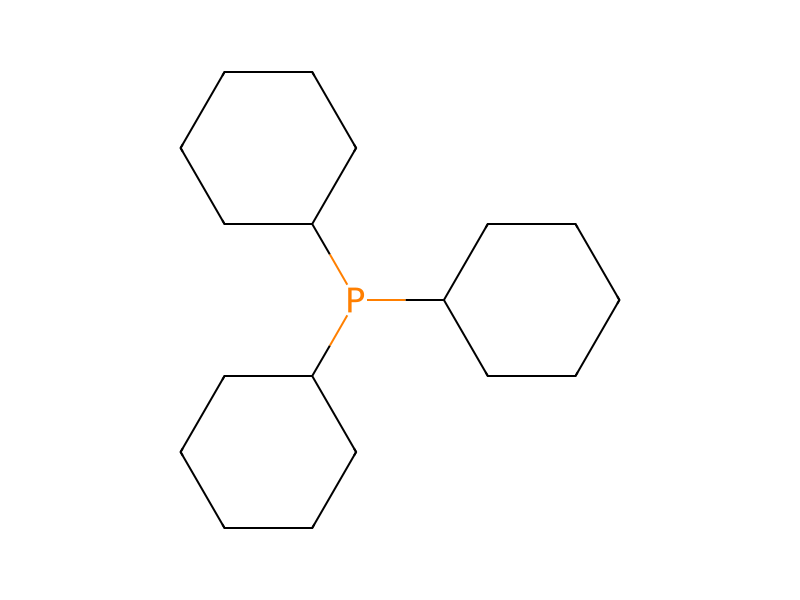
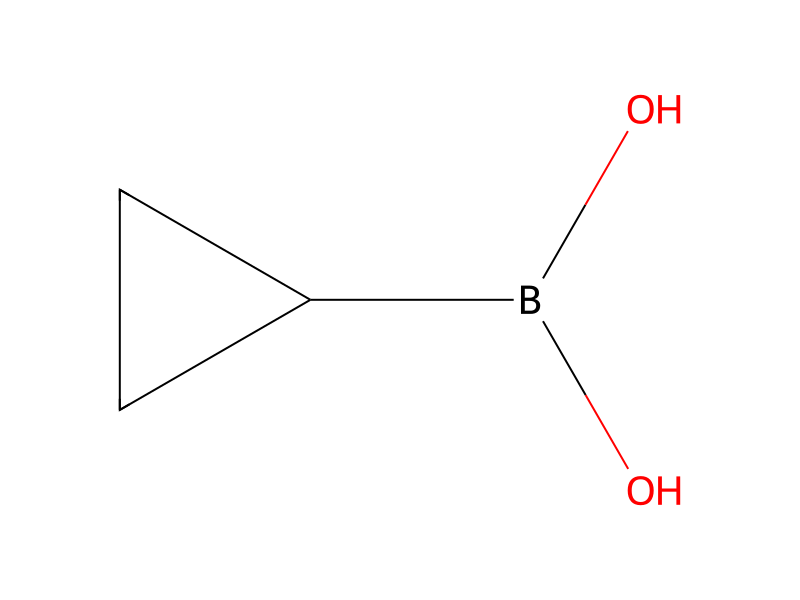
[CH2:1]([O:3][C:4]([C:6]1[C:11]([NH2:12])=[CH:10][CH:9]=[C:8](Br)[N:7]=1)=[O:5])[CH3:2].P([O-])([O-])([O-])=O.[K+].[K+].[K+].C1(P([CH:35]2[CH2:40][CH2:39]CCC2)C2CCCCC2)CCCCC1.C1(B(O)O)CC1>C1(C)C=CC=CC=1.C([O-])(=O)C.[Pd+2].C([O-])(=O)C.O>[CH2:1]([O:3][C:4]([C:6]1[C:11]([NH2:12])=[CH:10][CH:9]=[C:8]([CH:39]2[CH2:40][CH2:35]2)[N:7]=1)=[O:5])[CH3:2]Participants
8
Reactant 4


Product 1

Reagents, catalysts & solvents 3



Conditions
- Temperature
- 100 °C
Procedure
To a solution of 3-amino-6-bromo-pyridine-2-carboxylic acid ethyl ester (prepared according to US 2006/199960; 1.0 g, 4.08 mmol), potassium phosphate (3.03 g, 14.3 mmol), tricyclohexylphosphine (0.228 g, 0.82 mmol) and water (1.25 ml) in toluene (25 ml) was added cyclopropylboronic acid (0.91 g, 10.6 mmol) and palladium (II) acetate (90 mg, 0.4 mmol). The resulting suspension was stirred at 100° C. for 24 hours. After solvent evaporation, the title compound was obtained after silica gel chromatography using a heptane/ethyl acetate gradient as yellow solid (0.374 g, 44%).
Workup
- customAfter solvent evaporation
Sources & evidence
- ORD record
- ord-3ac0d8ec00f04e31b3832a0b80dd3ba3
- Source dataset
- uspto-grants-2014_01
- Patent number
- US08623866B2
Reaction notes
Loading…