Cesium carbonate → Tert-butyl 4-(2,5-difluoro-4-(1-(4-fluorophenylcarbamoyl)cyclopropanecarboxamido)phenoxy)pyridin-2-ylcarbamate
Reaction equation

Cl[C:2]1[CH:7]=[C:6]([O:8][C:9]2[C:14]([F:15])=[CH:13][C:12]([NH:16][C:17]([C:19]3([C:22]([NH:24][C:25]4[CH:30]=[CH:29][C:28]([F:31])=[CH:27][CH:26]=4)=[O:23])[CH2:21][CH2:20]3)=[O:18])=[C:11]([F:32])[CH:10]=2)[CH:5]=[CH:4][N:3]=1.[C:33](=[O:40])([O:35][C:36]([CH3:39])([CH3:38])[CH3:37])[NH2:34].CC1(C)C2C(=C(P(C3C=CC=CC=3)C3C=CC=CC=3)C=CC=2)OC2C(P(C3C=CC=CC=3)C3C=CC=CC=3)=CC=CC1=2.C(=O)([O-])[O-].[Cs+].[Cs+]>O1CCOCC1.C1C=CC(/C=C/C(/C=C/C2C=CC=CC=2)=O)=CC=1.C1C=CC(/C=C/C(/C=C/C2C=CC=CC=2)=O)=CC=1.C1C=CC(/C=C/C(/C=C/C2C=CC=CC=2)=O)=CC=1.[Pd].[Pd]>[F:15][C:14]1[CH:13]=[C:12]([NH:16][C:17]([C:19]2([C:22](=[O:23])[NH:24][C:25]3[CH:30]=[CH:29][C:28]([F:31])=[CH:27][CH:26]=3)[CH2:21][CH2:20]2)=[O:18])[C:11]([F:32])=[CH:10][C:9]=1[O:8][C:6]1[CH:5]=[CH:4][N:3]=[C:2]([NH:34][C:33](=[O:40])[O:35][C:36]([CH3:39])([CH3:38])[CH3:37])[CH:7]=1Participants
Reactant 4

Product 1

Reagents, catalysts & solvents 2
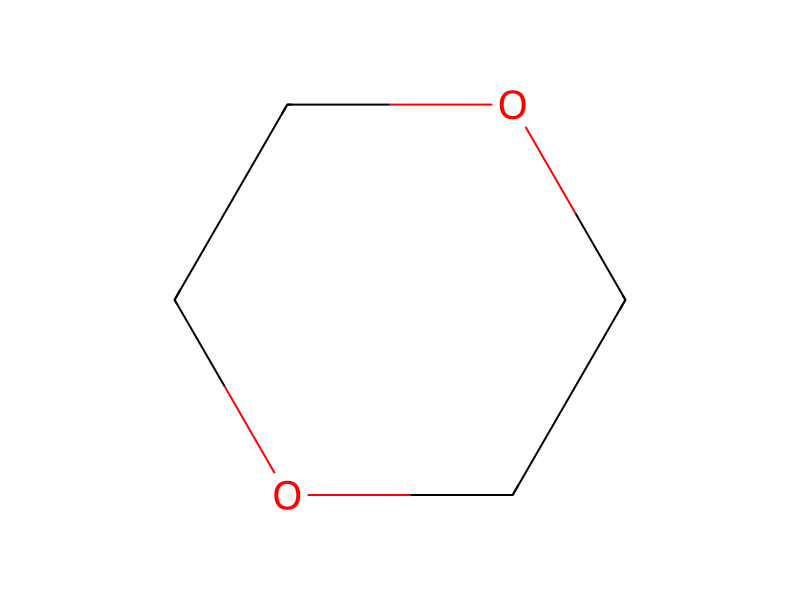
Conditions
- Temperature
- 100 °C
Procedure
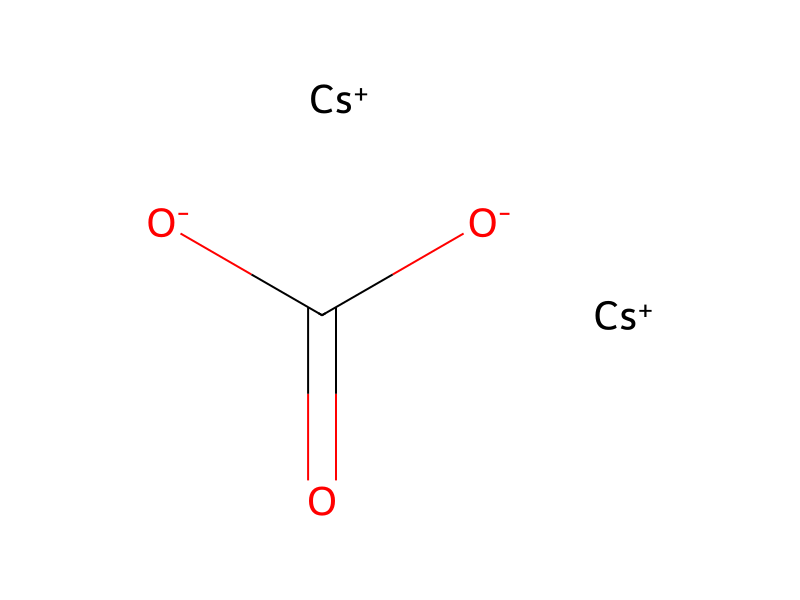
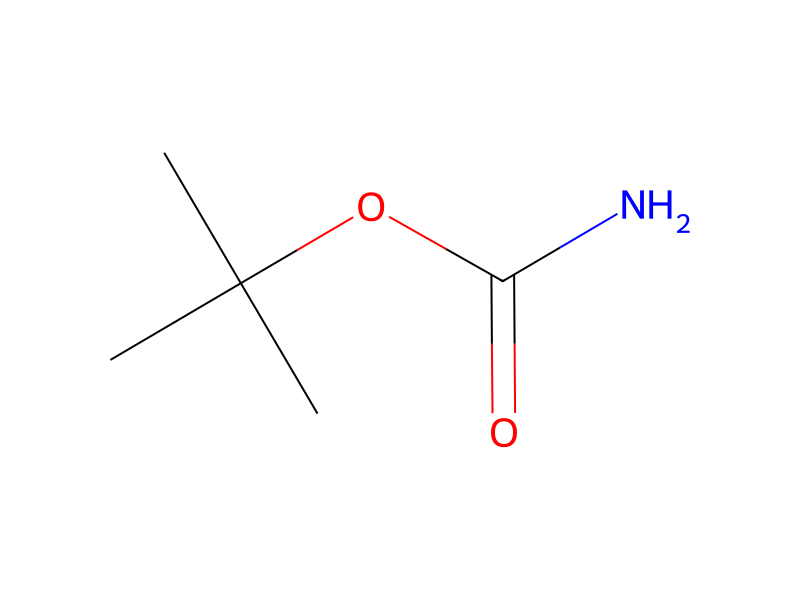
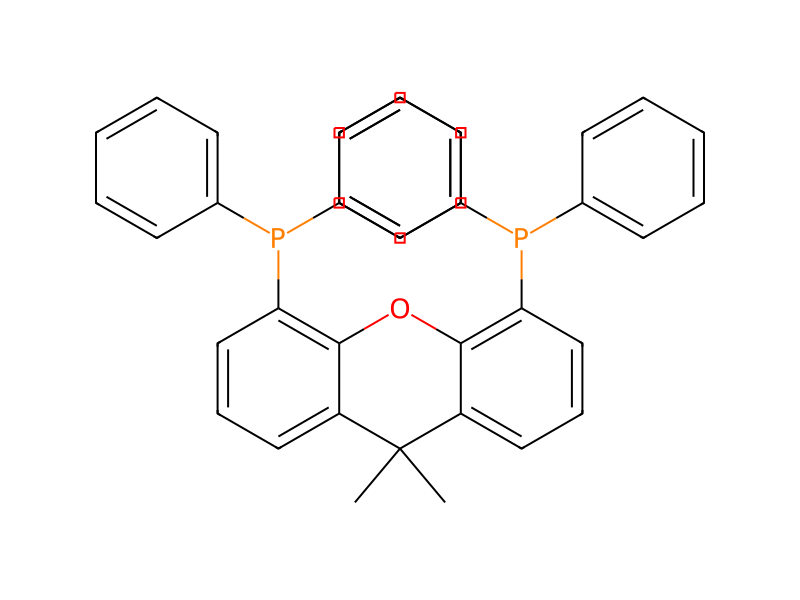
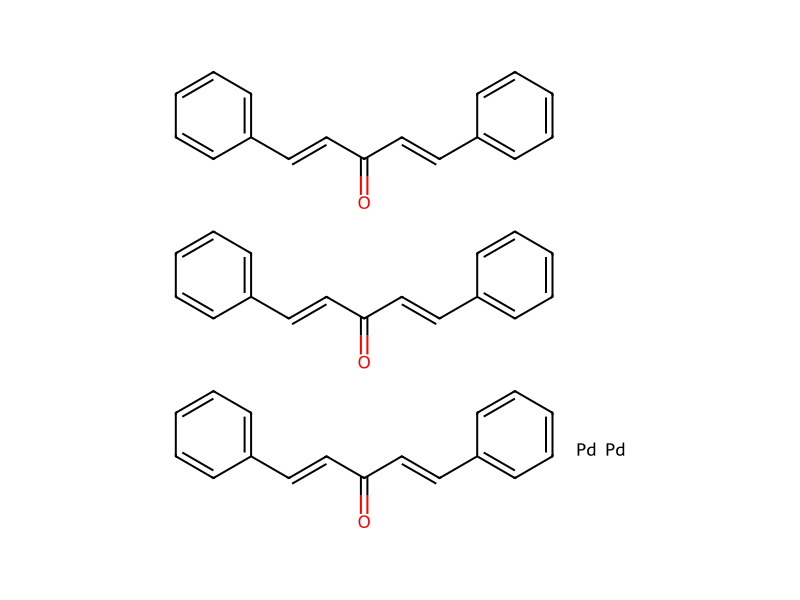
N-(4-(2-Chloropyridin-4-yloxy)-2,5-difluorophenyl)-N′-(4-fluorophenyl)cyclopropane-1,1-dicarboxamide (3 g, 6.5 mmol) (as prepared in Example 1), tert-butyl carbamate (2.3 g, 19.5 mmol), Xantphos (0.37 g, 0.65 mmol), and cesium carbonate (4.2 g, 13 mmol) were dissolved in dry dioxane (50 mL) and argon was bubbled through the mixture for 10 minutes. Pd2(dba)3 (0.3 g, 0.33 mmol) was then added, and the solution was sparged with argon for an additional 10 minutes. The flask was fitted with a reflux condenser and a balloon of argon and slowly heated to 100° C. and stirred overnight. The reaction mixture was cooled to RT. It was diluted with ethyl acetate (100 mL) and water (80 mL). The organic layer was separated and washed with brine. The aqueous layer was back extracted with the ethyl acetate, which was then washed with brine. The combined organic layers were dried over sodium sulfate and evaporated. The residue was purified by silica gel chromatography to give tert-butyl 4-(2,5-difluoro-4-(1-(4-fluorophenylcarbamoyl)cyclopropanecarboxamido)phenoxy)pyridin-2-ylcarbamate (1.8 g, 51% yield). 1H NMR (400 MHz, DMSO-d6): δ 11.03 (s, 1H), 9.88 (s, 1H), 9.78 (s, 1H), 8.13-8.05 (m, 2H), 7.59-7.53 (m, 3H), 7.33 (d, J=2.4 Hz, 1H), 7.18-7.13 (m, 2H), 6.63 (d, J=2.4 Hz, 1H), 1.63-1.62 (m, 2H), 1.58-1.56 (m, 2H), 1.40 (s, 9H).
Workup
- customargon was bubbled through the mixture for 10 minutes
- customthe solution was sparged with argon for an additional 10 minutes
- customThe flask was fitted with a reflux condenser
- temperatureThe reaction mixture was cooled to RT
- additionIt was diluted with ethyl acetate (100 mL) and water (80 mL)
- customThe organic layer was separated
- washwashed with brine
- extractionThe aqueous layer was back extracted with the ethyl acetate, which
- washwas then washed with brine
- dry with materialThe combined organic layers were dried over sodium sulfate
- customevaporated
- customThe residue was purified by silica gel chromatography
Sources & evidence
- ORD record
- ord-6e84331d2bf14659b5ad1b5ad6a34be3
- Source dataset
- uspto-grants-2014_01
- Patent number
- US08637672B2
Reaction notes
Loading…