Dimethylamine → P,P-bis(2,2-dimethyl-1-aziridinyl)-N,N-dimethylphosphinic amide
Reaction equation

C([N:3]([CH2:6][CH3:7])[CH2:4]C)C.[O:8]=[P:9](Cl)(Cl)Cl.[CH3:13][C:14]1([CH3:17])[CH2:16][NH:15]1.[CH3:18][NH:19][CH3:20].[CH2:21]1COCC1>>[CH3:13][C:14]1([CH3:17])[CH2:16][N:15]1[P:9]([N:3]1[CH2:4][C:6]1([CH3:7])[CH3:21])(=[O:8])[N:19]([CH3:20])[CH3:18]Participants
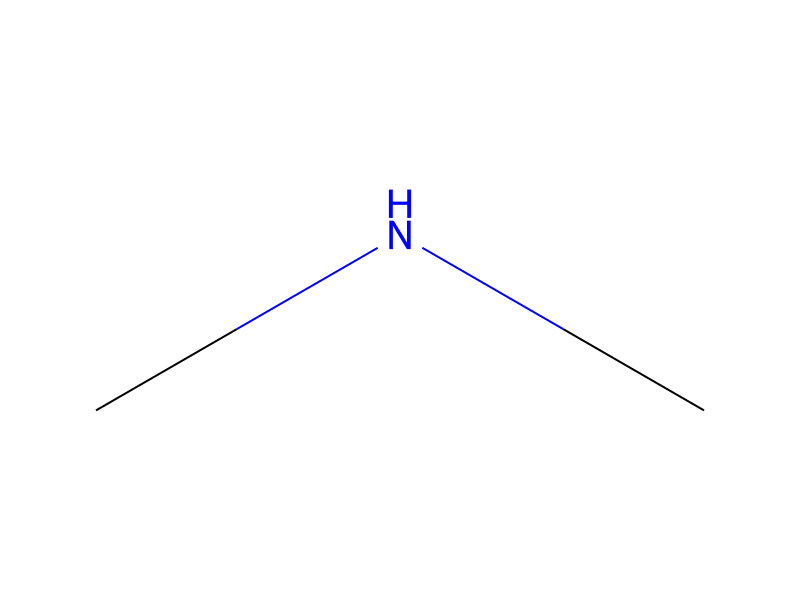





Conditions
- Temperature
- -40 °C
Procedure
0.16 moles of triethylamine, 0.05 moles of POCl3 and 150 milliliters of dried tetrahydrofuran were combined in a 250 milliliter round bottom flask, under a nitrogen atmosphere to avoid moisture contamination, to form a first solution which was then cooled to -40° C. A second solution was then prepared containing 0.10 moles of 2,2-dimethylaziridine in 20 milliliters of THF and the second solution was added dropwise to the cooled first addition over a period of about 2 hours. The resulting slurry was then warmed to approximately 0° C. over an hours' time and thereafter cooled again to -20° C. A third solution was then prepared containing 0.16 moles of dimethylamine in 25 milliliters of dried THF and the third solution was added dropwise to the cooled aforesaid combination of the first and second solutions over a period of about 2 hours. The vessel was sealed and stirred overnight at 4° C. The resulting slurry was then filtered, the filtrate was concentrated by rotary evaporation, and thereafter vacuum distilled at 58° C./0.15 millimeters Hg to produce at 75% yield of P,P-bis(2,2-dimethyl-1-aziridinyl)-N,N-dimethylphosphinic amide. The product was characterized by NMR and aziridine titration as having a purity of 99.45%. Elemental analysis confirmed the structure as follows:
Workup
- customto form a first solution which
- customA second solution was then prepared
- additionthe second solution was added dropwise to the cooled first addition over a period of about 2 hours
- temperatureThe resulting slurry was then warmed to approximately 0° C. over an hours' time
- temperaturecooled again to -20° C
- customA third solution was then prepared
- additionthe third solution was added dropwise to the cooled aforesaid combination of the first and second solutions over a period of about 2 hours
- customThe vessel was sealed
- filtrationThe resulting slurry was then filtered
- concentrationthe filtrate was concentrated by rotary evaporation
- distillationvacuum distilled at 58° C./0.15 millimeters Hg
Sources & evidence
- ORD record
- ord-682d6eff542f4ae18b883ccb55a33edb
- Source dataset
- uspto-grants-1989_12
- Patent number
- US04886790
Reaction notes
Loading…