3-Aminopyridine → (E)-N-cinnamyl-N'-(3-pyridyl) urea
Reaction equation

[C:1]([N:8]1[CH:12]=[CH:11]N=C1)([N:3]1[CH:7]=[CH:6][N:5]=[CH:4]1)=[O:2].N[C:14]1C=NC=C[CH:19]=1.C(N)/C=[CH:22]/[C:23]1[CH:28]=[CH:27][CH:26]=[CH:25][CH:24]=1>O1CCCC1>[CH2:12]([NH:8][C:1]([NH:3][C:7]1[CH:6]=[N:5][CH:4]=[CH:14][CH:19]=1)=[O:2])/[CH:11]=[CH:22]/[C:23]1[CH:28]=[CH:27][CH:26]=[CH:25][CH:24]=1Participants
Reactant 3
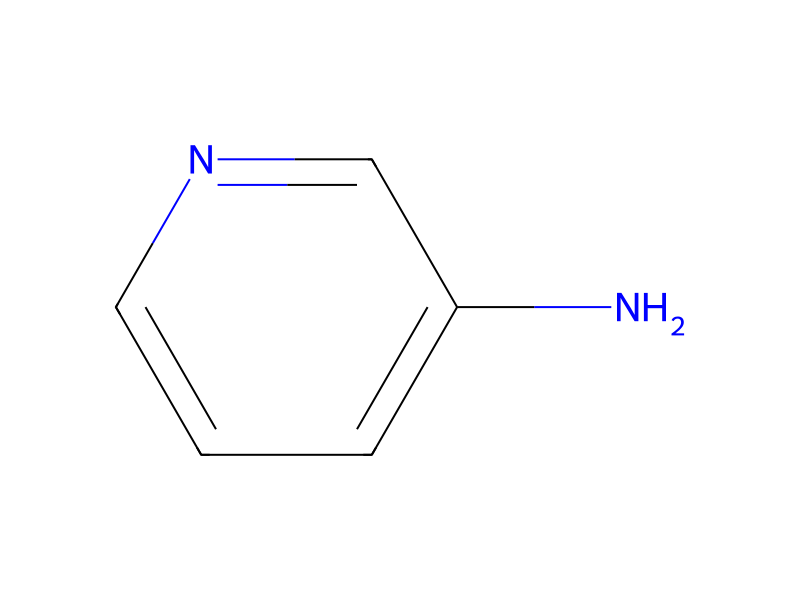


Product 1

Reagents, catalysts & solvents 1

Procedure
To 50 ml of a tetrahydrofuran solution containing 16.2 g of carbonyldiimidazole, a solution of 9.4 g of 3-aminopyridine dissolved in 50 ml of tetrahydrofuran was added dropwise under ice-cooling over 5 minutes. After stirring under ice-cooling for 30 minutes and at room temperature for 1 hour, the mixture was again ice-cooled, and 1.33 g of (E)-cinnamylamine was added, followed by stirring at room temperature for 18 hours. After distilling the solvent off, the residue was dissolved in ethyl acetate, washed with water and dried, followed by distillation of the solvent. The residue was purified by silica gel column chromatography (solvent: chloroform-methanol=20:1) to give 5.9 g of (E)-N-cinnamyl-N'-(3-pyridyl) urea as colorless caramel.
Workup
- additionwas added dropwise under ice-
- temperaturecooling over 5 minutes
- temperaturecooled
- stirringby stirring at room temperature for 18 hours
- distillationAfter distilling the solvent off, the residue
- dissolutionwas dissolved in ethyl acetate
- washwashed with water
- customdried
- distillationfollowed by distillation of the solvent
- customThe residue was purified by silica gel column chromatography (solvent: chloroform-methanol=20:1)
Sources & evidence
- ORD record
- ord-97c44f7008054c8591a1d3f809c41caa
- Source dataset
- uspto-grants-1989_12
- Patent number
- US04886817
Reaction notes
Loading…