4-Bromobiphenyl → HCID 9817140, compound
Reaction equation

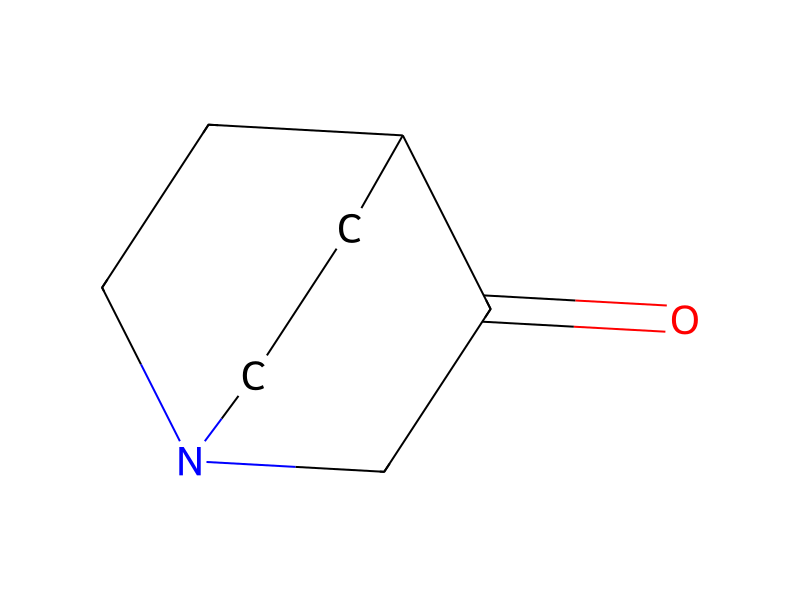
Br[C:2]1[CH:7]=[CH:6][C:5]([C:8]2[CH:13]=[CH:12][CH:11]=[CH:10][CH:9]=2)=[CH:4][CH:3]=1.[Mg].[N:15]12[CH2:22][CH2:21][CH:18]([CH2:19][CH2:20]1)[C:17](=[O:23])[CH2:16]2.[Cl-].[NH4+]>O1CCCC1.BrBr>[C:5]1([C:8]2[CH:13]=[CH:12][CH:11]=[CH:10][CH:9]=2)[CH:6]=[CH:7][C:2]([C:17]2([OH:23])[CH:18]3[CH2:21][CH2:22][N:15]([CH2:20][CH2:19]3)[CH2:16]2)=[CH:3][CH:4]=1Participants
Reactant 4



Product 1

Reagents, catalysts & solvents 2


Procedure
A solution of 4-bromobiphenyl (11.8 g) in dry tetrahydrofuran (60 ml) and bromine (3 drops) were added to stirred magnesium turnings (1.18 g) and the mixture heated under reflux for 70 minutes. A solution of quinuclidin-3-one (3.65 g) in dry tetrahydrofuran (25 ml) was added dropwise to the mixture at 10° C. and the reaction mixture heated under reflux for 90 minutes. Aqueous ammonium chloride (14 g in 56 ml of water) was added dropwise to the mixture and the mixture extracted with diethyl ether. The ether extract was dried (Na2SO4) and evaporated to give a residue which was crystallised from ethyl acetate to give 3-(biphenyl-4-yl)-3-hydroxyquinuclidine (1.4 g) as a colourless solid, m.p. 180°-182° C., microanalysis, found: C, 81.7; H, 7.5; N, 5.0%; C19H21NO requires: C, 81.8; H, 7.5; N, 5.0%. This material was identical to that in Example 1 except that it was a higher melting polymorphic form.
Workup
- temperaturethe mixture heated
- temperatureunder reflux for 70 minutes
- temperaturethe reaction mixture heated
- temperatureunder reflux for 90 minutes
- extractionthe mixture extracted with diethyl ether
- extractionThe ether extract
- dry with materialwas dried (Na2SO4)
- customevaporated
- customto give a residue which
- customwas crystallised from ethyl acetate
Sources & evidence
- ORD record
- ord-2d098a25a12548e78ec27014bbc09348
- Source dataset
- uspto-grants-1998_08
- Patent number
- US05792777
Reaction notes
Loading…