Hydrogen Peroxide → 2-Ethylhexanoic Acid
Reaction equation

Br[C:2](Br)=[CH:3][C:4]1[CH:9]=[CH:8][CH:7]=[CH:6][CH:5]=1.S([O-])(OCCCCCCCCCCCC)(=O)=[O:12].[Na+].S(OOS([O-])(=O)=O)([O-])(=O)=O.[K+].[K+].OO.[OH2:43]>>[CH3:8][CH2:7][CH2:6][CH2:5][CH:4]([C:9]([OH:12])=[O:43])[CH2:3][CH3:2]Participants


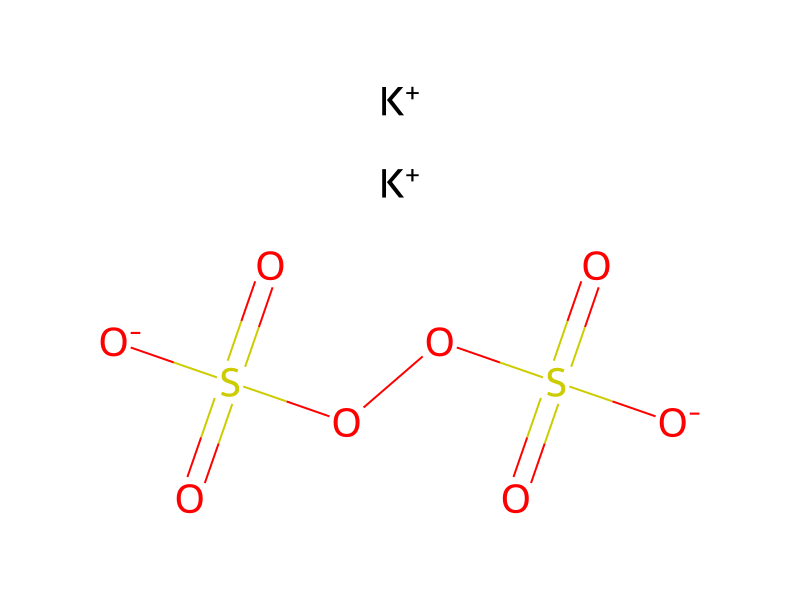


Procedure
A series of emulsion polymerizations of dibromostyrene (DBS)/2-ethylhexyl acrylate (2-EHA) were carried out in 8 oz. bottles. All the ingredients (122.50 or 180 parts by weight deionized water, 3 parts sodium dodecyl sulfate, 0.3 parts potassium persulfate, 0.2 parts t-dodecyl mercaptan and 100 parts total monomers in the ratio desired in the polymer) were charged into 8 oz. bottles and flushed well with nitrogen, and then reacted at 50° C. to about 45.8 or 36.5% solids in 15 hr. The whole bottle was cooled to room temperature and 3 parts deionized water and 0.18 parts 50% H2O2 added, followed by agitation for 20 minutes. The results of these preparations are set forth in Table I. The latices in Examples 1 and 2 perform well in a variety of coating applications, and display improved flame retardancy, while the latices in Examples 3 through 5 give very soft and tacky coatings.
Workup
- additionwere charged into 8 oz. bottles
- customflushed well with nitrogen
- customreacted at 50° C. to about 45.8 or 36.5% solids in 15 hr
- additionadded
- customThe results of these preparations
- temperatureimproved flame retardancy
- customwhile the latices in Examples 3 through 5 give very soft
Sources & evidence
- ORD record
- ord-b9fbcf2b539a42e5adf884906811f80b
- Source dataset
- uspto-grants-1994_03
- Patent number
- US05290636
Reaction notes
Loading…