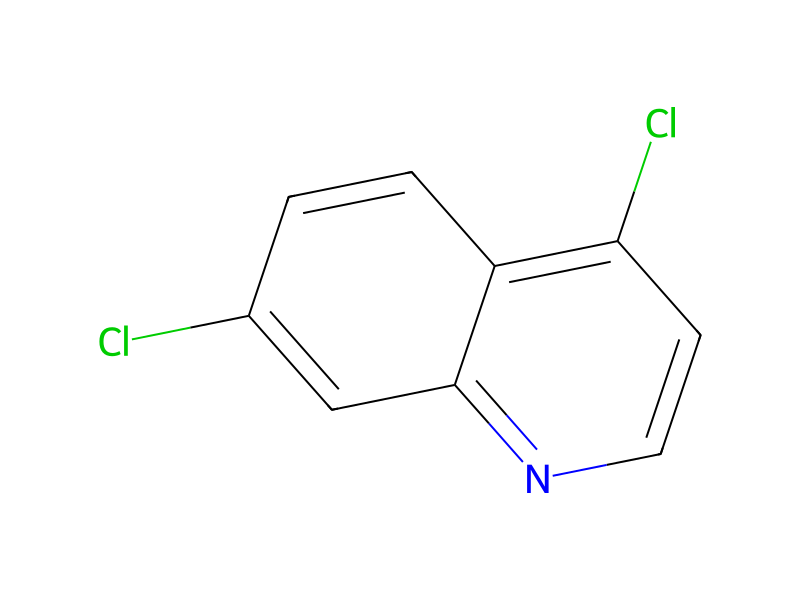
4,7-Dichloroquinoline → Quinoline, 7-chloro-4-(1-(2-fluorophenyl)ethoxy)-
Reaction equation

[F:1][C:2]1[CH:7]=[CH:6][CH:5]=[CH:4][C:3]=1[CH:8]([OH:10])[CH3:9].Cl[C:12]1[C:21]2[C:16](=[CH:17][C:18]([Cl:22])=[CH:19][CH:20]=2)[N:15]=[CH:14][CH:13]=1.[H-].[Na+]>CN(C=O)C.O>[Cl:22][C:18]1[CH:17]=[C:16]2[C:21]([C:12]([O:10][CH:8]([C:3]3[CH:4]=[CH:5][CH:6]=[CH:7][C:2]=3[F:1])[CH3:9])=[CH:13][CH:14]=[N:15]2)=[CH:20][CH:19]=1Participants
6





Conditions
- Temperature
- 160 °C
Procedure
A solution of 2.52 g (18 mmol) of 1-(2-fluorophenyl)ethanol in DMF was added dropwise to a mixture of 2.97 g (15mmol) of 4,7-dichloroquinoline and 0.50 g (21 mmol) of sodium hydride in 15 ml of DMF. After addition was complete, the mixture was heated to 160° C. After four hours the mixture was allowed to cool and 0.1 g of sodium hydride was added. Upon completion of the reaction, a few drops of water were carefully added to destroy excess sodium hydride. Then the solution was poured into water. The product was extracted into ethyl acetate, the ethyl acetate solution was washed three times with water, then dried, and evaporated, producing an oil that crystallized from heptane/ethyl acetate. Yield: 0.77 g M.P. 53°-54° C.
Workup
- additionAfter addition
- temperatureto cool
- additionwere carefully added
- customto destroy excess sodium hydride
- additionThen the solution was poured into water
- extractionThe product was extracted into ethyl acetate
- washthe ethyl acetate solution was washed three times with water
- customdried
- customevaporated
- customproducing an oil that
- customcrystallized from heptane/ethyl acetate
Sources & evidence
- ORD record
- ord-6f19646f85ac4b8fa0c7faf811555514
- Source dataset
- uspto-grants-1994_03
- Patent number
- US05296484
Reaction notes
Loading…