Hydrogen Bromide → 2-amino-5-bromo-N,3-dimethylbenzamide
Reaction equation

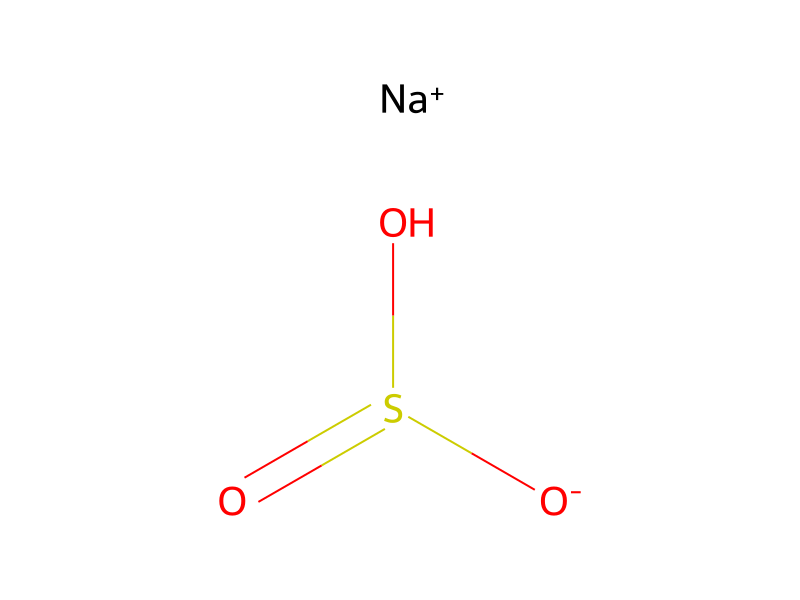
[NH2:1][C:2]1[C:11]([CH3:12])=[CH:10][CH:9]=[CH:8][C:3]=1[C:4]([NH:6][CH3:7])=[O:5].[BrH:13].OO.S(=O)(O)[O-].[Na+].[OH-].[Na+]>O.C(O)(=O)C>[NH2:1][C:2]1[C:11]([CH3:12])=[CH:10][C:9]([Br:13])=[CH:8][C:3]=1[C:4]([NH:6][CH3:7])=[O:5]Participants







Conditions
- Temperature
- 12 °C
Procedure
A mixture of 2-amino-N,3-dimethylbenzamide (i.e. the product of Step A of Example 5) (14 g, 85 mmol), acetic acid (50 mL), and water (50 mL) was cooled to 12° C., and concentrated hydrobromic acid (28.5 g, 0.34 mol) was added over 10 minutes at this temperature. Then 30% aqueous hydrogen peroxide (9 g, 0.08 mol) was added over 5 minutes at 10-11° C., and the mixture was allowed to warm slowly to room temperature while being stirred for 2.5 h. Then more concentrated hydrobromic acid (2.9 g) was added, and the mixture was stirred overnight at room temperature. To the mixture was then added water (50 mL) and sodium bisulfite (1.5 g), and then the pH was adjusted to 5-6 by the addition of 50% aqueous sodium hydroxide (˜15 mL). The mixture was filtered, and the solids were washed with water and dried in vacuo to afford the title compound, 19.5 g (94%).
Workup
- temperatureto warm slowly to room temperature
- stirringthe mixture was stirred overnight at room temperature
- filtrationThe mixture was filtered
- washthe solids were washed with water
- customdried in vacuo
Sources & evidence
- ORD record
- ord-172a301225ad4b1ab681ceeb8a41ae0d
- Source dataset
- uspto-grants-2009_05
- Patent number
- US07528260B2
Reaction notes
Loading…