Phenylacetyl chloride → 3-{4-[2-Fluoro-4-(3-phenylacetylthioureido)phenoxy]pyridin-2-yl}-1-methyl-1-[3-(4-methylpiperazin-1-yl)propyl]urea
Reaction equation

C1(CC(Cl)=O)C=CC=CC=1.[S-]C#N.[K+].C(=O)([O-])O.[Na+].[NH2:20][C:21]1[CH:48]=[CH:47][C:24]([O:25][C:26]2[CH:31]=[CH:30][N:29]=[C:28]([NH:32][C:33](=[O:46])[N:34]([CH3:45])[CH2:35][CH2:36][CH2:37][N:38]3[CH2:43][CH2:42][N:41]([CH3:44])[CH2:40][CH2:39]3)[CH:27]=2)=[C:23]([F:49])[CH:22]=1.CC1(C)C2(CS(O)(=O)=O)C(CC1CC2)=O.[C:65]1([CH2:71][C:72]([N:74]=[C:75]=[S:76])=[O:73])[CH:70]=[CH:69][CH:68]=[CH:67][CH:66]=1>C(#N)C.C(O)C.CCCCCC.C(OCC)C.C(OCC)(=O)C>[F:49][C:23]1[CH:22]=[C:21]([NH:20][C:75]([NH:74][C:72](=[O:73])[CH2:71][C:65]2[CH:66]=[CH:67][CH:68]=[CH:69][CH:70]=2)=[S:76])[CH:48]=[CH:47][C:24]=1[O:25][C:26]1[CH:31]=[CH:30][N:29]=[C:28]([NH:32][C:33](=[O:46])[N:34]([CH3:45])[CH2:35][CH2:36][CH2:37][N:38]2[CH2:39][CH2:40][N:41]([CH3:44])[CH2:42][CH2:43]2)[CH:27]=1Participants
Reactant 6
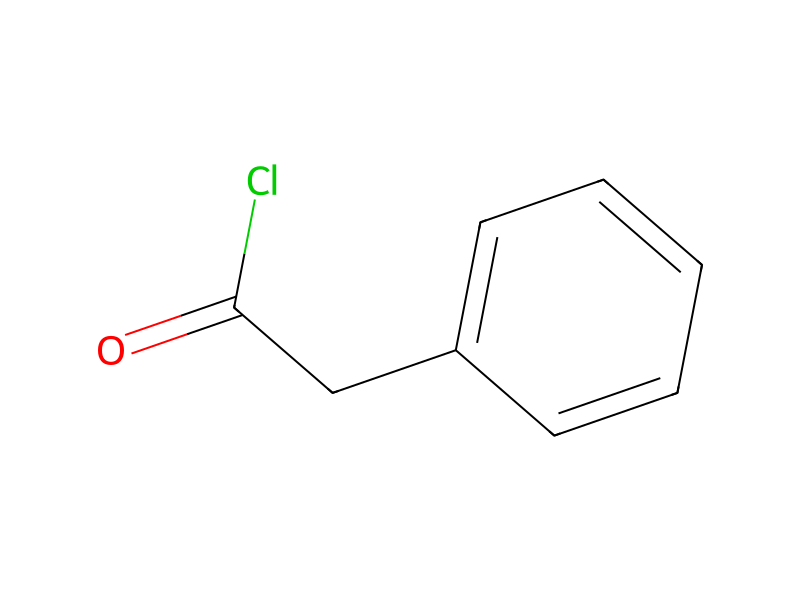 HCID 7679Phenylacetyl chloride
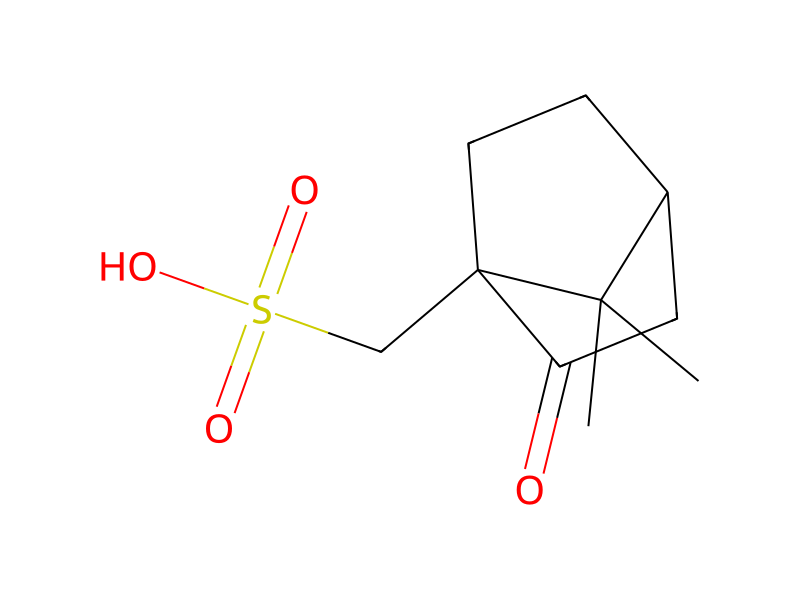 HCID 18462Bicyclo[2.2.1]heptane-1-methanesulfonic acid, 7,7-dimethyl-2-oxo-, (1S)-
 HCID 516872Potassium thiocyanate
 HCID 516892Sodium Bicarbonate
 HCID 12454157Phenylacetyl isothiocyanate
 HCID 231533523-[4-(4-Amino-2-fluorophenoxy)pyridin-2-yl]-1-methyl-1-[3-(4-methylpiperazin-1-yl)propyl]urea
Product 1

Reagents, catalysts & solvents 5





Procedure
2-Phenylacetyl chloride (0.032 ml) was dissolved in acetonitrile (3 ml) under a nitrogen atmosphere, and then potassium thiocyanate (46.6 mg) was added thereto at 60° C., followed by stirring at the same temperature for 2 hrs. The reaction mixture was cooled down to room temperature, and then ethyl acetate and a saturated aqueous solution of sodium hydrogencarbonate were added thereto, followed by stirring for 30 min. The organic layer was separated, washed with a saturated aqueous solution of sodium hydrogencarbonate, water and brine in this order, and dried over anhydrous sodium sulfate. The solvent was evaporated to give a residue, to which was added acetonitrile (2 ml) to prepare a solution. 3-[4-(4-Amino-2-fluorophenoxy)pyridin-2-yl]-1-methyl-1-[3-(4-methylpiperazin-1-yl)propyl]urea (50.0 mg) was dissolved in ethanol (1 ml) under a nitrogen atmosphere, and then D-10-camphorsulfonic acid (24.9 mg) was added thereto, followed by stirring for 5 min. To the reaction mixture was added the solution of 2-phenylacetyl isothiocyanate in acetonitrile (2 ml) synthesized above, followed by stirring under a nitrogen atmosphere at room temperature overnight. The reaction mixture was partitioned between ethyl acetate and a saturated aqueous solution of sodium hydrogencarbonate. The organic layer was washed with a saturated aqueous solution of sodium hydrogencarbonate, water and brine in this order, and dried over anhydrous sodium sulfate. The solvent was evaporated to give a residue, which was then purified by silica gel column chromatography (FUJI Silysia NH, eluent; heptane:ethyl acetate=1:5 to 1:8). Fractions containing the target compound were concentrated to give a residue, to which diethyl ether (1.5 ml)-hexane (1.5 ml) was then added to suspend. The solid was filtered off and dried under aeration to provide the titled compound (35.0 mg, 49.1%) as a white solid.
Workup
- customat 60° C.
- stirringby stirring for 30 min
- customThe organic layer was separated
- washwashed with a saturated aqueous solution of sodium hydrogencarbonate, water and brine in this order
- dry with materialdried over anhydrous sodium sulfate
- customThe solvent was evaporated
- customto give a residue
- customto prepare a solution
- stirringby stirring for 5 min
- customsynthesized above,
- stirringby stirring under a nitrogen atmosphere at room temperature overnight
- customThe reaction mixture was partitioned between ethyl acetate
- washThe organic layer was washed with a saturated aqueous solution of sodium hydrogencarbonate, water and brine in this order
- dry with materialdried over anhydrous sodium sulfate
- customThe solvent was evaporated
- customto give a residue, which
- customwas then purified by silica gel column chromatography (FUJI Silysia NH, eluent; heptane:ethyl acetate=1:5 to 1:8)
- additionFractions containing the target compound
- concentrationwere concentrated
- customto give a residue
- filtrationThe solid was filtered off
- customdried under aeration
Sources & evidence
- ORD record
- ord-25f02f42fb72400d9860c39bc7de0b0b
- Source dataset
- uspto-grants-2009_05
- Patent number
- US07531532B2
Reaction notes
Loading…