Quinoline → Propylamine
Reaction equation

O[C:2]1[C:11]2[C:6](=[CH:7][CH:8]=[CH:9][N:10]=2)[N:5]=[CH:4][CH:3]=1.CS(Cl)(=O)=O.FC(F)(F)S(OS(C(F)(F)F)(=O)=O)(=O)=O.[N:32]1C2C(=CC=CC=2)[CH:35]=[CH:34][CH:33]=1>P(Cl)(Cl)(Cl)=O.N1C=CC=CC=1>[NH2:32][C:2]1[C:11]2[C:6](=[CH:7][CH:8]=[CH:9][N:10]=2)[N:5]=[CH:4][CH:3]=1.[CH2:33]([NH2:32])[CH2:34][CH3:35]Participants
Reactant 4
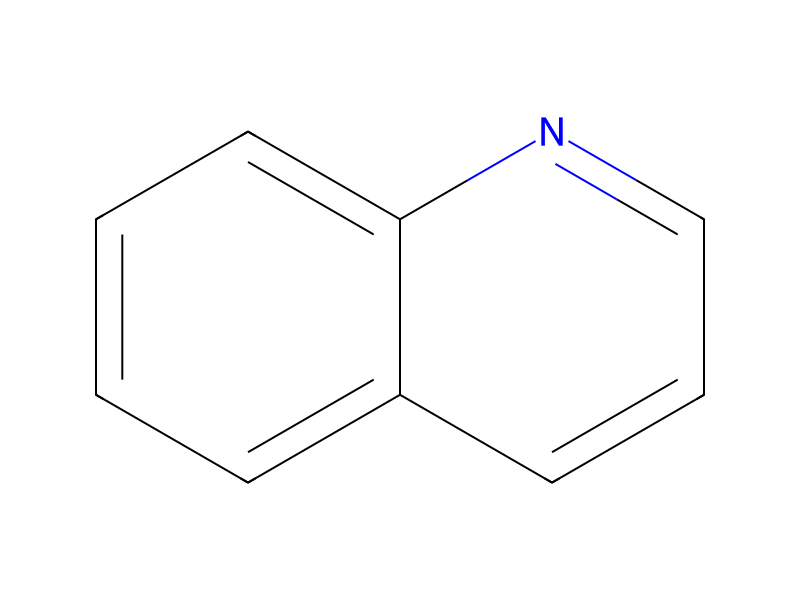


Product 2
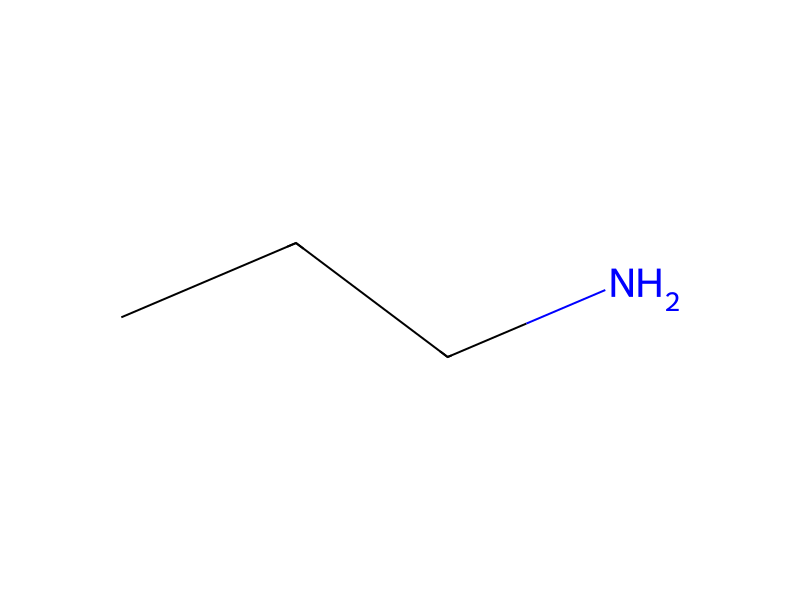

Reagents, catalysts & solvents 2


Procedure
4-Hydroxy-1,5-naphthyridines can be prepared from 3-aminopyridine derivatives by reaction with diethyl ethoxymethylene malonate to produce the 4-hydroxy-3-carboxylic acid ester derivative with subsequent hydrolysis to the acid, followed by thermal decarboxylation in quinoline (as for example described for 4-Hydroxy-[1,5]naphthyridine-3-carboxylic acid, J. T. Adams et al., J. Amer. Chem. Soc., 1946, 68, 1317). A 4-hydroxy-[1,5]naphthyridine can be converted to the 4-chloro derivative by heating in phosphorus oxychloride, or to the 4-methanesulphonyloxy or 4-trifluoromethanesulphonyloxy derivative by reaction with methanesulphonyl chloride or trifluoromethanesulphonic anhydride, respectively, in the presence of an organic base. A 4-amino 1,5-naphthyridine can be obtained from the 4-chloro derivative by reaction with n-propylamine in pyridine.
Workup
- customwith subsequent hydrolysis to the acid
Sources & evidence
- ORD record
- ord-792fbb81b1704bf3802137e15e62a9dd
- Source dataset
- uspto-grants-2009_05
- Patent number
- US07534793B2
Reaction notes
Loading…