Diisopropylamine → HCID 9884652, compound
Reaction equation

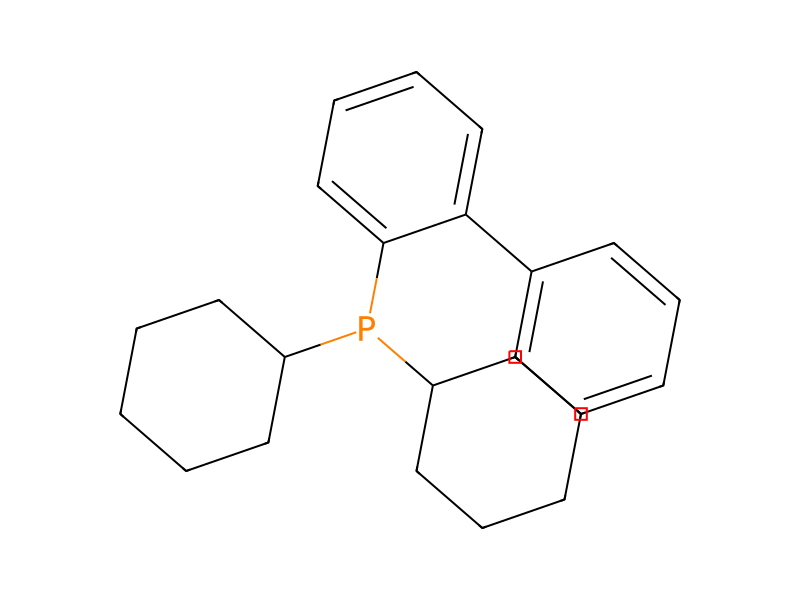
[OH:1][C:2]1[CH:7]=[CH:6][C:5]([C:8]2[CH:13]=[CH:12][CH:11]=[C:10]([C:14](=[O:16])[CH3:15])[CH:9]=2)=[CH:4][C:3]=1I.C1(P(C2CCCCC2)C2CCCCC2)C(C2C=CC=CC=2)=CC=CC=1.C(NC(C)C)(C)C.[CH2:50]([N:54]1[CH2:58][CH2:57][CH2:56][C@H:55]1[CH3:59])[CH2:51][C:52]#[CH:53]>C([O-])(=O)C.[Pd+2].C([O-])(=O)C.[Cu]I.CN(C)C=O.CC#N>[CH3:59][C@@H:55]1[CH2:56][CH2:57][CH2:58][N:54]1[CH2:50][CH2:51][C:52]1[O:1][C:2]2[CH:7]=[CH:6][C:5]([C:8]3[CH:9]=[C:10]([C:14](=[O:16])[CH3:15])[CH:11]=[CH:12][CH:13]=3)=[CH:4][C:3]=2[CH:53]=1Participants
Reactant 4



Product 1

Reagents, catalysts & solvents 4




Conditions
- Temperature
- 45 °C
Procedure
The product from Example 136B (1.15 g, 3.40 mmol), palladium (II) acetate (38 mg, 0.17 mmol), biphen-2-yl-dicyclohexylphosphine (119 mg, 0.34 mmol), diisopropylamine (4.8 mL, 34 mmol), and copper(I) iodide (76 mg, 0.40 mmol) were suspended in a 0.09 M MeCN solution of (R)-1-but-3-ynyl-2-methylpyrrolidine (45 mL, 4.0 mmol). N,N-dimethylformamide (10 mL) was added, and the mixture was heated at 45° C. overnight, cooled to room temperature, partitioned between CH2Cl2 (100 mL) and 5% aqueous ammonia (100 mL), worked up as usual but with 5% aqueous ammonia, filtered, and concentrated. The residue was dissolved into CH2Cl2 and washed consecutively with water and brine, dried (Na2SO4), concentrated, and chromatographed through silica with a gradient of 0 to 4% MeOH/CH2Cl2. The appropriate fractions were combined and rechromatographed with 50% CH2Cl2/hexanes followed by a gradient of 0 to 4% MeOH/CH2Cl2 to provide the title compound as a dark brown gum (30% yield). MS (APCI) m/z 348 (M+H)+; 1HNMR (300 MHz, CD3OD) δ 1.17 (d, 3H), 1.38-1.52 (m, 1H), 1.73-1.86 (m, 2H), 1.94-2.07 (m, 1H), 2.23-2.34 (m, 1H), 2.40-2.58 (m, 2H), 2.67 (s, 3H), 2.95-3.14 (m, 2H), 3.19-3.32 (m, 2H), 6.62 (s, 1H), 7.49-7.52 (m, 2H), 7.57 (dd, 1H), 7.78 (dd, 1H), 7.88 (ddd, 1H), 7.96 (ddd, 1H), 8.22 (dd, 1H).]
Workup
- temperaturecooled to room temperature
- custompartitioned between CH2Cl2 (100 mL) and 5% aqueous ammonia (100 mL)
- filtrationfiltered
- concentrationconcentrated
- dissolutionThe residue was dissolved into CH2Cl2
- washwashed consecutively with water and brine
- dry with materialdried (Na2SO4)
- concentrationconcentrated
- customchromatographed through silica with a gradient of 0 to 4% MeOH/CH2Cl2
- customrechromatographed with 50% CH2Cl2/hexanes
Sources & evidence
- ORD record
- ord-549d4f3a4a8f45b5a83e8e50c0766457
- Source dataset
- uspto-grants-2009_05
- Patent number
- US07538138B2
Reaction notes
Loading…