3-Hydroxybenzaldehyde → n-butyl (R)-2-(3-formylphenoxy)butyrate
Reaction equation

C(=O)([O-])[O-].[K+].[K+].[OH:7][C:8]1[CH:9]=[C:10]([CH:13]=[CH:14][CH:15]=1)[CH:11]=[O:12].FC(F)(F)S(O[C@@H:22]([CH2:30][CH3:31])[C:23]([O:25][CH2:26][CH2:27][CH2:28][CH3:29])=[O:24])(=O)=O.C(OCC)(=O)C>C(#N)C>[CH:11]([C:10]1[CH:9]=[C:8]([CH:15]=[CH:14][CH:13]=1)[O:7][C@H:22]([CH2:30][CH3:31])[C:23]([O:25][CH2:26][CH2:27][CH2:28][CH3:29])=[O:24])=[O:12]Participants
6
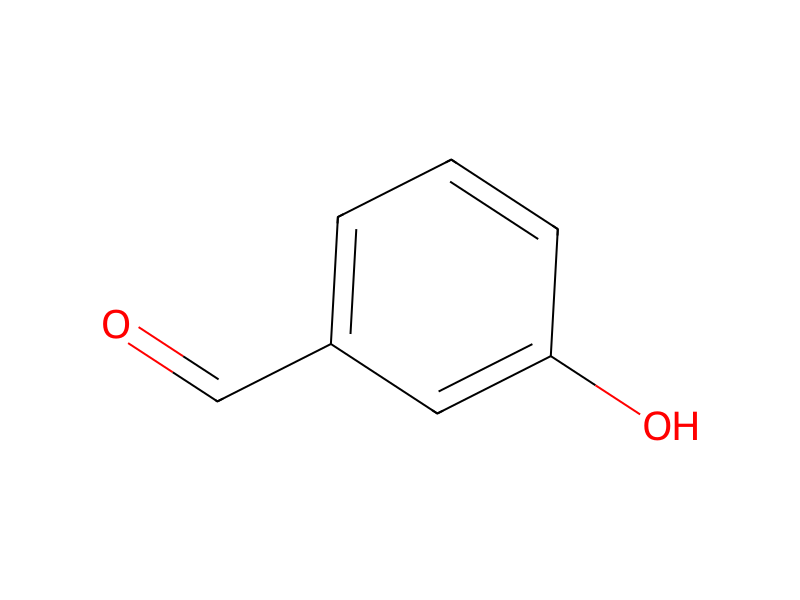





Procedure
Potassium carbonate (473 mg) was added to a solution of 3-hydroxybenzaldehyde (418 mg) in acetonitrile (10 mL). Subsequently, n-butyl (S)-2-trifluoromethanesulfonyloxybutyrate (1.0 g) was added to the mixture, followed by stirring at room temperature for 12 hours. Ethyl acetate was added to the reaction mixture, and the resultant mixture was washed sequentially with water and saturated brine, followed by drying over sodium sulfate anhydrate. The reaction mixture was filtered, and the filtrate was concentrated under reduced pressure. The residue was purified through silica gel column chromatography (hexane/ethyl acetate=4/1), to thereby yield 904 mg of a colorless, oily substance (99.9%).
Workup
- washthe resultant mixture was washed sequentially with water and saturated brine
- dry with materialby drying over sodium sulfate anhydrate
- filtrationThe reaction mixture was filtered
- concentrationthe filtrate was concentrated under reduced pressure
- customThe residue was purified through silica gel column chromatography (hexane/ethyl acetate=4/1)
Sources & evidence
- ORD record
- ord-f3edbdc1d6d14417a7c6af4ca139b6e5
- Source dataset
- uspto-grants-2009_05
- Patent number
- US07538242B2
Reaction notes
Loading…