Hydrochloric Acid → (2-Ethylthiophenyl)boronic acid
Reaction equation

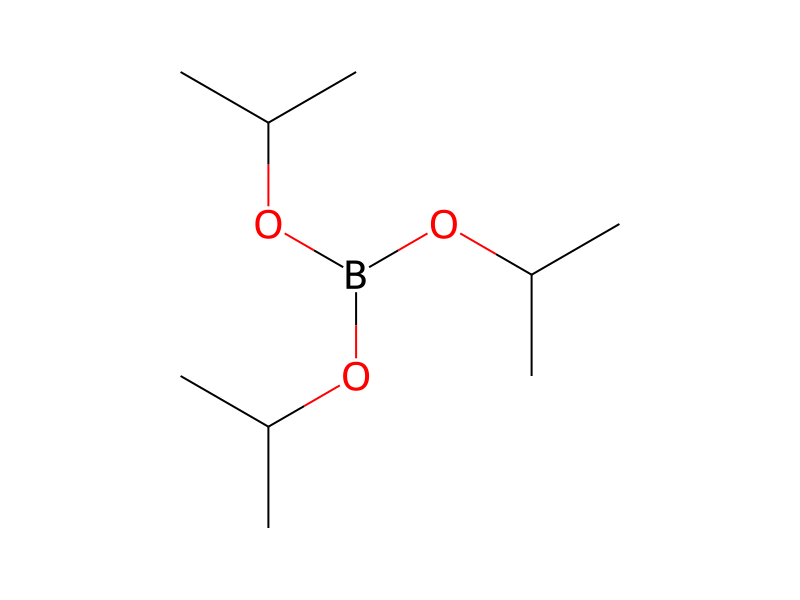
[B:1](OC(C)C)([O:6]C(C)C)[O:2]C(C)C.Br[C:15]1[CH:20]=[CH:19][CH:18]=[CH:17][C:16]=1[S:21][CH2:22][CH3:23].[Li]CCCC.CCCCCC.Cl>C(OCC)(=O)C>[CH2:22]([S:21][C:16]1[CH:17]=[CH:18][CH:19]=[CH:20][C:15]=1[B:1]([OH:6])[OH:2])[CH3:23]Participants
7






Conditions
- Temperature
- -70 °C
Procedure
9.5 g (50 mmol) of triisopropyl borate are added to a solution of 10.9 g (50.0 mmol) of 1-bromo-2-ethylsulfanylbenzene kept at −70° C. 33.3 ml of a 15% solution of BuLi in hexane (55 mmol) are then added. The mixture is stirred at −70° C. for a further 30 minutes, then 1 N hydrochloric acid and ethyl acetate are added. The organic phase is separated off, dried and evaporated. The residue is taken up in diethyl ether and filtered. A colourless solid is obtained; FAB 182
Workup
- customkept at −70° C
- customThe organic phase is separated off
- customdried
- customevaporated
- filtrationfiltered
- customA colourless solid is obtained
Sources & evidence
- ORD record
- ord-8215473de7e84f9db4a581d52f40e108
- Source dataset
- uspto-grants-2005_09
- Patent number
- US06946489B2
Reaction notes
Loading…