Benzocaine → ethyl 4-(decanoylamino)benzoate
Reaction equation

[CH2:1]([O:3][C:4](=[O:12])[C:5]1[CH:10]=[CH:9][C:8]([NH2:11])=[CH:7][CH:6]=1)[CH3:2].[C:13](Cl)(=[O:23])[CH2:14][CH2:15][CH2:16][CH2:17][CH2:18][CH2:19][CH2:20][CH2:21][CH3:22].CCN(CC)CC>C(Cl)Cl.CCOC(C)=O>[CH2:1]([O:3][C:4](=[O:12])[C:5]1[CH:10]=[CH:9][C:8]([NH:11][C:13](=[O:23])[CH2:14][CH2:15][CH2:16][CH2:17][CH2:18][CH2:19][CH2:20][CH2:21][CH3:22])=[CH:7][CH:6]=1)[CH3:2]Participants
6
Reactant 3


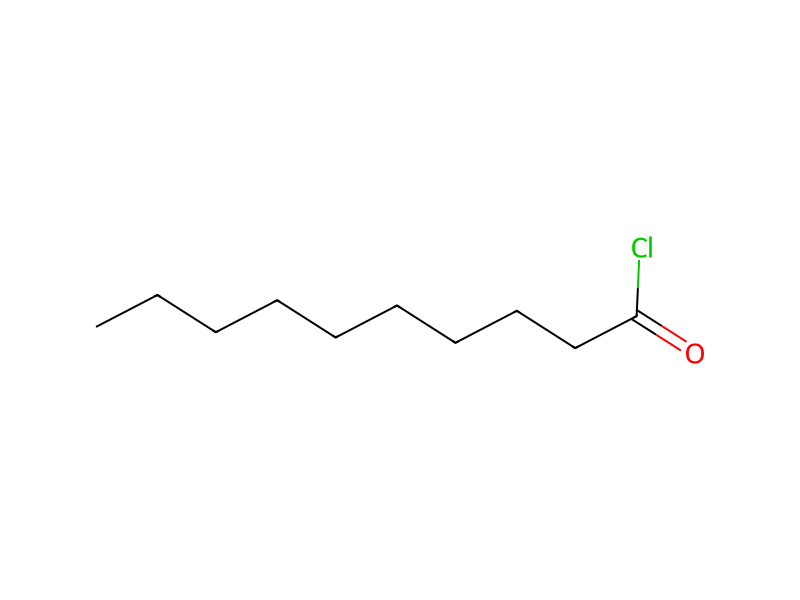
Product 1

Reagents, catalysts & solvents 2


Procedure
(Scheme 3, Compound H) To a solution of 4-amino-benzoic acid ethyl ester (2.0 g, 12.1 mmol) and decanoyl chloride (2.35 g, 13.3 mmol) in methylene chloride (20 mL) was added Et3N (1.34 g, 13.3 mmol). The resultant mixture was stirred at room temperature for one hour and then was diluted with EtOAc, washed by H2O, dried over MgSO4. After filtration and concentration in vacuo, the product was directly used in the next step.
Workup
- washwashed by H2O
- dry with materialdried over MgSO4
- filtrationAfter filtration and concentration in vacuo
Sources & evidence
- ORD record
- ord-145e46e5ae5b4c09842389bf03f8cf55
- Source dataset
- uspto-grants-2005_09
- Patent number
- US06949574B2
Reaction notes
Loading…