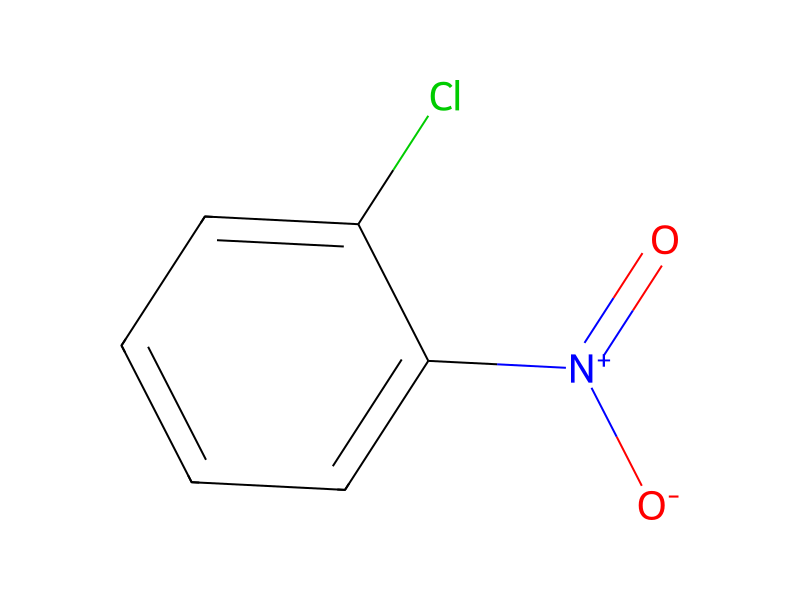
1-Chloro-2-nitrobenzene → 4'-Chloro-2-nitro-1,1'-biphenyl
Reaction equation

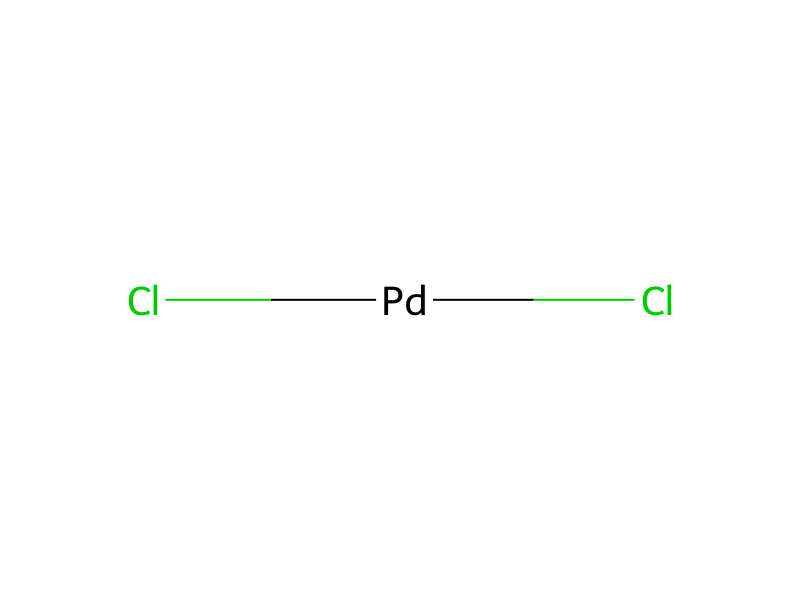
[Cl:1][C:2]1[CH:7]=[CH:6][C:5](B(O)O)=[CH:4][CH:3]=1.[OH-].[Na+].C1(P(C2C=CC=CC=2)C2C=CC=CC=2)C=CC=CC=1.Cl[C:33]1[CH:38]=[CH:37][CH:36]=[CH:35][C:34]=1[N+:39]([O-:41])=[O:40]>O1CCCC1.[Pd](Cl)Cl.O>[Cl:1][C:2]1[CH:7]=[CH:6][C:5]([C:33]2[CH:38]=[CH:37][CH:36]=[CH:35][C:34]=2[N+:39]([O-:41])=[O:40])=[CH:4][CH:3]=1Participants
Reactant 4



Product 1

Reagents, catalysts & solvents 3


Conditions
- Temperature
- 26 °C
Procedure
A 4 m3 reactor was initially charged with 1773 kg of a 13% by weight solution of 4-chlorophenylboronic acid in tetrahydrofuran at 18-22° C. Within 20 minutes, 538 kg of 25% by weight aqueous sodium hydroxide solution and 140 kg of water were metered in with stirring at 22-30° C. After full addition, the reaction solution was stirred at 22-25° C. for 30 minutes. 2.28 kg of triphenylphosphine, 372 g of palladium(II) chloride and 252 kg of molten 1-chloro-2-nitrobenzene were added to the reaction solution. The reaction solution was heated to 66° C. for 18 h. After full reaction of the 4-chlorophenylboronic acid, the reaction solution was cooled to 45° C. and extracted with 794 kg of 10% by weight aqueous hydrochloric acid. After phase separation, a solution of 4-chloro-2′-nitrobiphenyl in tetrahydrofuran was obtained (conversion 99%).
Workup
- additionAfter full addition
- stirringthe reaction solution was stirred at 22-25° C. for 30 minutes
- temperatureThe reaction solution was heated to 66° C. for 18 h
- temperaturethe reaction solution was cooled to 45° C.
- extractionextracted with 794 kg of 10% by weight aqueous hydrochloric acid
- customAfter phase separation
Sources & evidence
- ORD record
- ord-113d573b70104e408db9af9be220ddc1
- Source dataset
- uspto-grants-2010_08
- Patent number
- US07772446B2
Reaction notes
Loading…