Formaldehyde → HCID 66656142, compound
Reaction equation

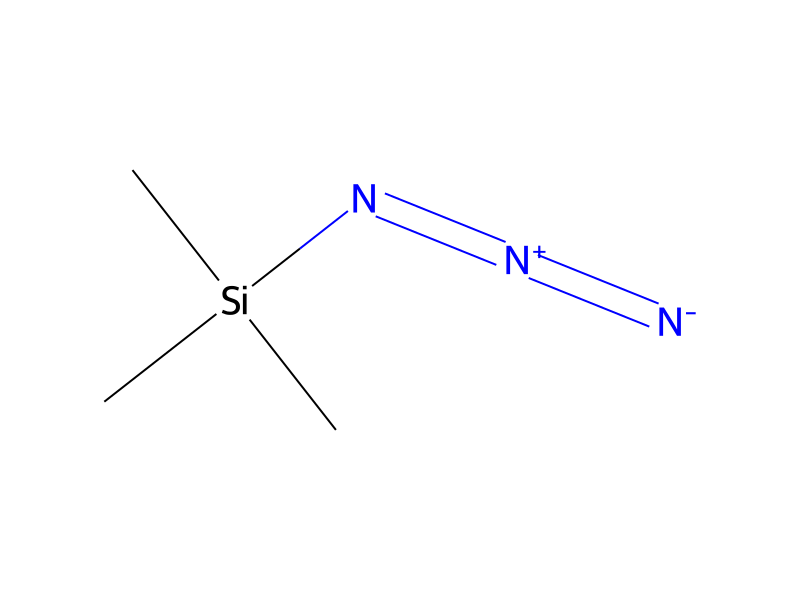
Cl.[F:2][C:3]1([F:8])[CH2:7][CH2:6][NH:5][CH2:4]1.C=O.C([N:13]([CH2:16][CH3:17])[CH2:14][CH3:15])C.[N+](C1C=[CH:26][C:23]([C:24]#[N:25])=[CH:22][CH:21]=1)#[C-].C[Si]([N:32]=[N+:33]=[N-:34])(C)C>CO>[F:2][C:3]1([F:8])[CH2:7][CH2:6][N:5]([CH2:17][C:16]2[N:13]([C:14]3[CH:15]=[CH:26][C:23]([C:24]#[N:25])=[CH:22][CH:21]=3)[N:34]=[N:33][N:32]=2)[CH2:4]1Participants
7





Procedure
To a solution of 3,3-difluoropyrrolidine hydrochloride (129 mg, 0.90 mmol, Sigma-Aldrich) in methanol (2 mL) was added formaldehyde (37% aqueous) (0.067 mL, 0.90 mmol) and triethylamine (0.125 mL, 0.90 mmol). The reaction mixture was shaken at room temperature for 40 minutes. To the reaction mixture was added 4-isocyanobenzonitrile (128 mg, 1.00 mmol) and trimethylsilylazide (0.133 mL, 1.00 mmol). The reaction mixture was shaken at room temperature for a further 18 hours.
Workup
- stirringThe reaction mixture was shaken at room temperature for a further 18 hours
Sources & evidence
- ORD record
- ord-d22528158bdf479483d00f2ddbca2858
- Source dataset
- uspto-grants-2015_08
- Patent number
- US09115132B2
Reaction notes
Loading…