Tetrahydrofuran → Pyrazolo[1,5-a]pyrimidine-3-carboxylic acid [4-(5-chloro-2-difluoromethoxy-phenyl)-2-(5-methyl-hexahydro-pyrrolo[3,4-c]pyrrole-2-carbonyl)-thiazol-5-yl]-amide
Reaktionsgleichung

Br[C:2]1[S:3][C:4]([NH:18][C:19]([C:21]2[CH:22]=[N:23][N:24]3[CH:29]=[CH:28][CH:27]=[N:26][C:25]=23)=[O:20])=[C:5]([C:7]2[CH:12]=[C:11]([Cl:13])[CH:10]=[CH:9][C:8]=2[O:14][CH:15]([F:17])[F:16])[N:6]=1.CN1CC2C(CNC2)C1.C(P(C(C)(C)C)C(C)(C)C)(C)(C)C.[CH2:52]1[CH2:62][CH2:61][N:60]2[C:55](=[N:56][CH2:57][CH2:58][CH2:59]2)CC1.C1C[O:66][CH2:65]C1>CC1C(P(C2C([CH2-])=CC=CC=2)C2C(C)=CC=CC=2)=CC=CC=1.CC1C(P(C2C([CH2-])=CC=CC=2)C2C(C)=CC=CC=2)=CC=CC=1.CC(O)=O.CC(O)=O.[Pd].[Pd].CO.[C-]#[O+].[C-]#[O+].[C-]#[O+].[C-]#[O+].[C-]#[O+].[C-]#[O+].[Mo]>[Cl:13][C:11]1[CH:10]=[CH:9][C:8]([O:14][CH:15]([F:17])[F:16])=[C:7]([C:5]2[N:6]=[C:2]([C:65]([N:56]3[CH2:57][CH:58]4[CH:62]([CH2:61][N:60]([CH3:55])[CH2:59]4)[CH2:52]3)=[O:66])[S:3][C:4]=2[NH:18][C:19]([C:21]2[CH:22]=[N:23][N:24]3[CH:29]=[CH:28][CH:27]=[N:26][C:25]=23)=[O:20])[CH:12]=1Komponenten
Edukt 5




Produkt 1

Reagenzien, Katalysatoren, Lösungsmittel 3



Reaktionsbedingungen
- Temperatur
- 125 °C
Versuchsvorschrift
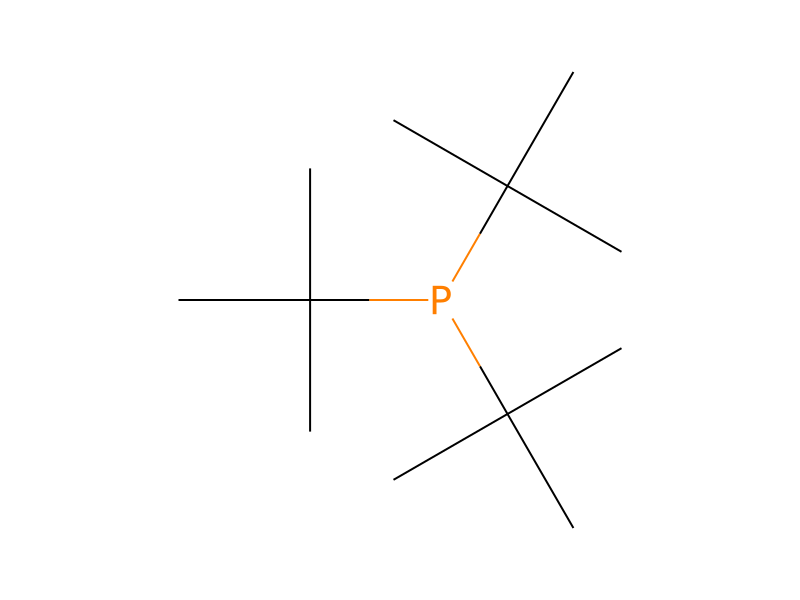
Pyrazolo[1,5-a]pyrimidine-3-carboxylic acid [2-bromo-4-(5-chloro-2-difluoromethoxy-phenyl)-thiazol-5-yl]-amide (200 mg, 0.4 mmol), 2-methyl-octahydro-pyrrolo[3,4-c]pyrrole (70 mg, 0.56 mmol), Herrmann's catalyst (4.5 mg, 0.0048 mmol), tri-tert-butyl phosphine hydrofluoroborate (3.5 mg, 0.011 mmol), molybdenum hexacarbonyl (53 mg, 0.2 mmol) and DBU (40 μl, 0.27 mmol) were dissolved in THF (2 ml) and heated in a microwave at 125° C. for 15 mins. The residue was dissolved in MeOH and loaded onto an SCX-2 cartridge which had been conditioned with MeOH. After flushing with MeOH, the product was eluted with 2M ammonia in MeOH. The resulting yellow glass was purified by HPLC (MDAP, Method 1). Appropriate fractions were combined and evaporated to afford a yellow solid. The residue was dissolved in MeOH and loaded onto an SCX-2 cartridge which had been conditioned with MeOH. After flushing with MeOH, the product was eluted with 2M ammonia in MeOH to give the title compound as a pale yellow solid (18 mg, 8%). LCMS (Method 5) [M+H]+=574.1, RT=3.06 min. 1H NMR (400 MHz, DMSO-d6) δ: (ppm) 10.88 (s, 1H), 9.42 (dd, 1H, J=1.6, 7.0 Hz), 8.81 (s, 1H), 8.61 (dd, 1H, J=1.5, 4.3 Hz), 7.84 (d, 1H, J=2.6 Hz), 7.73 (dd, 1H, J=2.6, 8.8 Hz), 7.54 (d, 1H, J=8.8 Hz), 7.36 (dd, 1H, J=4.3, 7.0 Hz), 7.22 (t, 1H, J=73.1 Hz), 4.24 (dd, 1H, J=8.6, 12.3 Hz), 4.09 (dd, 1H, J=3.9, 12.3 Hz), 3.80 (dd, 1H, J=8.9, 12.6 Hz), 3.59-3.47 (m, 1H), 3.02-2.92 (m, 1H), 2.88-2.80 (m, 1H), 2.65-2.48 (m, 4H), 2.29 (s, 3H).
Aufarbeitung
- customAfter flushing with MeOH
- washthe product was eluted with 2M ammonia in MeOH
- customThe resulting yellow glass was purified by HPLC (MDAP, Method 1)
- customevaporated
- customto afford a yellow solid
- customAfter flushing with MeOH
- washthe product was eluted with 2M ammonia in MeOH
Quellen und Nachweise
- ORD-Eintrag
- ord-f138fbb4fdda4dcf882c367c53ad3469
- Quelldatensatz
- uspto-grants-2016_05
- Patentnummer
- US09346815B2
Notizen zur Reaktion
Wird geladen…