Hydroquinone → Phenol, 2-ethoxy-4-(methoxymethyl)-
Reaction equation

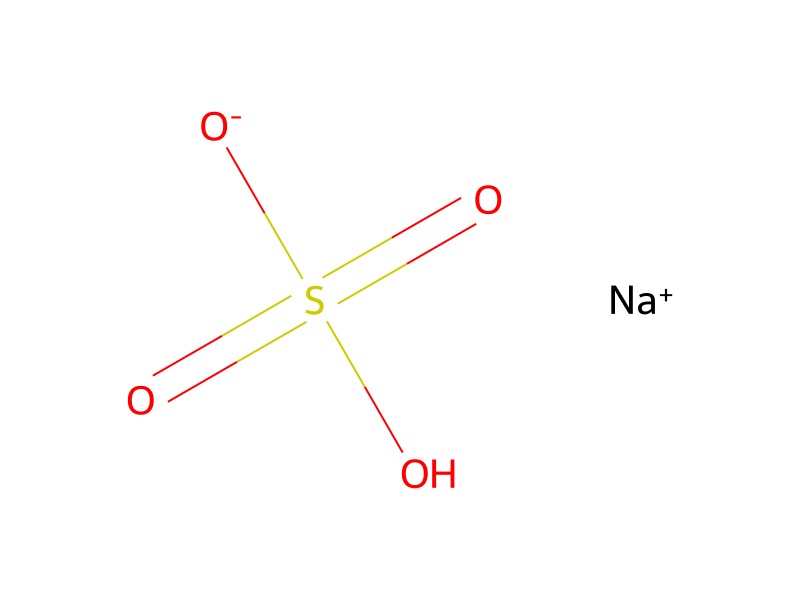
C([CH:3](O)[C:4]1[CH:12]=[CH:11][C:9]([OH:10])=[C:6]([O:7][CH3:8])[CH:5]=1)C.S([O-])(O)(=O)=O.[Na+].[C:20]1(C=CC(O)=CC=1)O.C(=O)([O-])O.[Na+].[CH3:33][OH:34]>>[CH3:33][O:34][CH2:3][C:4]1[CH:12]=[CH:11][C:9]([OH:10])=[C:6]([O:7][CH2:8][CH3:20])[CH:5]=1Participants
6





Conditions
- Temperature
- 50 °C
Procedure
100 g of ethylvanillyl alcohol (4-hydroxy-3-ethoxybenzyl alcohol) are dissolved in 200 ml of methanol. The solution is treated with 10 g of sodium hydrogen sulphate and a knife tip of hydroquinone. The mixture is firstly heated to 50° C. for 2 minutes and left to cool again to room temperature. The methanolic solution is now poured into 85 ml of a saturated sodium hydrogen carbonate solution. The methyl alcohol is distilled off in vacuo, the residue is taken up in toluene, the organic solution is washed neutral with water and evaporated. The residue (95.5 g) is fractionally distilled. There are obtained 61.1 g of chemically and olfactorily pure 4-hydroxy-3-ethoxybenzyl methyl ether; b.p.=77° C./0.03 mmHg; d420 =1.1084; nD20 =1.529.
Workup
- waitleft
- temperatureto cool again to room temperature
- distillationThe methyl alcohol is distilled off in vacuo
- washthe organic solution is washed neutral with water
- customevaporated
- distillationThe residue (95.5 g) is fractionally distilled
Sources & evidence
- ORD record
- ord-437c75b7674c40bbb271caf90f3d3e76
- Source dataset
- uspto-grants-1987_04
- Patent number
- US04657700
Reaction notes
Loading…