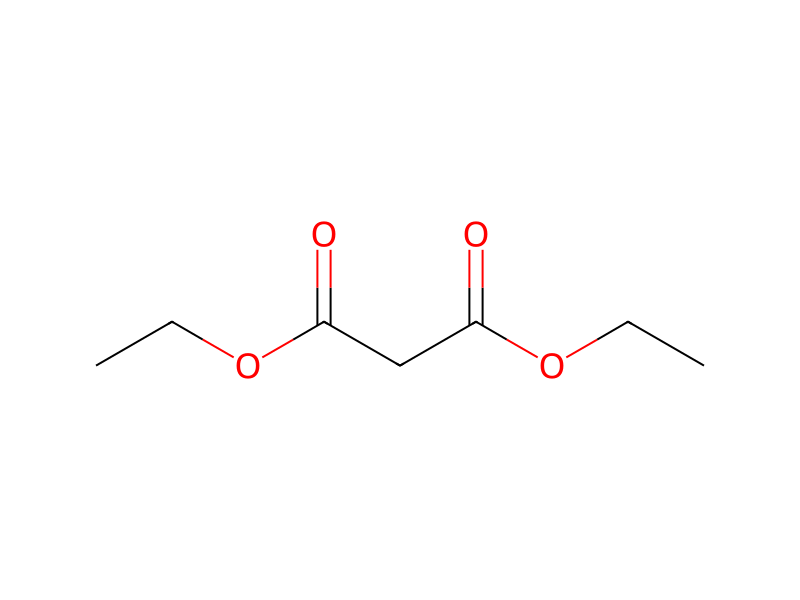
Diethyl Malonate → Ethyl 1,6-dimethyl-4-hydroxy-2-oxo-1,2-dihydropyridine-3-carboxylate
Reaction equation

[C:1]([O:9][CH2:10][CH3:11])(=[O:8])[CH2:2][C:3]([O:5]CC)=O.[H-].[Na+].[CH3:14][N:15]1[C:20]([CH3:21])=[CH:19]C(=O)[O:17][C:16]1=O>O1CCCC1>[CH3:14][N:15]1[C:20]([CH3:21])=[CH:19][C:3]([OH:5])=[C:2]([C:1]([O:9][CH2:10][CH3:11])=[O:8])[C:16]1=[O:17]Participants




Procedure
At room temperature, 1 ml of a solution of 0.71 g diethyl malonate in tetrahydrofuran was added to a mixture of 0.19 g of sodium hydride and 4 ml of tetrahydrofuran and the mixture was stirred for 20 minutes. At room temperature, 3 ml of a solution of 0.59 g 3,4-dimethyl-2H-1,3-oxazine-2,6(3H)-dione in tetrahydrofuran was added to the mixture, followed by stirring for 2 hours under heat refluxing condition. The reaction mixture was concentrated under reduced pressure. To the residue, 10 ml of water and 12 ml of 2 mol/L hydrochloric acid were added, followed by extraction with ethyl acetate. The organic layer was dried with magnesium sulfate, then filtered and concentrated to obtain 0.57 g of ethyl 1,6-dimethyl-4-hydroxy-2-oxo-1,2-dihydropyridine-3-carboxylate represented by the formula:
Workup
- stirringby stirring for 2 hours
- temperatureunder heat
- temperaturerefluxing condition
- concentrationThe reaction mixture was concentrated under reduced pressure
- additionTo the residue, 10 ml of water and 12 ml of 2 mol/L hydrochloric acid were added
- extractionfollowed by extraction with ethyl acetate
- dry with materialThe organic layer was dried with magnesium sulfate
- filtrationfiltered
- concentrationconcentrated
Sources & evidence
- ORD record
- ord-ff31cd6d4b914029b8b7f2857d1ff100
- Source dataset
- uspto-grants-2011_05
- Patent number
- US07943638B2
Reaction notes
Loading…