Dimethylformamide → 1-{[1-(4-Chlorophenyl)cyclopropyl]carbonyl}pyrrolidin-3-ol
Reaction equation

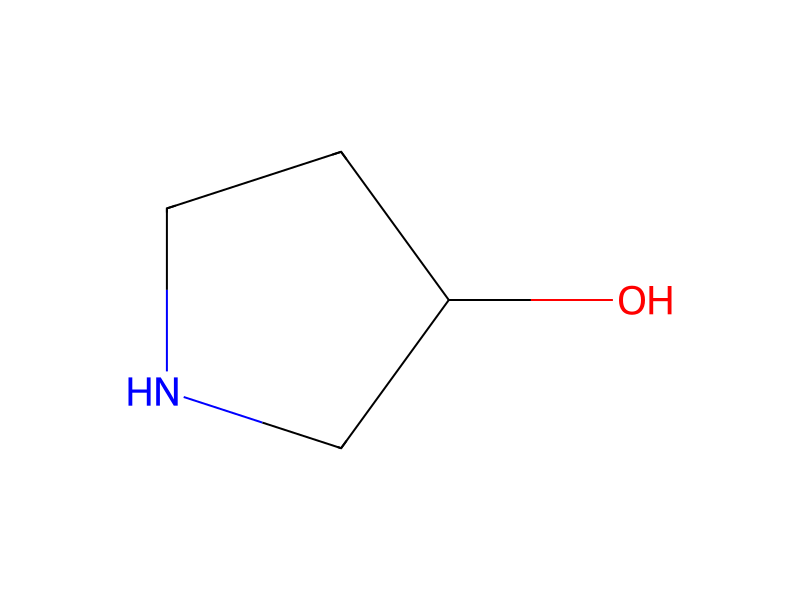
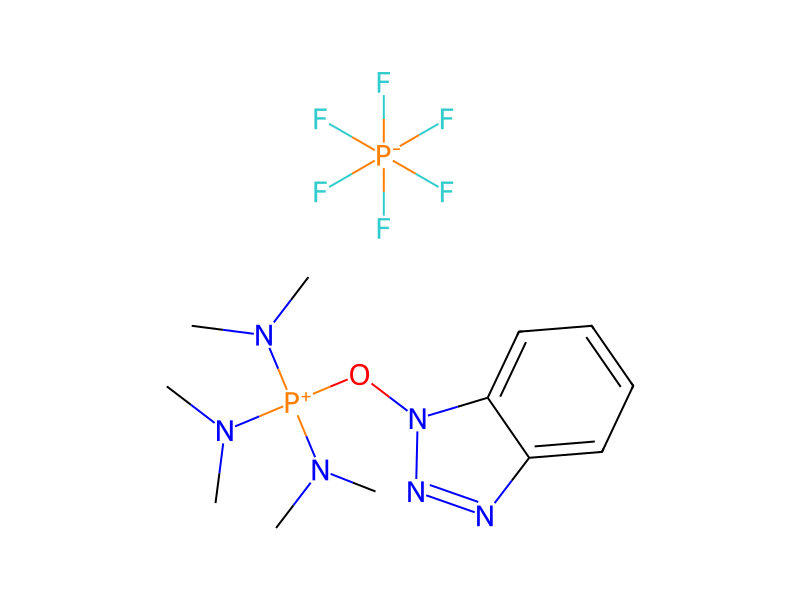
[NH:1]1[CH2:5][CH2:4][CH:3]([OH:6])[CH2:2]1.[Cl:7][C:8]1[CH:13]=[CH:12][C:11]([C:14]2([C:17](O)=[O:18])[CH2:16][CH2:15]2)=[CH:10][CH:9]=1.F[P-](F)(F)(F)(F)F.N1(O[P+](N(C)C)(N(C)C)N(C)C)C2C=CC=CC=2N=N1.CN1CCOCC1.CN(C)C=O>C(OCC)(=O)C>[Cl:7][C:8]1[CH:9]=[CH:10][C:11]([C:14]2([C:17]([N:1]3[CH2:5][CH2:4][CH:3]([OH:6])[CH2:2]3)=[O:18])[CH2:15][CH2:16]2)=[CH:12][CH:13]=1Participants
7
Reactant 5



Product 1

Reagents, catalysts & solvents 1

Procedure
3-Pyrrolidinol (1.81 g, 0.0208 mol) was added to a mixture of 1-(4-chlorophenyl)cyclopropanecarboxylic acid (3.93 g, 0.0200 mol), benzotriazol-1-yloxytris(dimethylamino) phosphonium hexafluorophosphate (8.84 g, 0.0200 mol) and 4-methylmorpholine (9.00 mL, 0.0819 mol) in N,N-dimethylformamide (20.0 mL, 0.258 mol). The mixture was stirred at rt overnight. The mixture was diluted with ethyl acetate (100 mL) and was washed with NaHCO3 (7.5%, 3×30 mL). The organic layer was dried over Na2SO4, filtered and concentrated under reduced pressure. The residue was used directly in the next step without further purification.
Workup
- washwas washed with NaHCO3 (7.5%, 3×30 mL)
- dry with materialThe organic layer was dried over Na2SO4
- filtrationfiltered
- concentrationconcentrated under reduced pressure
- customThe residue was used directly in the next step without further purification
Sources & evidence
- ORD record
- ord-6d3a18d7ce1b46869184fed1d8d7b56e
- Source dataset
- uspto-grants-2011_11
- Patent number
- US08058288B2
Reaction notes
Loading…