Dimethyl malonate → 2-(3-Bromo-5-chloro-phenyl)-malonic acid dimethyl ester
Reaction equation

Br[C:2]1[CH:7]=[C:6]([Cl:8])[CH:5]=[C:4]([Br:9])[CH:3]=1.[C:10]([O:17][CH3:18])(=[O:16])[CH2:11][C:12]([O:14][CH3:15])=[O:13].[H-].[Na+].[NH4+].[OH-]>O1CCOCC1.[Cu]Br.C(Cl)Cl>[CH3:15][O:14][C:12](=[O:13])[CH:11]([C:2]1[CH:7]=[C:6]([Cl:8])[CH:5]=[C:4]([Br:9])[CH:3]=1)[C:10]([O:17][CH3:18])=[O:16]Participants
8
Reactant 4
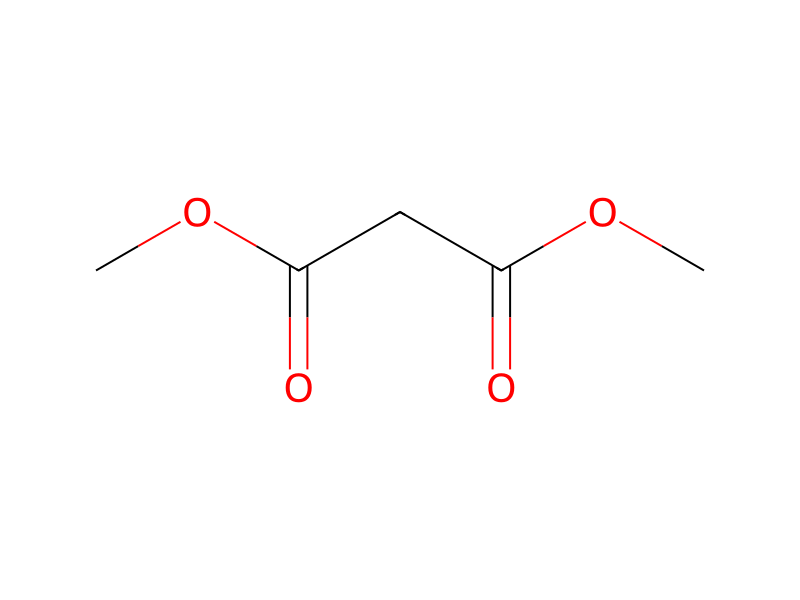



Product 1

Reagents, catalysts & solvents 3



Conditions
- Temperature
- 0 °C
Procedure
1,3-Dibromo-5-chlorobenzene (25 g, 93 mmol), dimethyl malonate (23.4 mL, 204 mmol), and copper(I) bromide (29.2 g, 204 mmol) were combined in 1,4-dioxane (300 mL) and cooled to 0° C. Sodium hydride (60% in mineral oil; 8.2 g, 204 mmol) was added slowly, and the reaction was stirred at room temperature for 20 minutes, and then stirred at 105° C. for 4 hours. After cooling to room temperature, the mixture was worked-up with CH2Cl2 and aqueous NH4OH. The organic layer was concentrated, and the residue was purified by silica gel chromatography (0-20% EtOAc in hexanes) to give the title compound.
Workup
- stirringstirred at 105° C. for 4 hours
- temperatureAfter cooling to room temperature
- concentrationThe organic layer was concentrated
- customthe residue was purified by silica gel chromatography (0-20% EtOAc in hexanes)
Sources & evidence
- ORD record
- ord-78f437b81da9473d909fcf55740c3f88
- Source dataset
- uspto-grants-2011_11
- Patent number
- US08067445B2
Reaction notes
Loading…