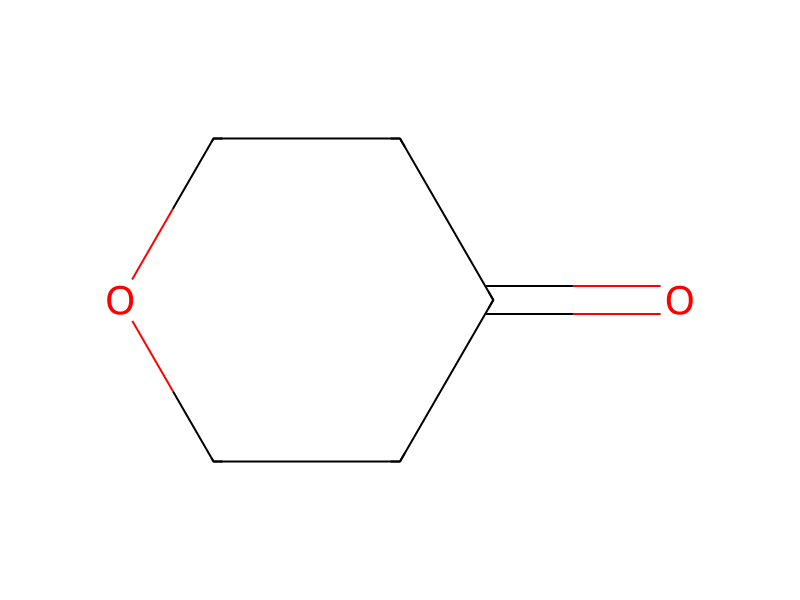
Tetrahydro-4H-pyran-4-one → HCID 178520382, compound
Reaction equation

[NH:1]1[CH2:5][CH2:4][C@@H:3]([NH:6][C:7](=[O:22])[CH2:8][C:9]2[NH:13][C:12]3[CH:14]=[CH:15][CH:16]=[C:17]([C:18]([F:21])([F:20])[F:19])[C:11]=3[N:10]=2)[CH2:2]1.[O:23]1[CH2:28][CH2:27][C:26](=O)[CH2:25][CH2:24]1.C(O[BH-](OC(=O)C)OC(=O)C)(=O)C.[Na+].C([O-])(O)=O.[Na+]>CO.ClCCl>[O:23]1[CH2:28][CH2:27][CH:26]([N:1]2[CH2:5][CH2:4][C@@H:3]([NH:6][C:7](=[O:22])[CH2:8][C:9]3[NH:10][C:11]4[C:17]([C:18]([F:19])([F:20])[F:21])=[CH:16][CH:15]=[CH:14][C:12]=4[N:13]=3)[CH2:2]2)[CH2:25][CH2:24]1Participants
Reactant 4



Product 1

Reagents, catalysts & solvents 2


Procedure
To a solution of N-[(3R)-pyrrolidin-3-yl]-2-[4-(trifluoromethyl)-1H-benzimidazol-2-yl]acetamide (1.0 equiv) in methanol (0.500 M) at room temperature was added tetrahydro-4H-pyran-4-one (1.25 equiv.) followed by sodium triacetoxyborohydride (4 equiv); the reaction mixture was stirred for 16 hours. To the mixture was added NaHCO3 (sat. aq., 10 mL) and dichloromethane (10 mL). The organic layer was separated and the aqueous layer was washed with an addition portion of dichloromethane (10 mL). The organic layers were combined, dried over Na2SO4, filtered and concentrated. The resulting crude product was subjected to flash chromatography (15% MeOH, 1% NH4OH in EtOAc) to afford N-[(3R)-1-(tetrahydro-2H-pyran-4-yl)pyrrolidin-3-yl]-2-[7-(trifluoromethyl)-1H-benzimidazol-2-yl]acetamide as a white solid. 1H-NMR (CD3Cl3) δ: 1.45-1.74 (m, 5H), 2.14-2.22 (m, 2H), 2.33 (m, 1H), 2.60 (m, 2H), 2.83 (m, 1H), 3.34 (m, 2H), 3.91 (m, 2H), 3.95 (s, 2H), 4.39 (m, 1H), 7.27 (t, J=8.0 Hz, 1H), 4.45-7.54 (m, 2H). MS m/z: 397 (M+1).
Workup
- customThe organic layer was separated
- washthe aqueous layer was washed with an addition portion of dichloromethane (10 mL)
- dry with materialdried over Na2SO4
- filtrationfiltered
- concentrationconcentrated
Sources & evidence
- ORD record
- ord-5b00fba60672426cab3b300f5b5f95e9
- Source dataset
- uspto-grants-2011_11
- Patent number
- US08067457B2
Reaction notes
Loading…