Iodoethane → 195202-06-3
Reaction equation

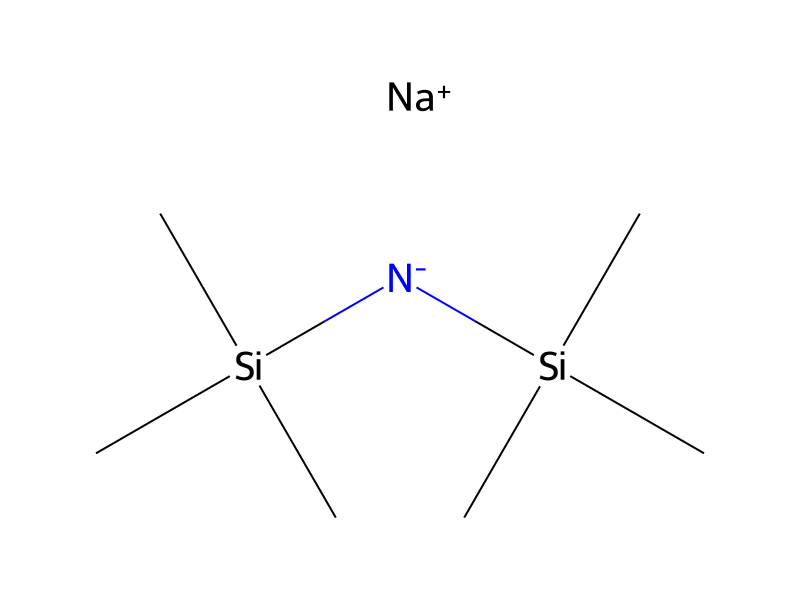
[CH3:1][O:2][C:3]1[CH:4]=[C:5]([CH2:13][C:14]([OH:16])=[O:15])[CH:6]=[C:7]([O:11][CH3:12])[C:8]=1[O:9][CH3:10].C[Si]([N-][Si](C)(C)C)(C)C.[Na+].[CH2:27](I)[CH3:28]>C1COCC1>[CH3:12][O:11][C:7]1[CH:6]=[C:5]([CH:13]([CH2:27][CH3:28])[C:14]([OH:16])=[O:15])[CH:4]=[C:3]([O:2][CH3:1])[C:8]=1[O:9][CH3:10]Participants
Reactant 3


Product 1

Reagents, catalysts & solvents 1

Conditions
- Temperature
- -25 °C
Procedure
A 20 L reactor was purged with nitrogen and 3,4,5-trimethoxyphenylacetic acid (1000 g, 4.42 moles) added followed by THF (4000 mL). The suspension was stirred until all acid was dissolved. The resulting solution was then cooled to −25° C. and a 1.0 M THF solution of sodium bis(trimethylsilyl)amide added via cannula over a period of 1 hour in 2 batches of 500 mL each (10.0 moles total) and the mixture stirred for a further 30 minutes. The temperature of the reaction mixture was not allowed to rise above −15° C. during the course of addition. The resulting cream colored colloidal solution was treated at −25° C. with ethyl iodide (424 mL, 5.30 moles) via cannula over a 1 hour period. (A heat kick of 5° C. may be observed for the initial addition of 50 mL of ethyl iodide. If this occurs, the temperature was adjusted to −25° C. and ethyl iodide addition continued.) The solution was allowed to stir at −25° C. for 2 hours as the colloidal solution slowly changes to a homogeneous brown solution. The brown solution was then allowed to warm to room temperature and stirred overnight. After this time the reaction mixture was quenched, with constant stirring, with water (1500 mL) and allowed to stir for a further 1.5 hours. The organic and aqueous layers were allowed to then separate and the organic layer removed and extracted with water (2×1000 mL). All aqueous solutions were combined and acidified to pH 2 by the addition of a 2N HCl solution (3500 mL) and the solution extracted in batches of ˜400 mL with an roughly equivalent volume of EtOAc (6000 mL total). The combined organic extracts were washed with brine (2×1500 mL) and reduced to a volume of 2000 mL on a rotary evaporator at which time a brown crystalline solid began to precipitate. The solution was allowed to cool and the solid material was filtered, washed with a 1:1 EtOAc:hexanes solution, and the cream colored solids left in a vacuum oven at 40° C. overnight for a first crop of product, AP14900, (582.8 g). The filtrate was further evaporated and two additional crops (166.2 and 158.1 g) were obtained (907.05 g total, 80.6%).
Workup
- additionadded
- dissolutionwas dissolved
- stirringthe mixture stirred for a further 30 minutes
- additionto rise above −15° C. during the course of addition
- customA heat kick of 5° C.
- customwas adjusted to −25° C.
- stirringto stir at −25° C. for 2 hours as the colloidal solution
- temperatureto warm to room temperature
- stirringstirred overnight
- customAfter this time the reaction mixture was quenched, with constant stirring, with water (1500 mL)
- stirringto stir for a further 1.5 hours
- customto then separate
- customthe organic layer removed
- extractionextracted with water (2×1000 mL)
- additionacidified to pH 2 by the addition of a 2N HCl solution (3500 mL)
- extractionthe solution extracted in batches of ˜400 mL with an roughly equivalent volume of EtOAc (6000 mL total)
- washThe combined organic extracts were washed with brine (2×1500 mL)
- customreduced to a volume of 2000 mL on a rotary evaporator at which time a brown crystalline solid
- customto precipitate
- temperatureto cool
- filtrationthe solid material was filtered
- washwashed with a 1:1 EtOAc
- customThe filtrate was further evaporated
- customtwo additional crops (166.2 and 158.1 g) were obtained (907.05 g total, 80.6%)
Sources & evidence
- ORD record
- ord-53fc453040274661a8b9deea5ac3abe0
- Source dataset
- uspto-grants-2015_05
- Patent number
- US09024028B2
Reaction notes
Loading…