Cesium carbonate → US9611269, Example 40
Reaction equation

Cl.C[Si](C)(C)CCOC[N:8]1[C:12]2=[N:13][CH:14]=[CH:15][C:16]([C:17]3[CH:18]=[N:19][N:20]([C:22]4([CH2:26][C:27]#[N:28])[CH2:25][NH:24][CH2:23]4)[CH:21]=3)=[C:11]2[CH:10]=[CH:9]1.Br[C:32]1[CH:33]=[CH:34][C:35]([C:38]([NH:40][C:41]2([C:44]([F:47])([F:46])[F:45])[CH2:43][CH2:42]2)=[O:39])=[N:36][CH:37]=1.C(=O)([O-])[O-].[Cs+].[Cs+].C1C=CC(P(C2C=CC3C(=CC=CC=3)C=2C2C3C(=CC=CC=3)C=CC=2P(C2C=CC=CC=2)C2C=CC=CC=2)C2C=CC=CC=2)=CC=1>C1(C)C=CC=CC=1.C([O-])(=O)C.[Pd+2].C([O-])(=O)C>[C:27]([CH2:26][C:22]1([N:20]2[CH:21]=[C:17]([C:16]3[CH:15]=[CH:14][N:13]=[C:12]4[NH:8][CH:9]=[CH:10][C:11]=34)[CH:18]=[N:19]2)[CH2:25][N:24]([C:32]2[CH:33]=[CH:34][C:35]([C:38]([NH:40][C:41]3([C:44]([F:47])([F:45])[F:46])[CH2:43][CH2:42]3)=[O:39])=[N:36][CH:37]=2)[CH2:23]1)#[N:28]Participants
Reactant 4



Product 1

Reagents, catalysts & solvents 2


Conditions
- Temperature
- 105 °C
Procedure
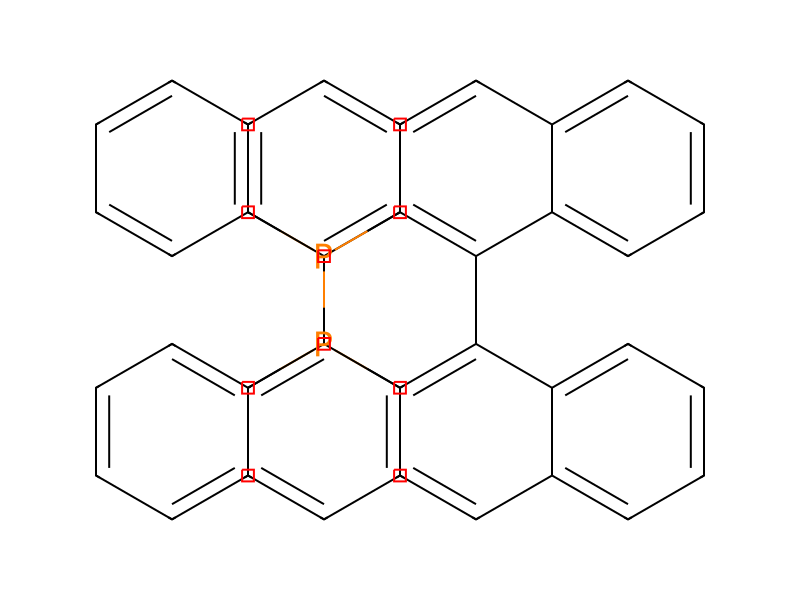
A mixture of {3-[4-(1-{[2-(trimethylsilyl)ethoxy]methyl}-1H-pyrrolo[2,3-b]pyridin-4-yl)-1H-pyrazol-1-yl]azetidin-3-yl}acetonitrile HCl salt (40 mg, 0.08 mmol), 5-bromo-N-[1-(trifluoromethyl)cyclopropyl]pyridine-2-carboxamide 26 mg, 0.083 mmol), cesium carbonate (81 mg, 0.25 mmol), (R)-(+)-2,2′-bis(diphenylphosphino)-1,1′-binaphthyl (5.2 mg, 0.0083 mmol) and palladium acetate (1.9 mg, 0.0083 mmol) in toluene (1 mL) was stirred at 105° C. overnight. After the reaction mixture was cooled to room temperature, the solid was separated, and washed with ethyl acetate twice. The combined organic solution was concentrated under reduced pressure. The residue was dissolved in a solution of trifluoroacetic acid (1 mL) in methylene chloride (1:1, 1 mL). After stirred at room temperature for 1.5 h., the mixture was concentrated under reduced pressure. The residue was dissolved in methanol (1 mL). To the solution was added ethylenediamine (0.6 mL). The mixture was stirred at room temperature for 2 h. The product was purified with RP-HPLC (pH=2) to afford the desired product (3.4 mg) as TFA salt. LCMS (M+H)+: m/z=507.2. 1H NMR (500 MHz, DMSO-d6): δ 11.98 (s, 1H), 9.04 (s, 1H), 8.89 (s, 1H), 8.39 (s, 1H), 8.26 (d, J=5.3 Hz, 1H), 7.93 (d, J=2.6 Hz, 1H), 7.88 (d, J=8.6 Hz, 1H), 7.63-7.57 (m, 1H), 7.45 (d, J=5.3 Hz, 1H), 7.09 (dd, J=8.5, 2.7 Hz, 1H), 6.99 (dd, J=3.2, 1.4 Hz, 1H), 4.68 (d, J=8.9 Hz, 2H), 4.42 (d, J=8.9 Hz, 2H), 3.75 (s, 2H), 1.32-1.23 (m, 2H), 1.22-1.12 (m, 2H).
Workup
- temperatureAfter the reaction mixture was cooled to room temperature
- customthe solid was separated
- washwashed with ethyl acetate twice
- concentrationThe combined organic solution was concentrated under reduced pressure
- dissolutionThe residue was dissolved in a solution of trifluoroacetic acid (1 mL) in methylene chloride (1:1, 1 mL)
- stirringAfter stirred at room temperature for 1.5 h.
- concentrationthe mixture was concentrated under reduced pressure
- dissolutionThe residue was dissolved in methanol (1 mL)
- additionTo the solution was added ethylenediamine (0.6 mL)
- stirringThe mixture was stirred at room temperature for 2 h
- customThe product was purified with RP-HPLC (pH=2)
Sources & evidence
- ORD record
- ord-18ef30ef02124d1da15a37e7e9cd0a0c
- Source dataset
- uspto-grants-2015_05
- Patent number
- US09023840B2
Reaction notes
Loading…