2,6-Dichloropyrazine → HCID 89400340, compound
Reaction equation

CCN(C(C)C)C(C)C.Cl[C:11]1[CH:16]=[N:15][CH:14]=[C:13]([Cl:17])[N:12]=1.Cl.[F:19][C:20]1[CH:21]=[CH:22][C:23]([C@@H:26]([NH2:28])[CH3:27])=[N:24][CH:25]=1>CN1CCCC1=O>[Cl:17][C:13]1[N:12]=[C:11]([NH:28][C@H:26]([C:23]2[CH:22]=[CH:21][C:20]([F:19])=[CH:25][N:24]=2)[CH3:27])[CH:16]=[N:15][CH:14]=1Participants
5


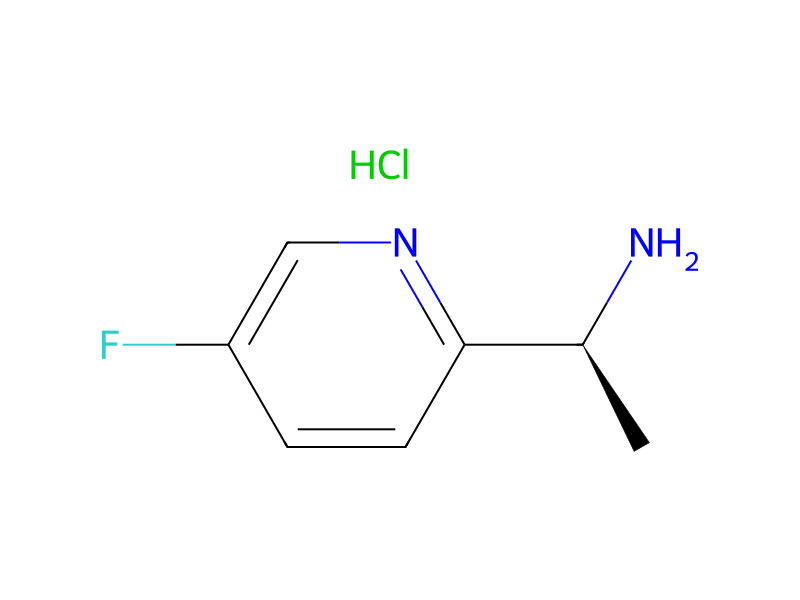


Conditions
- Temperature
- 180 °C
Procedure
N,N′-Diisopropylethylamine (2.50 mL, 14.35 mmol) was added dropwise to a solution of 2,6-dichloropyrazine (525 mg, 3.52 mmol) and (S)-1-(5-fluoropyridin-2-yl)ethanamine hydrochloride (prepared as described in WO2006/123113, 750 mg, 3.52 mmol) in 1-methylpyrrolidin-2-one (4 mL) and the resulting mixture was stirred and heated for 6 hours at 180° C. in a microwave oven. After cooling to ambient temperature, the solvent was evaporated under reduced pressure and the residue was purified by flash chromatography (7:3 hexanes/ethyl acetate) to give the title compound (520 g, 57%) as a brown oil.
Workup
- temperatureAfter cooling to ambient temperature
- customthe solvent was evaporated under reduced pressure
- customthe residue was purified by flash chromatography (7:3 hexanes/ethyl acetate)
Sources & evidence
- ORD record
- ord-339d1fb9baef4d30910cb3e5bb288928
- Source dataset
- uspto-grants-2015_05
- Patent number
- US09034311B2
Reaction notes
Loading…