Hydroquinone → Formaldehyde
Reaction equation

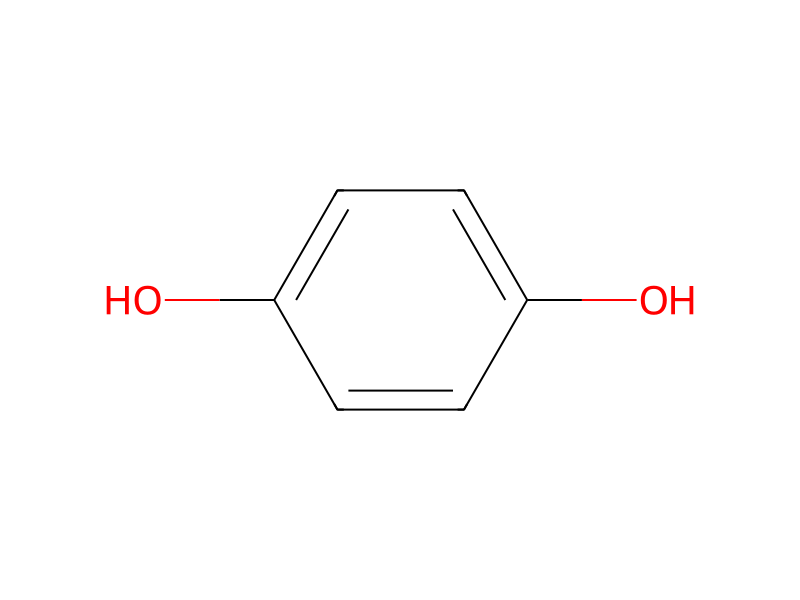
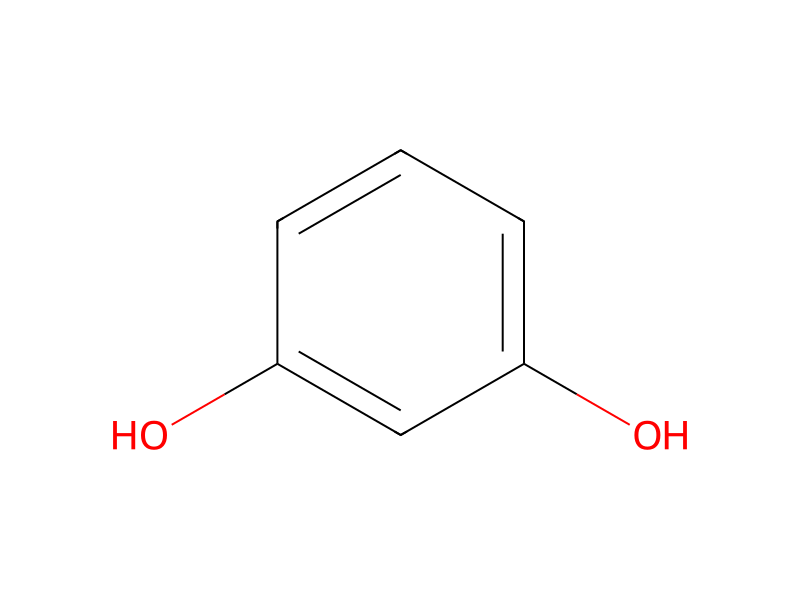
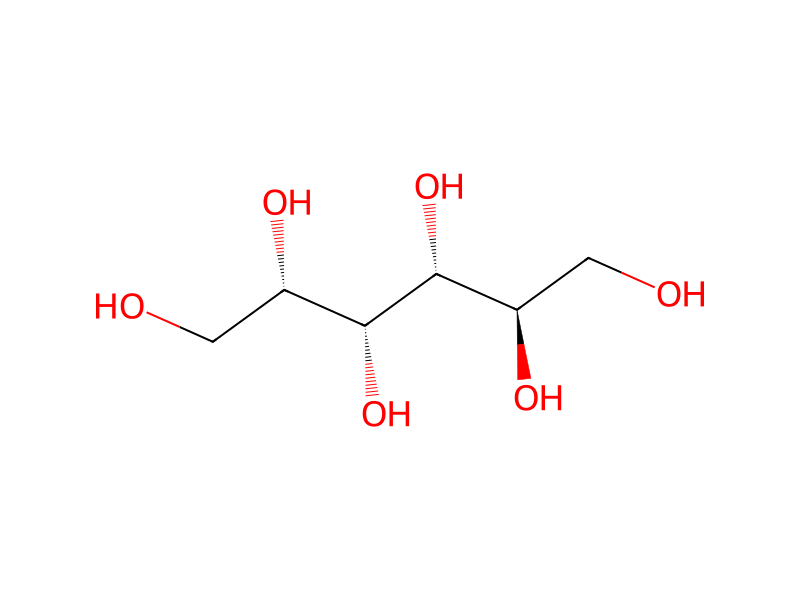
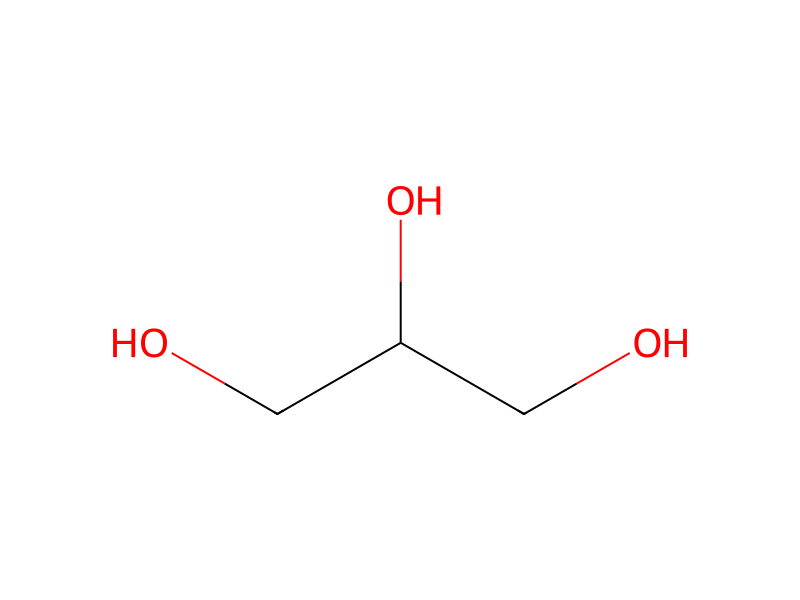
[C:1]1([CH:8]=[CH:7][C:5]([OH:6])=[CH:4][CH:3]=1)[OH:2].[C:9]1([CH:16]=[CH:15][CH:14]=[C:12]([OH:13])[CH:11]=1)O.O[CH2:18][C@@H:19]([C@H:21]([C@@H:23]([C@@H:25]([CH2:27]O)O)O)O)[OH:20]>OCC(CO)O>[OH:6][C:5]1[CH:7]=[CH:8][CH:1]=[CH:3][C:4]=1[CH2:18][C:14]1[CH:15]=[CH:16][CH:9]=[CH:11][C:12]=1[OH:13].[C:19]1([OH:20])[CH:18]=[CH:27][CH:25]=[CH:23][CH:21]=1.[CH2:1]=[O:2]Participants
Reactant 3
Product 3



Reagents, catalysts & solvents 1
Procedure
When more than one film forming polymer is used, an epoxy-containing polymer or copolymer can be used along with a nontacky polymer. Separate aqueous emulsions of the epoxy-containing polymer and the nontacky film forming polymer can be combined into a single emulsion or one single aqueous emulsion can be prepared wherein the epoxy-containing polymer and limited tack film forming polymer are solubilized, dispersed or emulsified in the aqueous emulsion. In preparing a single emulsion having the blended epoxy-containing polymer and nontacky film forming polymer, any nonionic, cationic, anionic or amphoteric emulsifying agents can be used. It is preferred to use nonionic emulsifying agents having an HLB in the range to match the ionic character of the blended polymers. Nonexclusive examples include: epoxy-containing polymers or copolymers which have an epoxy equivalent weight in the range of about 180 to about 230 grams of polymer for 1 gram equivalent of epoxide. The epoxy-containing polymer or copolymer assists in yielding treated glass fibers with good wettability for fast wet-out of the glass fibers in polymeric matrices such as saturated and unsaturated polyesters and epoxies. Epoxy polymers with epoxy equivalent weights greater than about 230 grams of polymer for one gram equivalent of epoxide will produce a glass fiber reinforced polymeric panel that is hazy. If the epoxy equivalent weight is less than about 180 grams, the treated glass fibers are too sticky. The epoxy equivalent weight or epoxide equivalent which is defined as the weight of resin in grams which contains one gram equivalent of epoxy can be determined by any method known to those skilled in the art. Nonexclusive examples include infrared spectroscopy and wet analysis such as the titration method with sodium hydroxide after the addition of pyridinium chloride in pyridine to the epoxy polymer. When the epoxy resin is used its amount in the aqueous treating composition can vary from a minor to a major portion of the solids of the aqueous treating composition. The epoxy resins that can be used can be epoxy resins prepared from bisphenol A and a comonomer such as epihalohydrin to form the diglycidyl ether of bisphenol A. Epoxy resins obtained by the use of hydroxyl compounds such as 4-isopropylidene bis(2,6-dibromophenol), dihydroxybenzenes, 1,1,2,2-tetra(p-hydroxy phenyl) ethane, 1,4-butane diol, glycerol, polyoxyalkylene (glycol), linoleic dimer acids, 1,1,3-tris(p-hydroxyphenyl)-propane and the like in reaction with epihalohydrin can also be used. Also, epoxy resins produced from aliphatic glycidyl ethers can be used. Also, epoxy resins produced by the reaction of monoepoxy compounds with themselves or other epoxy generating compounds can be used, for example, unsaturated monoepoxy compounds may be homopolymerized through the unsaturation to produce polyepoxy polymer like poly(allyl glycidyl ether). Particularly, suitable epoxy resins are the phenolic epoxies which are obtained by the reaction of a stoichiometric excess of an epihalohydrin such as epichlorohydrin with a polyhydric phenol such as bis(4-hydroxyphenol)-2,2propane, bis(hydroxyphenyl) methane which is obtained by the acid condensation of two moles of phenol with one mole of formaldehyde, hydroquinone, resorcinol or with polyhydroxy alcohol such as polyalkylene glycols, sorbitol, glycerol and the like. By varying these portions of the epihalohydrin, polyhydroxy compound and/or by varying the reaction conditions, compounds of low, intermediate or higher molecular weights may be produced which range from liquids to solids. Useful commercially available epoxy resins include that available from Shell Chemical Corporation under the trade designation Epon® 828 epoxy resin, and the epoxies available from Ciba-Geigy under the trade designation Araldite® resins, and from Dow Chemical Company under the trade designations D.E.R. or D.E.N. resins, and the Epi-Rez® resins available from Celanese Polymer Specialties Company. A suitable epoxy-containing copolymer which can be used is the epoxidized polyvinyl acetate copolymer available from National Starch under the trade designation 1971 resin.
Sources & evidence
- ORD record
- ord-e0d5288049454e1d822d6ba95fa91dbc
- Source dataset
- uspto-grants-1988_06
- Patent number
- US04752527
Reaction notes
Loading…