3,4-Dichlorobenzyl chloride → HCID 64844081, compound
Reaction equation

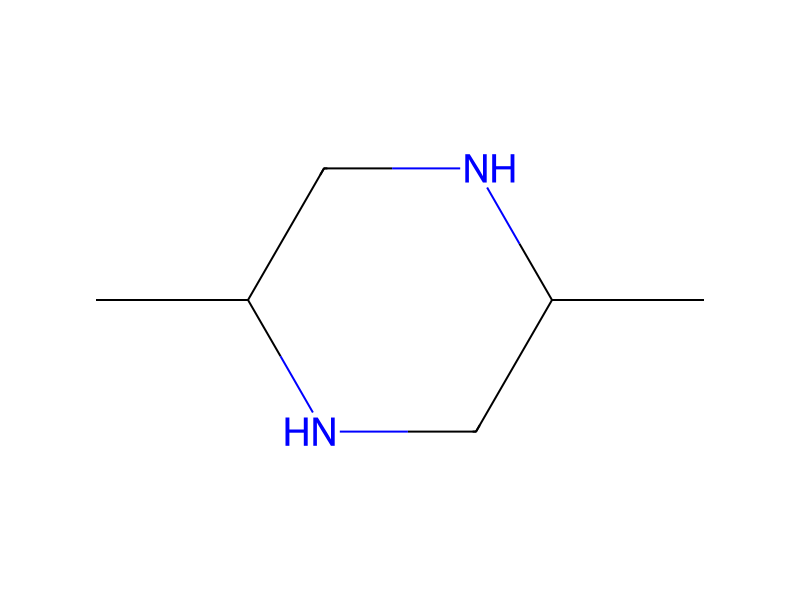
[Cl:1][C:2]1[CH:7]=[CH:6][C:5]([CH2:8]Cl)=[CH:4][C:3]=1[Cl:10].[CH3:11][CH:12]1[CH2:17][NH:16][CH:15]([CH3:18])[CH2:14][NH:13]1.CCOC(C)=O.C(=O)([O-])[O-].[Na+].[Na+]>CN(C=O)C>[Cl:10][C:3]1[CH:4]=[C:5]([CH:6]=[CH:7][C:2]=1[Cl:1])[CH2:8][N:13]1[CH2:14][CH:15]([CH3:18])[NH:16][CH2:17][CH:12]1[CH3:11]Participants
6
Reactant 4



Product 1

Reagents, catalysts & solvents 1

Procedure
A solution of 1,2-dichloro-4-chloromethyl-benzene (1.1 ml 7.89 mmol) in DMF (5 ml) was added to 2,5-dimethyl-piperazine (1.0 g, 8.77 mmol) dissolved in DMF (25 ml). The reaction was stirred over night, poured into a mixture of EtOAc and sodium carbonate (5%). The water phase was washed twice with EtOAc and the combined organic phase once with brine, and dried over sodium sulfate. After evaporation the crude was dissolved in methanol. The dibensylated piperazine does not dissolve. The filtrate was filtered through a short silica column, using methanol as eluant and evaporated to give the pure product. Yield 812 mg, 38%
Workup
- washThe water phase was washed twice with EtOAc
- dry with materialthe combined organic phase once with brine, and dried over sodium sulfate
- customAfter evaporation the crude
- dissolutionwas dissolved in methanol
- dissolutionThe dibensylated piperazine does not dissolve
- filtrationThe filtrate was filtered through a short silica column
- customevaporated
- customto give the pure product
Sources & evidence
- ORD record
- ord-55575e400eb04c4d910ace490022045a
- Source dataset
- uspto-grants-2005_08
- Patent number
- US06927222B2
Reaction notes
Loading…