Imidazole → HCID 73505654, compound
Reaction equation

N1C=CN=C1.[NH2:6][C:7]1[N:12]=[CH:11][C:10]2[C:13]([NH:35][C:36](=[O:39])[O:37][CH3:38])=[N:14][N:15](C(C3C=CC=CC=3)(C3C=CC=CC=3)C3C=CC=CC=3)[C:9]=2[CH:8]=1.[C:40]([N:47]1[CH:51]=[CH:50]N=C1)(N1C=CN=C1)=[O:41].Cl.[Cl:53][C:54]1[CH:59]=[CH:58][C:57]([C@H](N)C)=[CH:56][C:55]=1[O:63][CH3:64].CCN(C(C)C)C(C)C.C([SiH](CC)CC)C>C(Cl)Cl>[Cl:53][C:54]1[CH:59]=[CH:58][C:57]([C@H:51]([NH:47][C:40](=[O:41])[NH:6][C:7]2[N:12]=[CH:11][C:10]3[C:13]([NH:35][C:36](=[O:39])[O:37][CH3:38])=[N:14][NH:15][C:9]=3[CH:8]=2)[CH3:50])=[CH:56][C:55]=1[O:63][CH3:64]Participants
Reactant 6





Product 1

Reagents, catalysts & solvents 1

Procedure
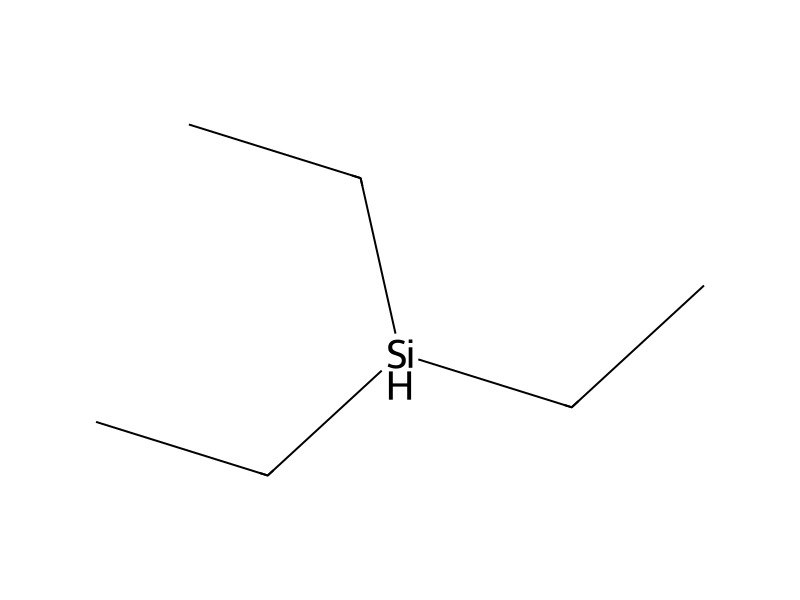
To a 8 mL vial charged with imidazole (18 mg, 0.26 mmol) and crude methyl (6-amino-1-trityl-1H-pyrazolo[4,3-c]pyridin-3-yl)carbamate (23.8 mg, 0.053 mmol) in DCM (2 ml) was added 1,1′-carbonyldiimidazole (26 mg, 0.159 mmol). The reaction mixture was stirred at room temperature for 5 h, leading to a clear yellow solution. (R)-1-(4-chloro-3-methoxyphenyl)ethanamine HCl (23.41 mg, 0.105 mmol) and DIEA (0.046 ml, 0.264 mmol) was added. The vial was capped and the contents stirred at room temperature for 16 h. The reaction mixture was concentrated and the resulting residue was re-dissolved in TFA (1 ml) and stirred at room temperature for 20 minutes. Triethylsilane (0.013 ml, 0.079 mmol) was added drop wise, and the reaction mixture stirred for an additional 5 minutes. The mixture was concentrated, re-dissolved in DMSO (1.5 mL) and submitted for purification by mass-triggered preparative HPLC to afford (R)-methyl (6-(3-(1-(4-chloro-3-methoxyphenyl)ethyl)ureido)-1H-pyrazolo[4,3-c]pyridin-3-yl)carbamate. TFA (4.4 mg, 8.26 μmol, 15.67% yield) and 1,1′-(1H-pyrazolo[4,3-c]pyridine-3,6-diyl)bis(3-((R)-1-(4-chloro-3-methoxyphenyl)ethyl)urea), TFA (5 mg, 7.28 μmol, 13.82% yield) as white solids. (Example 322) MS ESI calc'd. For C18H20ClN6O4 [M+H]+ 419. found 419. 1H NMR (ppm, 600 MHz, DMSO-d6): δ 10.40 (s, 1H); 8.95 (s, 1H); 7.81 (br s, 1H); 7.43 (s, 1H); 7.35 (d, J=8.1 Hz, 1H); 7.09 (d, J=1.9 Hz, 1H); 6.90 (dd, J=8.2, 1.9 Hz, 1H); 4.84 (t, J=7.2 Hz, 1H); 3.83 (s, 3H); 3.68 (s, 3H); 1.39 (d, J=6.9 Hz, 3H). (Example 314) MS ESI calc'd. For C26H28Cl2N7O4 [M+H]+ 572. found 572. 1H NMR (600 MHz, DMSO-d6): 9.70 (s, 1H); 9.06 (s, 1H); 7.84 (br s, 2H); 7.34-7.36 (m, 3H); 7.09-7.10 (m, 2H); 6.89-6.91 (m, 2H); 4.89 (t, J=7.2 Hz, 1H); 4.82-4.86 (m, 1H); 3.82 (s, 6H); 1.40 (dd, J=6.9 Hz, 6H).
Workup
- customThe vial was capped
- stirringthe contents stirred at room temperature for 16 h
- concentrationThe reaction mixture was concentrated
- dissolutionthe resulting residue was re-dissolved in TFA (1 ml)
- stirringstirred at room temperature for 20 minutes
- stirringthe reaction mixture stirred for an additional 5 minutes
- concentrationThe mixture was concentrated
- dissolutionre-dissolved in DMSO (1.5 mL)
- customsubmitted for purification by mass-triggered preparative HPLC
Sources & evidence
- ORD record
- ord-e3c419be24974965998be8bb834919c3
- Source dataset
- uspto-grants-2016_01
- Patent number
- US09233979B2
Reaction notes
Loading…