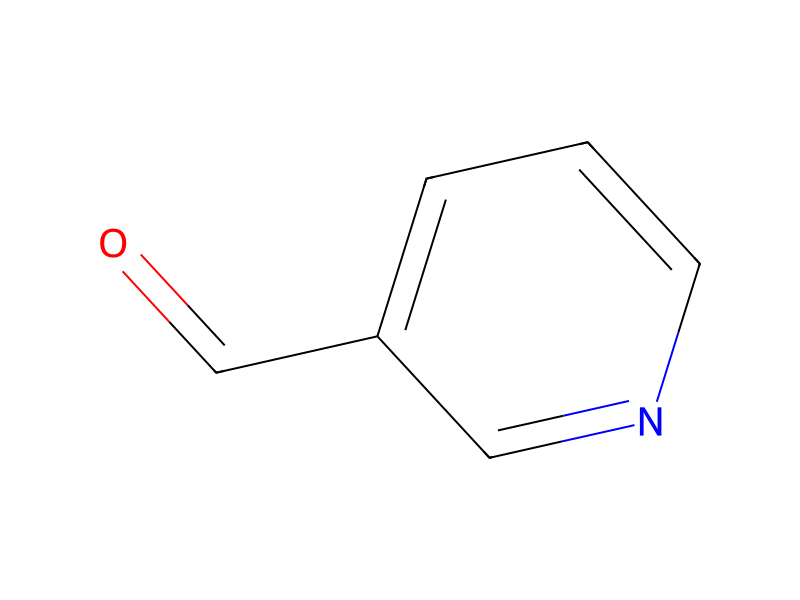
3-Pyridinecarboxaldehyde → HCID 178514003, compound
Reaction equation

[NH2:1][C:2]1[C:7]([NH2:8])=[C:6]([NH:9][C@@H:10]2[C@@H:15]3[CH2:16][C@@H:12]([CH:13]=[CH:14]3)[C@@H:11]2[C:17]([NH2:19])=[O:18])[C:5]([Cl:20])=[CH:4][N:3]=1.[N:21]1[CH:26]=[CH:25][CH:24]=[C:23]([CH:27]=O)[CH:22]=1.C([O-])(=O)C.[NH4+]>>[Cl:20][C:5]1[C:6]([NH:9][C@@H:10]2[C@@H:15]3[CH2:16][C@@H:12]([CH:13]=[CH:14]3)[C@@H:11]2[C:17]([NH2:19])=[O:18])=[C:7]2[N:8]=[C:27]([C:23]3[CH:22]=[N:21][CH:26]=[CH:25][CH:24]=3)[NH:1][C:2]2=[N:3][CH:4]=1Participants
4



Procedure
In a similar fashion to Compound LXXXVII, (1S,2S,3R,4R)-3-(2,3-Diamino-5-chloro-pyridin-4-ylamino)-bicyclo[2.2.1]hept-5-ene-2-carboxylic acid amide (75 mg, 0.26 mmol), 3-Pyridinecarboxaldehyde (26.4 uL, 0.281 mmol), and Ammonium acetate (39.4 mg, 0.511 mmol) were reacted to produce 5.5 mg (6%) of the title compound. (300 MHz, DMSO-d6) 13.50 (s, 1H), 9.31 (s, 1H), 8.66 (d, J=5 Hz, 1H), 8.45 (d, J=8 Hz, 1H), 7.99 (s, 1H), 7.78 (s, 1H), 7.59 (q, J=13 Hz, 6 Hz, 1H), 7.29 (d, J=8 Hz, 1H), 7.24 (s, 1H), 6.42 (m, 1H), 6.37 (m, 1H), 5.18 (t, J=17 Hz, 8.5 Hz, 1H), 2.90 (s, 1H), 2.80 (s, 1H), 2.63 (d, J=8 Hz, 1H), 2.24 (d, J=8 Hz, 1H), 1.38 (d, J=8 Hz, 1H). MS=381 (M+H), HPLC: 1.69 min. (G Method)
Sources & evidence
- ORD record
- ord-b9e9eb5016484979b19dafc924730069
- Source dataset
- uspto-grants-2016_01
- Patent number
- US09238656B2
Reaction notes
Loading…