3-Hydroxybenzaldehyde → 3-(2,2-difluoroethoxy)benzaldehyde
Reaction equation

[OH:1][C:2]1[CH:3]=[C:4]([CH:7]=[CH:8][CH:9]=1)[CH:5]=[O:6].FC(F)(F)S(O[CH2:16][CH:17]([F:19])[F:18])(=O)=O.C([O-])([O-])=O.[Cs+].[Cs+].O>CN(C=O)C.CCOC(C)=O>[F:18][CH:17]([F:19])[CH2:16][O:1][C:2]1[CH:3]=[C:4]([CH:7]=[CH:8][CH:9]=1)[CH:5]=[O:6]Participants
7
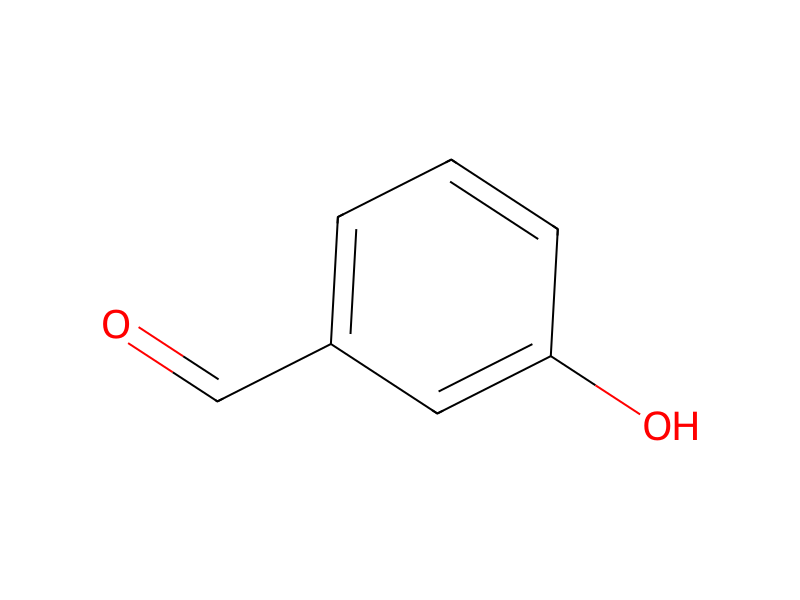






Procedure
A mixture of commercially available 3-hydroxybenzaldehyde (2.000 g; 16.40 mmol), 2,2-difluoroethyl trifluoromethanesulfonate (3.506 g; 16.40 mmol), and Cs2CO3 (8.004 g; 24.60 mmol) in anh. DMF (30 ml) was stirred at rt, under nitrogen, for 17 h. Water and AcOEt were added and the organic layer was washed with water, dried over anh. MgSO4, filtered, and concentrated to dryness under reduced pressure affording 3-(2,2-difluoroethoxy)benzaldehyde as a yellow oil. LC-MS (conditions A): tR=0.67 min.; no ionisation.
Workup
- washthe organic layer was washed with water
- dry with materialdried over anh. MgSO4
- filtrationfiltered
- concentrationconcentrated to dryness under reduced pressure
Sources & evidence
- ORD record
- ord-8a1a7b2c83ba4b5aaea350eca51a0eae
- Source dataset
- uspto-grants-2016_01
- Patent number
- US09242970B2
Reaction notes
Loading…