Toluene → P-Toluic Acid
Reaction equation

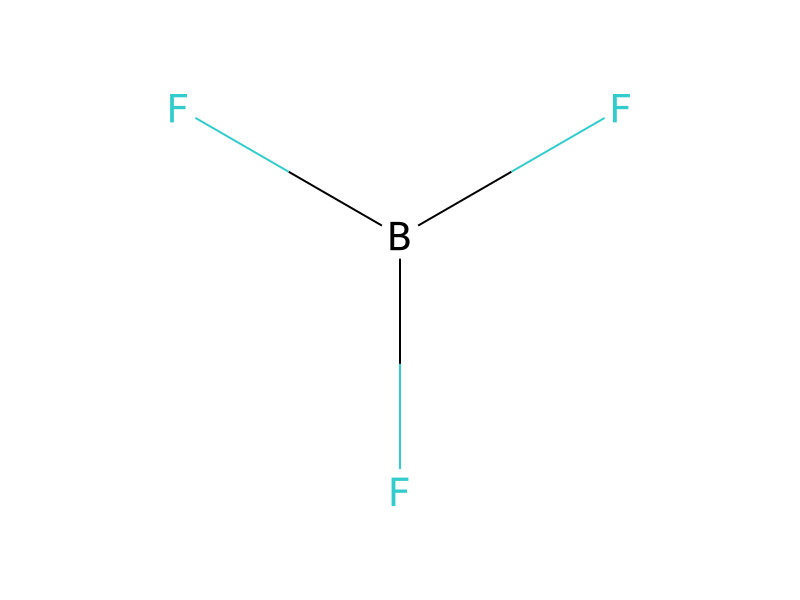
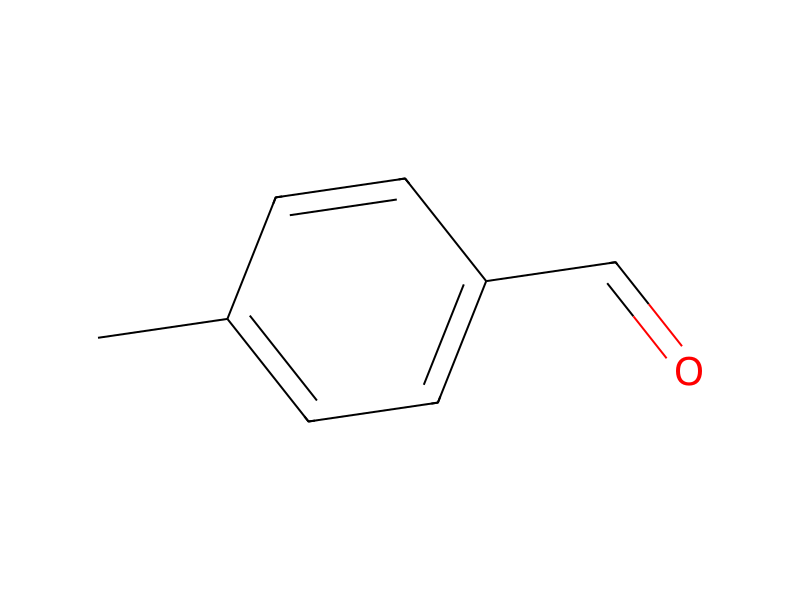
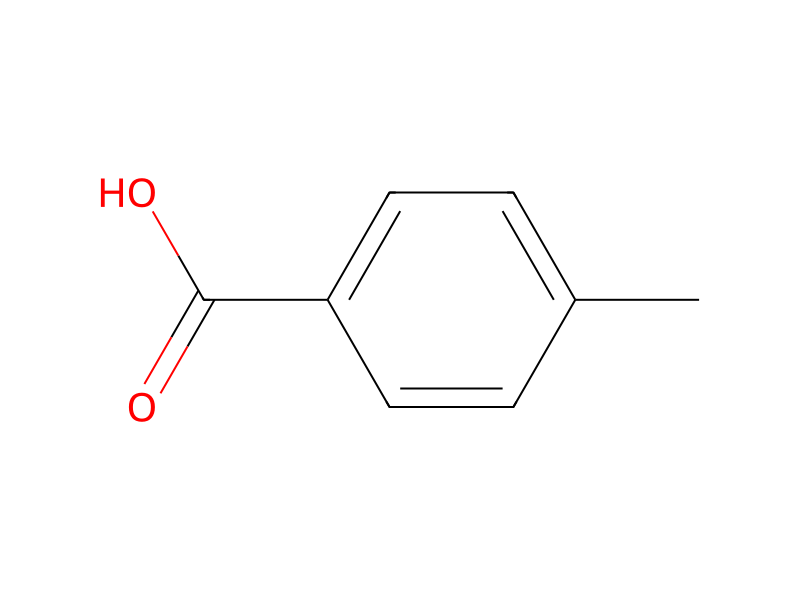
[C:1]1([CH3:9])[CH:6]=[CH:5][C:4]([CH:7]=[O:8])=[CH:3][CH:2]=1.C1(C)C=CC=CC=1.[C]=[O:18].B(F)(F)F>C(OCC)(=O)C.CC(C)=O>[CH3:9][C:1]1[CH:2]=[CH:3][C:4]([C:7]([OH:18])=[O:8])=[CH:5][CH:6]=1Participants
Reactant 4


Product 1
Reagents, catalysts & solvents 2


Procedure
As described above, p-tolualdehyde, starting material of the present invention, is synthesized through reaction of toluene with carbon monoxide in the presence of a catalyst of HF--BF3 or HCl--AlCl3, and the resulting crude p-tolualdehyde is in a form of complex with the catalyst. After passage through the ordinary step of decomposing the complex, the crude p-tolualdehyde is purified to a purity of about 93 % by distillation. The resulting p-tolualdehyde has a sufficient quality as an industrial raw material for the ordinary reaction processes other than the process l the present invention. That is, even if the resulting p-tolualdehyde as such is autooxidized with air under pressure in a solvent of acetone or ethyl acetate in the absence of catalyst, a long induction period is required for the start of reaction, and even if the reaction is started, a sufficient reaction rate cannot be obtained. Even with a sufficient time, the per-p-toluic acid yield is low, and thus the resulting p-tolualdehyde of purity of about 99 % is not industrially preferable as the starting material for the present invention.
Workup
- distillationthe crude p-tolualdehyde is purified to a purity of about 93 % by distillation
- customfor the ordinary reaction
- customa long induction period is required for the start of reaction
- customa sufficient reaction rate cannot be obtained
Sources & evidence
- ORD record
- ord-4ffde770ed6b4d0f9aa331e496305fc2
- Source dataset
- uspto-grants-1977_03
- Patent number
- US04010195
Reaction notes
Loading…