Cesium carbonate → HCID 178518647, compound
Reaction equation

[NH2:1][C:2]1[N:10]=[C:9]2[C:5]([NH:6][C:7](=[O:18])[N:8]2[C@H:11]2[CH2:16][CH2:15][C@H:14]([OH:17])[CH2:13][CH2:12]2)=[C:4]([Cl:19])[N:3]=1.C(=O)([O-])[O-].[Cs+].[Cs+].C1C=CC(P(C2C(C3C(P(C4C=CC=CC=4)C4C=CC=CC=4)=CC=C4C=3C=CC=C4)=C3C(C=CC=C3)=CC=2)C2C=CC=CC=2)=CC=1.Br[C:73]1[CH:78]=[C:77]([F:79])[CH:76]=[CH:75][C:74]=1[N+:80]([O-:82])=[O:81]>CC([O-])=O.CC([O-])=O.[Pd+2].C1(C)C=CC=CC=1>[Cl:19][C:4]1[N:3]=[C:2]([NH:1][C:73]2[CH:78]=[C:77]([F:79])[CH:76]=[CH:75][C:74]=2[N+:80]([O-:82])=[O:81])[N:10]=[C:9]2[C:5]=1[NH:6][C:7](=[O:18])[N:8]2[C@H:11]1[CH2:12][CH2:13][C@H:14]([OH:17])[CH2:15][CH2:16]1Participants





Procedure
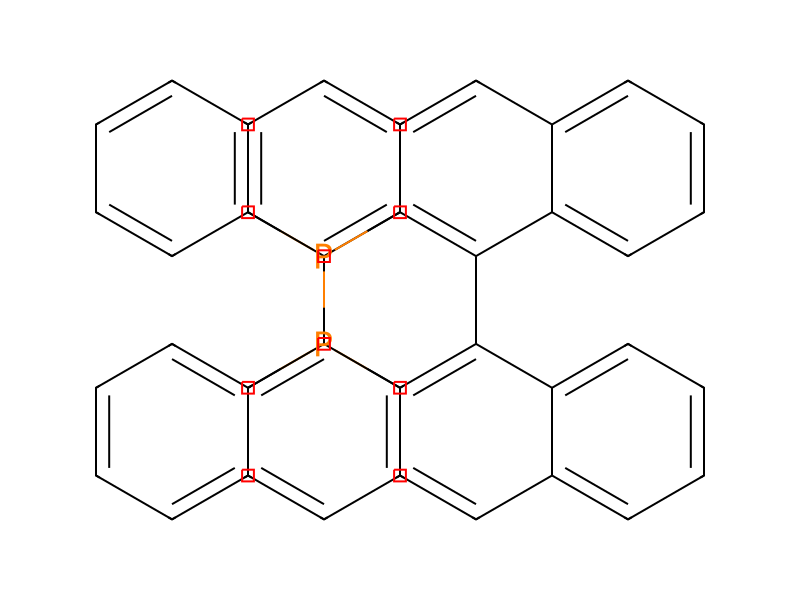
All glassware was dried in vacuum oven at 60° C. for 1 day prior to reaction. Finely ground cesium carbonate and finely ground 2-amino-6-chloro-9-(trans-4-hydroxycyclohexyl)-7H-purin-8(9H)-one were dried at 60° C. under high vacuum for one day prior to experiment. To an oven-dried 2-neck flask under Ar was added 2-amino-6-chloro-9-(trans-4-hydroxycyclohexyl)-7H-purin-8(9H)-one (6.78 g, 23.9 mmol), cesium carbonate (11.71 g, 35.9 mmol, 1.5 equiv.) and anhydrous toluene (100 mL) and the mixture was stirred at room temperature for 15 min. Then, Pd(OAc)2 (2.41 g, 3.59 mmol, 0.15 equiv.), racemic BINAP (5.21 g, 8.36 mmol, 0.35 equiv.) and 1-bromo-5-fluoro-2-nitrobenzene (6.84 g, 31.07 mmol, 1.3 equiv.) were added as solids, under Ar, and the reaction mixture was stirred at room temperature for 15 min, then stirred at 100° C. for 2 days (LC-MS shows ratio of desired product/starting material approx. 8/1). The reaction mixture was cooled to room temperature, and the solvent removed in vacuo. The dark brown residue was dissolved in warm CH3COOH/EtOH (60 mL/60 mL), and then water (700 mL) was added. A dark yellow solid precipitated and was filtered under vacuum. A small portion of the dark yellow solid was purified by flash chromatography (silica gel, gradient elution with ethyl acetate/hexanes 1/1 to 3/1, then up to 20% methanol in 3/1 ethyl acetate/hexanes) to provide the desired compound as an orange solid. 1H NMR (300 MHz, CDCl3+CD3OD) δ, ppm: 10.67 (br s, 1H), 8.80 (dd, 1H), 8.37 (dd, 1H), 6.85-6.80 (m, 1H), 4.39-4.30 (m, 1H), 3.81-3.73 (m, 1H), 2.67-2.44 (m, 2H), 2.18-2.14 (m, 2H), 1.92-1.88 (m, 2H), 1.56-1.41 (m, 2H); MS (EI) m/z 423.3 (MH)+.
Workup
- customAll glassware was dried in vacuum oven at 60° C. for 1 day
- customto reaction
- dry with materialFinely ground cesium carbonate and finely ground 2-amino-6-chloro-9-(trans-4-hydroxycyclohexyl)-7H-purin-8(9H)-one were dried at 60° C. under high vacuum for one day
- stirringthe reaction mixture was stirred at room temperature for 15 min
- stirringstirred at 100° C. for 2 days (LC-MS shows ratio of desired product/starting material approx. 8/1)
- temperatureThe reaction mixture was cooled to room temperature
- customthe solvent removed in vacuo
- dissolutionThe dark brown residue was dissolved in warm CH3COOH/EtOH (60 mL/60 mL)
- additionwater (700 mL) was added
- customA dark yellow solid precipitated
- filtrationwas filtered under vacuum
- customA small portion of the dark yellow solid was purified by flash chromatography (
- washsilica gel, gradient elution with ethyl acetate/hexanes 1/1 to 3/1
Sources & evidence
- ORD record
- ord-457be52819654eb586b79c7a863c1c97
- Source dataset
- uspto-grants-2011_03
- Patent number
- US07902187B2
Reaction notes
Loading…