3-Butyn-2-ol → 4-Methoxy-7-(3-hydroxy-1-butyn-1-yl)-6-azaindole
Reaction equation

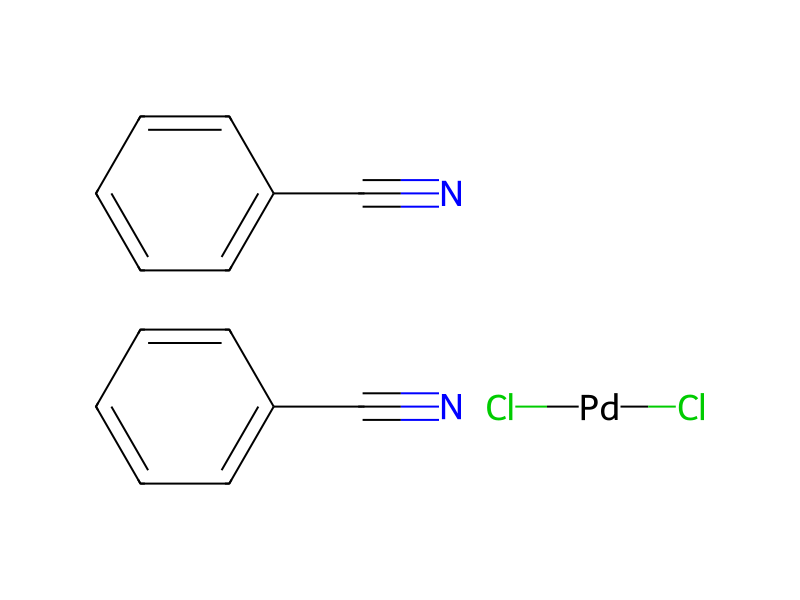
[CH3:1][O:2][C:3]1[CH:11]=[N:10][C:9](Br)=[C:8]2[C:4]=1[CH:5]=[CH:6][NH:7]2.O1C=CC=C1P(C1OC=CC=1)C1OC=CC=1.[CH3:29][CH:30]([OH:33])[C:31]#[CH:32]>C1C=CC(C#N)=CC=1.C1C=CC(C#N)=CC=1.Cl[Pd]Cl.[Cu]I.N1CCCCC1>[CH3:1][O:2][C:3]1[CH:11]=[N:10][C:9]([C:32]#[C:31][CH:30]([OH:33])[CH3:29])=[C:8]2[C:4]=1[CH:5]=[CH:6][NH:7]2Participants
7
Reactant 3


Product 1

Reagents, catalysts & solvents 3


Conditions
- Temperature
- 80 °C
Procedure
To a mixture of 4-methoxy-7-bromo-6-azaindole (0.200 g, 0.88 mmol), PdCl2(PhCN)2 (0.017 g, 0.044 mmol), tri-2-furylphosphine (0.0410 g, 0.176 mmol) and CuI (0.017 g, 0.088 mmol) was added piperidine (10 mL), followed by 3-butyn-2-ol (0.09 mL, 1.15 mmol). The mixture was heated at 80° C. for 6 h and then the solvent was removed in vacuo. The residue was partitioned with EtOAc-H2O and then the aqueous phase was separated and re-extracted with EtOAc (×2). The combined organic layers were washed (H2O, brine), dried (Na2SO4) and concentrated to afford the title compound (0.200 g, 95%) as a brown solid which was of sufficient purity for use in the following step:
Workup
- customthe solvent was removed in vacuo
- customThe residue was partitioned with EtOAc-H2O
- customthe aqueous phase was separated
- extractionre-extracted with EtOAc (×2)
- washThe combined organic layers were washed (H2O, brine)
- dry with materialdried (Na2SO4)
- concentrationconcentrated
Sources & evidence
- ORD record
- ord-6704980383aa4cfa8c74e64ce0912a8e
- Source dataset
- uspto-grants-2011_03
- Patent number
- US07915283B2
Reaction notes
Loading…