Phenylacetylene → 3-Phenylethynyl-pyridine
Reaction equation
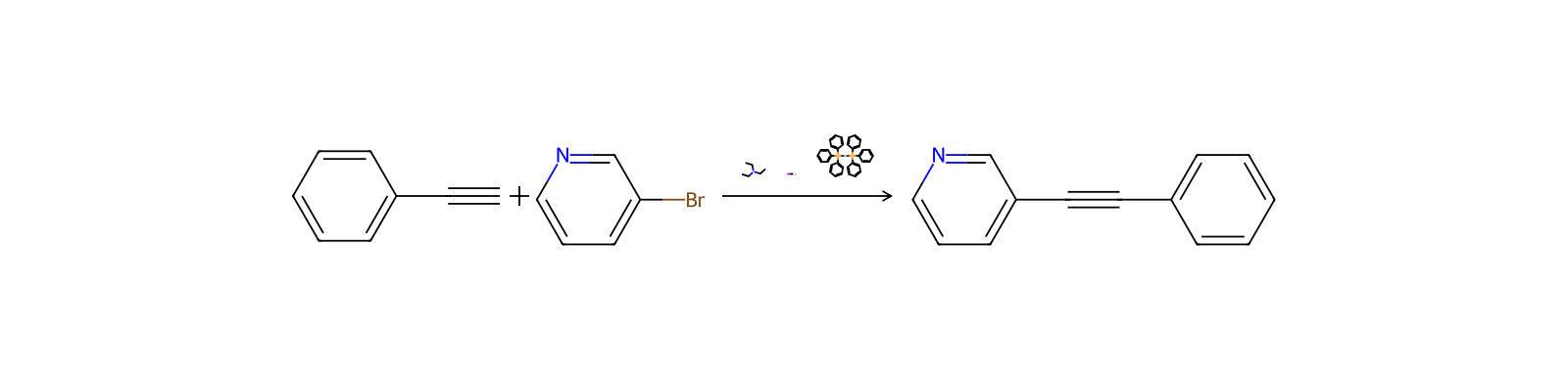
[C:1]1([C:7]#[CH:8])[CH:6]=[CH:5][CH:4]=[CH:3][CH:2]=1.Br[C:10]1[CH:11]=[N:12][CH:13]=[CH:14][CH:15]=1>C(N(CC)CC)C.[Cu]I.C1(C=CC=CC=1)[P](C1C=CC=CC=1)(C1C=CC=CC=1)[Pd][P](C1C=CC=CC=1)(C1C=CC=CC=1)C1C=CC=CC=1>[C:1]1([C:7]#[C:8][C:10]2[CH:11]=[N:12][CH:13]=[CH:14][CH:15]=2)[CH:6]=[CH:5][CH:4]=[CH:3][CH:2]=1Participants
6
Reactant 2

Product 1

Reagents, catalysts & solvents 3



Conditions
- Temperature
- 80 °C
Procedure
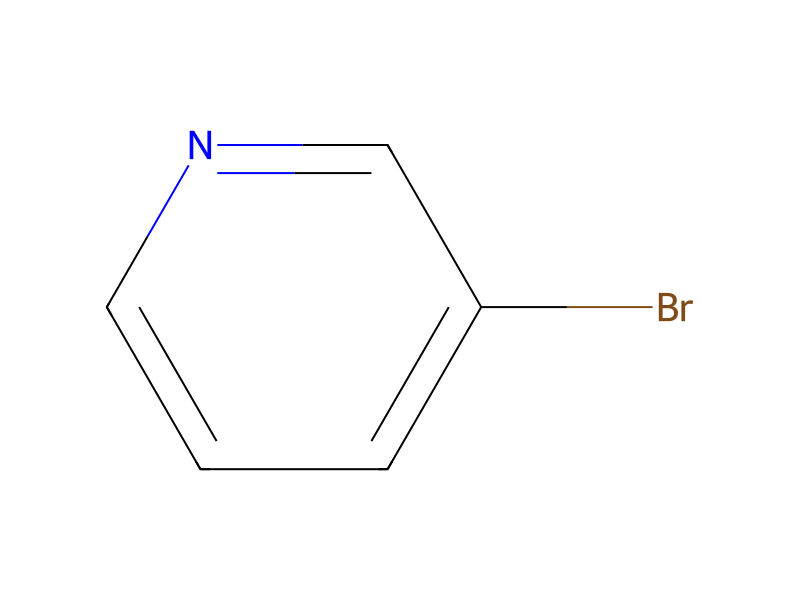
Add phenylacetylene (0.175 mL, 1.6 mmol), copper (I) iodide (0.028 g, 0.15 mmol) and bis(triphenylphosphine)palladium (II) dichloride (0.051 g, 0.07 mmol) to a solution of 3-bromopyridine (0.140 mL, 1.45 mmol) in degassed triethylamine (6 mL) and stir under nitrogen at 80° C. for 16 h. Cool to room temperature, filter through diatomaceous earth, wash with ethyl acetate, and concentrate. Purify the residue by silica gel chromatography, eluting with 100:0 to 0:100 hexanes:dichlormethane, to give the title compound (91.1 mg, 35%).
Workup
- temperatureCool to room temperature
- filtrationfilter through diatomaceous earth
- washwash with ethyl acetate
- concentrationconcentrate
- customPurify the residue by silica gel chromatography
- washeluting with 100:0 to 0:100 hexanes
Sources & evidence
- ORD record
- ord-f093eddfdd414106971a3bb01a6ec04d
- Source dataset
- uspto-grants-2011_03
- Patent number
- US07915424B2
Reaction notes
Loading…