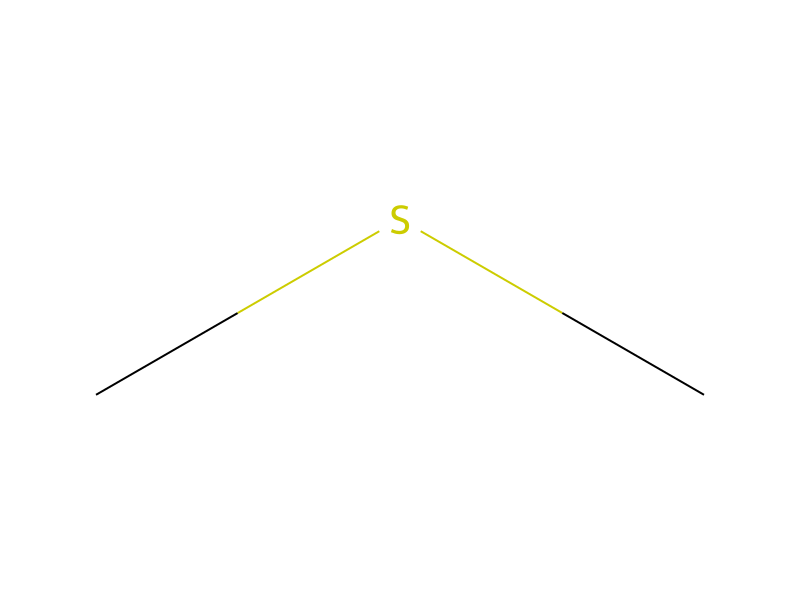
Dimethyl Sulfide → 3-Methylsulfanyl-5-phenylethynylpyridine
Reaction equation

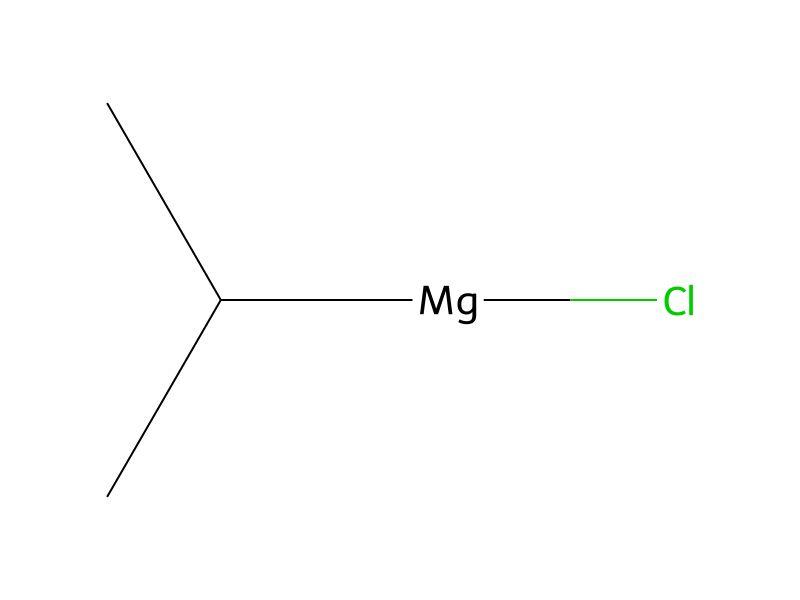
C([Mg]Cl)(C)C.Br[C:7]1[CH:8]=[N:9][CH:10]=[C:11]([C:13]#[C:14][C:15]2[CH:20]=[CH:19][CH:18]=[CH:17][CH:16]=2)[CH:12]=1.C(N(CC)CC)C.[CH3:28][S:29]C>O1CCCC1.O>[CH3:28][S:29][C:7]1[CH:8]=[N:9][CH:10]=[C:11]([C:13]#[C:14][C:15]2[CH:20]=[CH:19][CH:18]=[CH:17][CH:16]=2)[CH:12]=1Participants
7





Procedure
Add a 2 M solution of isopropylmagnesium chloride in tetrahydrofuran (0.96 mL, 1.94 mmol) to a solution of 3-bromo-5-phenylethynylpyridine, (prepared as described in EXAMPLE 9), (500 mg, 1.94 mmol) in anhydrous tetrahydrofuran (2 mL) and stir under nitrogen at room temperature for 2 h. Add triethylamine (0.27 mL, 1.94 mmol) and dimethyl sulfide (0.175 mL, 1.94 mmol). Stir for an additional 2 h, dilute with water, extract with dichloromethane, dry (magnesium sulfate), filter and concentrate. Purify the residue by silica gel chromatography, eluting from 100:0 to 100:50 with hexanes:ethyl acetate, to give the title compound (10.1 mg, 2.3%).
Workup
- stirringStir for an additional 2 h
- extractionextract with dichloromethane
- dry with materialdry (magnesium sulfate)
- filtrationfilter
- concentrationconcentrate
- customPurify the residue by silica gel chromatography
- washeluting from 100:0 to 100:50 with hexanes
Sources & evidence
- ORD record
- ord-0c0c4ff396744c1bb68e3b8a3186b30c
- Source dataset
- uspto-grants-2011_03
- Patent number
- US07915424B2
Reaction notes
Loading…