Ethylene → N-(5-Ethenylpyridin-2-yl)acetamide
Reaction equation

Br[C:2]1[CH:3]=[CH:4][C:5]([NH:8][C:9](=[O:11])[CH3:10])=[N:6][CH:7]=1.[C:12]1(C)C=CC=C[C:13]=1P(C1C=CC=CC=1C)C1C=CC=CC=1C.C=C>C(#N)C.C(N(CC)CC)C.C([O-])(=O)C.[Pd+2].C([O-])(=O)C>[CH:12]([C:2]1[CH:3]=[CH:4][C:5]([NH:8][C:9](=[O:11])[CH3:10])=[N:6][CH:7]=1)=[CH2:13]Participants

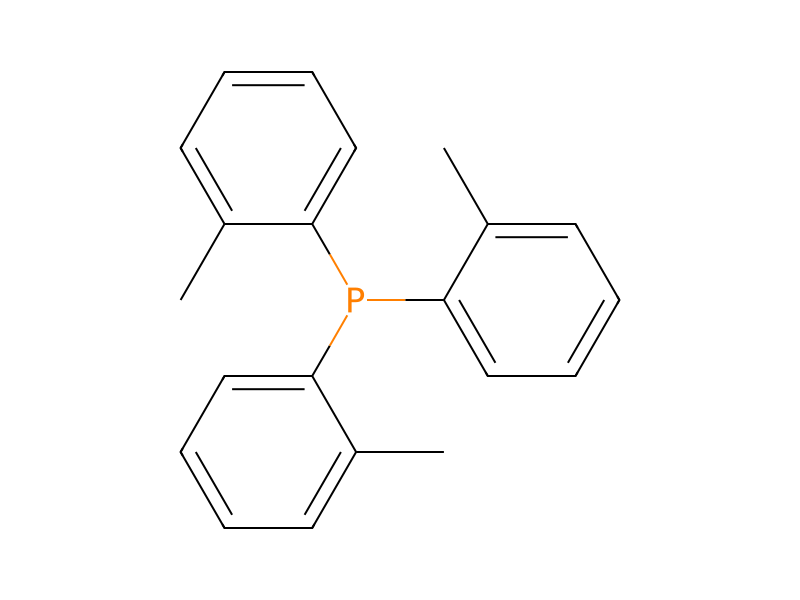





Conditions
- Temperature
- 85 °C
Procedure
A solution of of N-(5-bromo-pyridin-2-yl)-acetamide (4.30 g, 20 mmol) in acetonitrile (15 ml) and triethylamine (5.04 ml) was treated with palladium acetate (45 mg, 0.2 mmol) and tri-o-tolylphosphine (203 mg, 0.66 mmol). The mixture was placed in a pressure reactor under 50 psig of ethylene pressure and heated at 85° C. for 66 hours. The reaction mixture was cooled, vented, and partitioned between phosphate buffer (0.1 M, pH 6.6) and ethyl acetate. The aqueous phase was extracted with ethyl acetate twice more. The combined ethyl acetate extracts were washed with additional phosphate buffer, brine and dried over sodium sulfate. The extracts were filtered and evaporated to afford 2.06 g (63%) of the title product as a flaky crystalline residue. Recrystallization from ethyl acetate/cyclohexane gave colorless flakes. mp 120-121° C. 1H NMR (CDCl3): δ=8.55 (br, 1 H); 8.24 (d, 1 H); 8.15 (d, 1 H); 7.76 (d of d, 1H); 6.64 (d of d, 1 H); 5.73 (d, 1 H); 5.28 (d, 1 H); 2.19 (s, 3 H). MS (Cl): m/z=163 (M+H+).
Workup
- temperatureThe reaction mixture was cooled
- custompartitioned between phosphate buffer (0.1 M, pH 6.6) and ethyl acetate
- extractionThe aqueous phase was extracted with ethyl acetate twice more
- washThe combined ethyl acetate extracts were washed with additional phosphate buffer, brine
- dry with materialdried over sodium sulfate
- filtrationThe extracts were filtered
- customevaporated
Sources & evidence
- ORD record
- ord-b242243c1de24686b635c529825f0caa
- Source dataset
- uspto-grants-1999_12
- Patent number
- US06001856
Reaction notes
Loading…