Sodium hydride → HCID 15388570, compound
Reaction equation

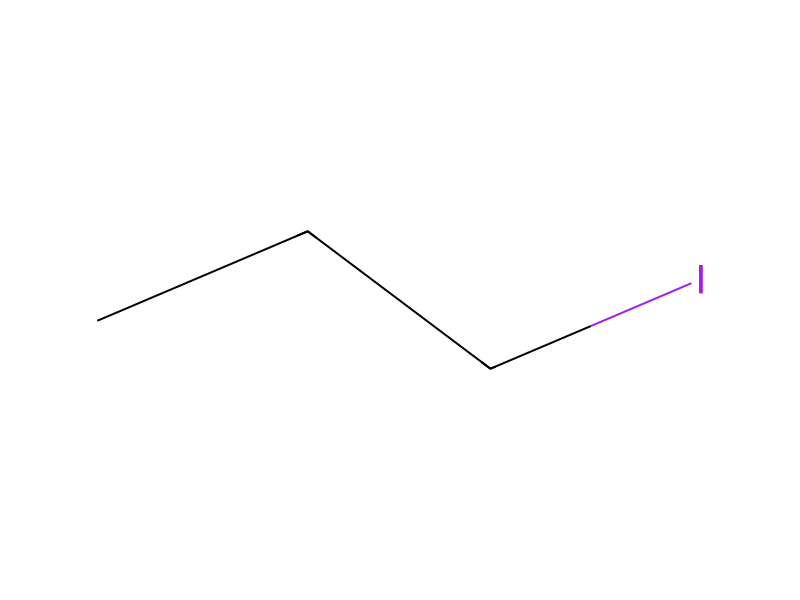
[S:1]1[CH:5]=[CH:4][N:3]=[C:2]1[N:6]1[C:10](=[O:11])[C:9]2([CH2:16][CH2:15][CH2:14][CH2:13][CH2:12]2)[NH:8][C:7]1=[O:17].[H-].[Na+].I[CH2:21][CH2:22][CH3:23]>CN(C)C=O.O>[CH2:21]([N:8]1[C:9]2([CH2:16][CH2:15][CH2:14][CH2:13][CH2:12]2)[C:10](=[O:11])[N:6]([C:2]2[S:1][CH:5]=[CH:4][N:3]=2)[C:7]1=[O:17])[CH2:22][CH3:23]Participants
Reactant 3


Product 1

Reagents, catalysts & solvents 2


Procedure
5.05 g of the product from Example 2, stage 2 were dissolved in 20 ml of dimethylformamide. 1.10 g of sodium hydride (50% suspension in mineral oil) were added in portions with stirring at 200C. After 1 hour's stirring, 4 ml of 1-iodopropane were added. Stirring was continued for a further 3 hours. The mixture was then diluted with 100 ml of distilled water, extracted three times with 30 ml portions of ethyl acetate, washed with saturated sodium chloride solution and dried over sodium sulphate. Once the solvent had been removed by distillation, the residue was purified by passage through a silica gel column with ethyl acetate/n-hexane=8/5. 3.95 g of l-propyl-3-thiazol-2-yl-1,3-diazaspiro[4.5]decane-2,4-dione (67% of th.) were obtained in the form of white crystals (mp 135-138° C.).
Workup
- stirringStirring
- waitwas continued for a further 3 hours
- extractionextracted three times with 30 ml portions of ethyl acetate
- washwashed with saturated sodium chloride solution
- dry with materialdried over sodium sulphate
- customOnce the solvent had been removed by distillation
- customthe residue was purified by passage through a silica gel column with ethyl acetate/n-hexane=8/5
Sources & evidence
- ORD record
- ord-34f50492f9254917b0ec8d7921352f4c
- Source dataset
- uspto-grants-1999_12
- Patent number
- US06004963
Reaction notes
Loading…