Triethylamine → 6-Chloro-9-(2-benzoyloxyethoxymethyl)purine
Reaction equation

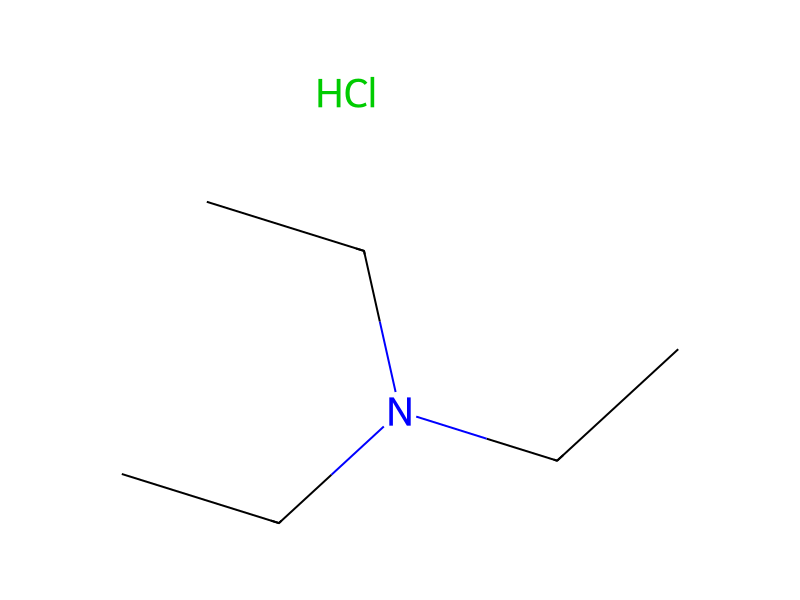
[C:1]([O:9][CH2:10][CH2:11][O:12][CH2:13]Cl)(=[O:8])[C:2]1[CH:7]=[CH:6][CH:5]=[CH:4][CH:3]=1.[Cl:15][C:16]1[N:24]=[CH:23][N:22]=[C:21]2[C:17]=1[NH:18][CH:19]=[N:20]2.C(N(CC)CC)C.Cl.C(N(CC)CC)C>CN(C)C=O>[Cl:15][C:16]1[N:24]=[CH:23][N:22]=[C:21]2[C:17]=1[N:18]=[CH:19][N:20]2[CH2:13][O:12][CH2:11][CH2:10][O:9][C:1](=[O:8])[C:2]1[CH:3]=[CH:4][CH:5]=[CH:6][CH:7]=1Participants




Procedure
Following substantially the procedure of Schaeffer, et al. supra but with minor modifications, 1-benzoyloxy-2-chloromethoxyethane (4.4g) was added with stirring to a dry solution of 6-chloropurine (3.1g) and triethylamine (6.5ml) in dimethylformamide (50ml). The reaction was exothermic, immediately precipitating triethylamine hydrochloride. The reaction mixture was stirred at room temperature for 24 hours and filtered. The filtrate was evaporated on a rotary evaporator at 70° C. The remaining thick amber oil was dissolved in the minimum amount of benzene and purified by column chromatography using a silica gel column. Benzene elution removed a trace of an unidentified material. Elution with ether first removed a small amount of ethylene glycol monobenzoate and then 6-chloro-9-(2-benzoyloxyethoxymethyl)purine. Recrystallization from ether gave a white material, m.p. 108.5°-111° C.
Workup
- filtrationfiltered
- customThe filtrate was evaporated on a rotary evaporator at 70° C
- dissolutionThe remaining thick amber oil was dissolved in the minimum amount of benzene
- custompurified by column chromatography
- washBenzene elution
- customremoved a trace of an unidentified material
- washElution with ether
- customfirst removed a small amount of ethylene glycol monobenzoate
- customRecrystallization from ether
- customgave a white material, m.p. 108.5°-111° C.
Sources & evidence
- ORD record
- ord-cea871e460ac4501952a24f5d318f434
- Source dataset
- uspto-grants-1979_03
- Patent number
- US04146715
Reaction notes
Loading…