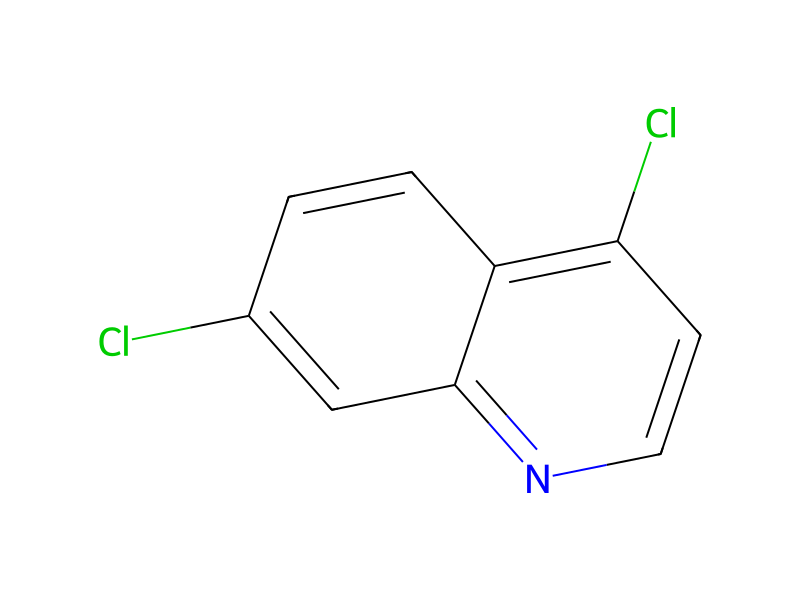
4,7-Dichloroquinoline → HCID 54478391, compound
Reaction equation

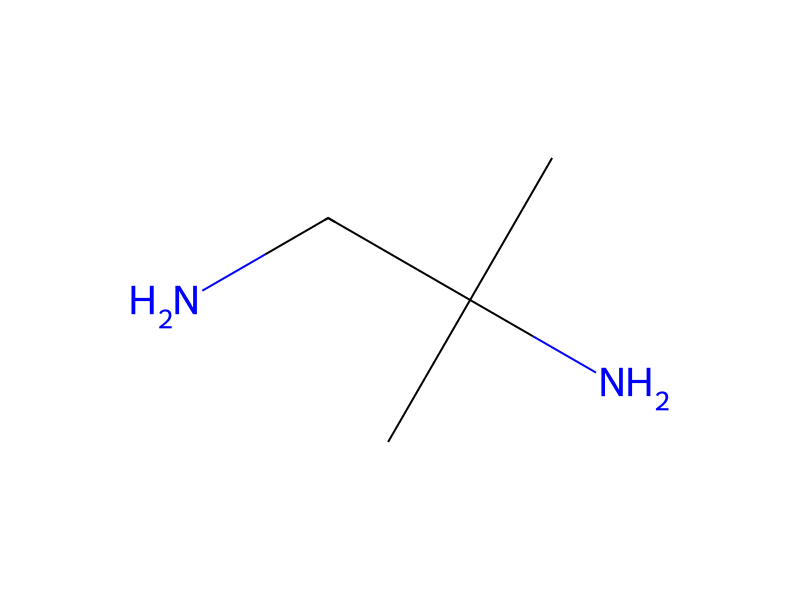
Cl[C:2]1[C:11]2[C:6](=[CH:7][C:8]([Cl:12])=[CH:9][CH:10]=2)[N:5]=[CH:4][CH:3]=1.[NH2:13][CH2:14][C:15]([NH2:18])([CH3:17])[CH3:16].C(N(CC)CC)C>CN1CCCC1=O>[Cl:12][C:8]1[CH:7]=[C:6]2[C:11]([C:2]([NH:13][CH2:14][C:15]([CH3:17])([NH2:18])[CH3:16])=[CH:3][CH:4]=[N:5]2)=[CH:10][CH:9]=1Participants
Reactant 3

Product 1

Reagents, catalysts & solvents 1

Procedure
198 g of 4,7-dichloroquinoline, 97 g of 1,2-diamino-2-methyl-propane and 101 g of triethylamine were stirred in 1 l of N-methyl-2-pyrrolidone at 150° C. under argon for 5 hours. The solvent was evaporated in a vacuum and the residue was taken up in 1 l of water. The pH was adjusted to 1 using 220 ml of 25% hydrochloric acid and the mixture was diluted with 6 l of water and extracted four times with 0.5 l of ethyl acetate each time. The clear aqueous solution was treated with about 900 g of KOH, whereby the pH rose to 14 and the product separated in crystalline form. This was filtered off under suction, rinsed with about 3 l of water and, for further purification, recrystallized from 4 l of acetonitrile. There were obtained 126.7 g (73%) of N1 -(7-chloro-quinolin-4-yl)-2-methyl-propane-1,2-diamine, m.p. 182-184° C.
Workup
- customThe solvent was evaporated in a vacuum
- additionthe mixture was diluted with 6 l of water
- extractionextracted four times with 0.5 l of ethyl acetate each time
- additionThe clear aqueous solution was treated with about 900 g of KOH, whereby the pH
- customthe product separated in crystalline form
- filtrationThis was filtered off under suction
- washrinsed with about 3 l of water and, for further purification
- customrecrystallized from 4 l of acetonitrile
Sources & evidence
- ORD record
- ord-dfe13ac342f541d5a7ed92b487d8b345
- Source dataset
- uspto-grants-1999_09
- Patent number
- US05948791
Reaction notes
Loading…