Water → 2-Chloro-4-phenylhydrazinoquinazoline
Reaction equation

C(N(CC)C(C)C)(C)C.[C:10]1([NH:16][NH2:17])[CH:15]=[CH:14][CH:13]=[CH:12][CH:11]=1.O.[Cl:19][C:20]1[N:29]=[C:28](Cl)[C:27]2[C:22](=[CH:23][CH:24]=[CH:25][CH:26]=2)[N:21]=1>C1COCC1>[Cl:19][C:20]1[N:29]=[C:28]([NH:17][NH:16][C:10]2[CH:15]=[CH:14][CH:13]=[CH:12][CH:11]=2)[C:27]2[C:22](=[CH:23][CH:24]=[CH:25][CH:26]=2)[N:21]=1Participants
6
Reactant 4

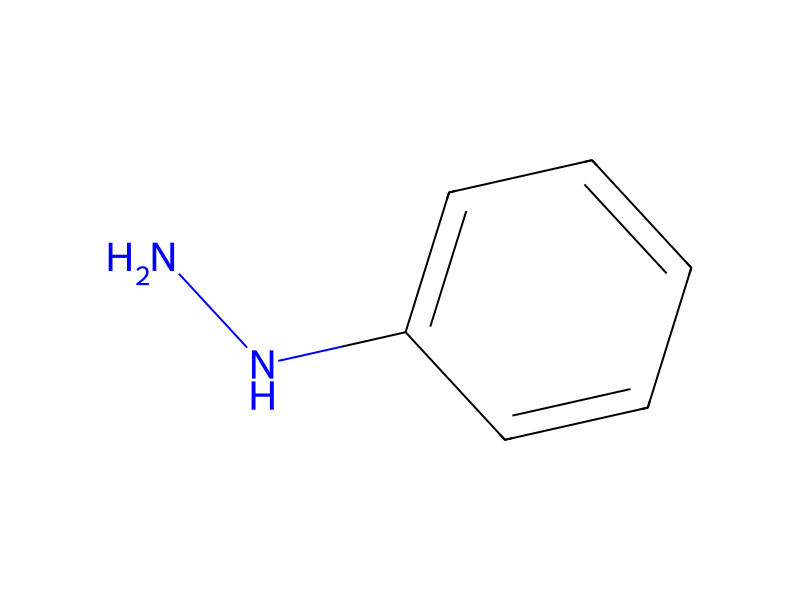


Product 1

Reagents, catalysts & solvents 1

Procedure
To a stirred solution of N,N-diisopropylethylamine (10 ml, 57 mmol) in THF (150 ml), 2,4dichloroquinazoline [prepared according to the procedure described by Curd, F. H. S. et al., J. Chem. Soc., (1947), 775] (5 g, 25 mmol) and phenylhydrazine (2.7 g, 25 mmol) was added. After stirring for 30 minutes, the reaction was poured into water and extracted with dichloromethane (3×100 ml). The combined organic layers were dried over Na2SO4 and evaporated under reduced pressure. The resulting solid was triturated with ethanol and filtered to afford 2-chloro-4-phenylhydrazinoquinazoline (3.2 g ) as a yellow solid, m.p. 178° C. (dec.).
Workup
- extractionextracted with dichloromethane (3×100 ml)
- dry with materialThe combined organic layers were dried over Na2SO4
- customevaporated under reduced pressure
- customThe resulting solid was triturated with ethanol
- filtrationfiltered
Sources & evidence
- ORD record
- ord-be39c526ffab406fbd5763123b922d06
- Source dataset
- uspto-grants-1999_09
- Patent number
- US05955465
Reaction notes
Loading…