Isopropanol → methyl 6-bromo-1-isopropyl-1H-indole-4-carboxylate
Reaction equation

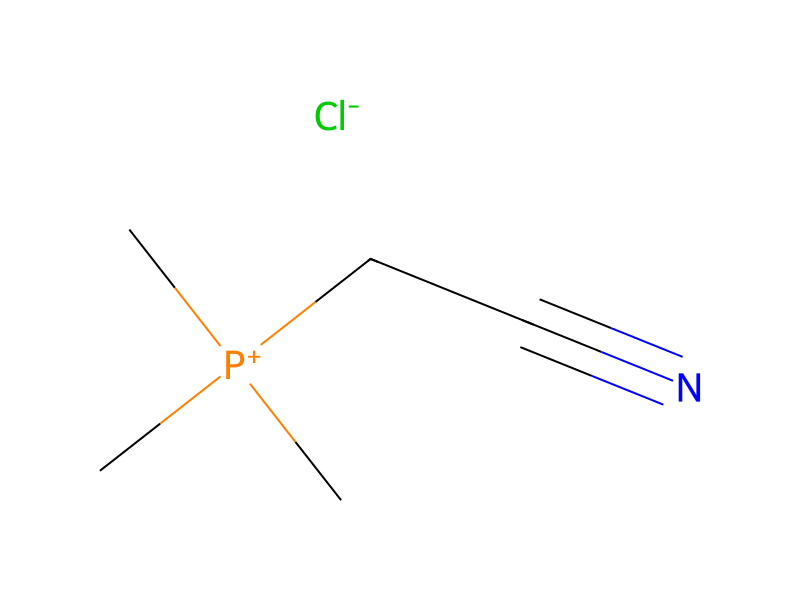
[N].N1C2[C:5](=CC=CC=2)[CH:4]=[CH:3]1.[Br:11][C:12]1[CH:13]=[C:14]([C:21]([O:23][CH3:24])=[O:22])[C:15]2[CH:16]=[CH:17][NH:18][C:19]=2[CH:20]=1.[Cl-].C(C[P+](C)(C)C)#N.CC(O)C.[H-].[Na+]>C1COCC1>[Br:11][C:12]1[CH:13]=[C:14]([C:21]([O:23][CH3:24])=[O:22])[C:15]2[CH:16]=[CH:17][N:18]([CH:4]([CH3:5])[CH3:3])[C:19]=2[CH:20]=1Participants
Reactant 5




Product 1

Reagents, catalysts & solvents 1

Procedure
Alternatively, the alkylation of the indole nitrogen could be performed as follows: To a cooled (0° C.) suspension of methyl 6-bromo-1H-indole-4-carboxylate (10 g, 39.4 mmol) and (cyanomethyl)(trimethyl)phosphonium chloride (14.91 g, 98 mmol) in THF (400 mL) was added 2-propanol (6.06 mL, 79 mmol), followed by sodium hydride (3.46 g, 87 mmol). The mixture was stirred at ambient temperature for 2 h, at which time LCMS showed no product formation. Heated at 50° C. for 18 h. LC/MS showed reaction complete. Filtered reaction mixture and concentrated in vacuo. The residue was diluted with methylene chloride and passed through a pad of silica (washed with methylene chloride). Purification by flash chromatography (Analogix SF65-200 g; 5-10% EtOAc/hexanes) gave methyl 6-bromo-1-(1-methylethyl)-1H-indole-4-carboxylate (9.7 g, 31.4 mmol, 80% yield). MS(ES) [M+H]+ 296.2, 298.4.
Workup
- temperatureTo a cooled
- temperatureHeated at 50° C. for 18 h
- customreaction complete
- filtrationFiltered
- customreaction mixture
- concentrationconcentrated in vacuo
- additionThe residue was diluted with methylene chloride
- customPurification by flash chromatography (Analogix SF65-200 g; 5-10% EtOAc/hexanes)
Sources & evidence
- ORD record
- ord-18c646f3289143b588d285f1f01c4fc2
- Source dataset
- uspto-grants-2016_09
- Patent number
- US09446041B2
Reaction notes
Loading…