Potassium Carbonate → 3-Methoxy-N-(4-methoxybenzyl)-1,7-naphthyridin-8-amine
Reaction equation

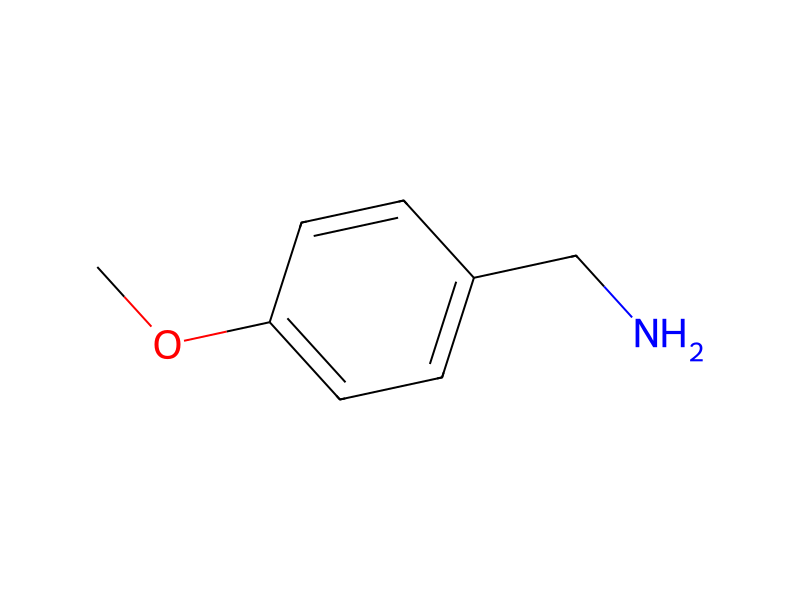
Cl[C:2]1[N:3]=[CH:4][CH:5]=[C:6]2[C:11]=1[N:10]=[CH:9][C:8]([O:12][CH3:13])=[CH:7]2.C(=O)([O-])[O-].[K+].[K+].[CH3:20][O:21][C:22]1[CH:29]=[CH:28][C:25]([CH2:26][NH2:27])=[CH:24][CH:23]=1>CN(C)C=O>[CH3:13][O:12][C:8]1[CH:9]=[N:10][C:11]2[C:6]([CH:7]=1)=[CH:5][CH:4]=[N:3][C:2]=2[NH:27][CH2:26][C:25]1[CH:28]=[CH:29][C:22]([O:21][CH3:20])=[CH:23][CH:24]=1Participants
5




Conditions
- Temperature
- 100 °C
Procedure
To a solution of 8-chloro-3-methoxy-1,7-naphthyridine (1 g, 5.14 mmol) in N,N-dimethylformamide (10.28 mL) was added potassium carbonate (1.42 g, 10.28 mmol) followed by 4-methoxybenzylamine (1.47 ml, 11.3 mmol). The reaction was stirred at 100° C. for 24 hours and then concentrated to generate a brown residue. This was partitioned between ethyl acetate and water. The organic layer was concentrated and purified by silica-gel chromatography, eluting with 1-5% methanol in DCM, to provide the title compound (1.37 g, 4.63 mmol) as a tan solid. LC/MS (ESI+) m/z=296 (M+H).
Workup
- concentrationconcentrated
- customThis was partitioned between ethyl acetate and water
- concentrationThe organic layer was concentrated
- custompurified by silica-gel chromatography
- washeluting with 1-5% methanol in DCM
Sources & evidence
- ORD record
- ord-e4ef21512660455190159fdbdd308552
- Source dataset
- uspto-grants-2016_04
- Patent number
- US09309263B2
Reaction notes
Loading…