Hydrochloric Acid → 4,4,4-Trifluoro-1-(3-methyl-4-methoxylphenyl)-1,3-butanedione
Reaction equation

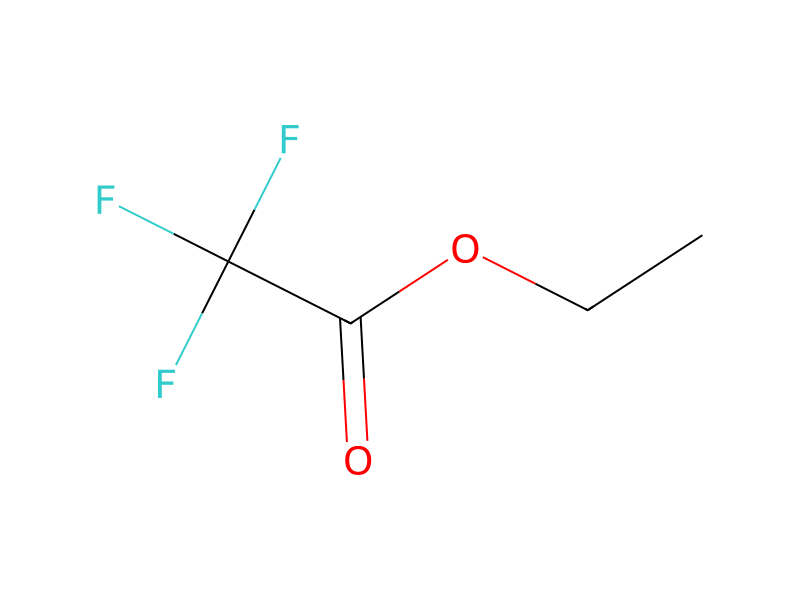
[CH3:1][O:2][C:3]1[CH:8]=[CH:7][C:6]([C:9](=[O:11])[CH3:10])=[CH:5][C:4]=1[CH3:12].C([O:15][C:16](=O)[C:17]([F:20])([F:19])[F:18])C.[O-]CC.[Na+].Cl>C(O)C.O.O1CCCC1>[F:18][C:17]([F:20])([F:19])[C:16](=[O:15])[CH2:10][C:9]([C:6]1[CH:7]=[CH:8][C:3]([O:2][CH3:1])=[C:4]([CH3:12])[CH:5]=1)=[O:11]Participants
Reactant 4



Product 1

Reagents, catalysts & solvents 3



Procedure
At room temperature, to a mixture of 1 (4 methoxy-3-methylphenyl)-ethanone (described in Reference Preparation example 48) 6.9 g and tetrahydrofuran 200 ml was added trifluoroacetic acid ethyl ester 11.9 g and 20% solution of sodium ethoxide in ethanol 28.5 g. The resulting mixture was stirred with heating under reflux for six hours. To the reaction mixture was added water, and the resulting mixture was acidified with 6N aqueous hydrochloric acid solution. The resulting mixture was extracted with ethyl acetate. The organic layer was washed with water and was dried over anhydrous magnesium sulfate, and was then concentrated under reduced pressure. The resulting residue was subjected to a silica gel column chromatography to give 4,4,4-trifluoro-1-(4-methoxy-3-methyl-phenyl)-butane-1,3-dione 10 g.
Workup
- temperaturewith heating
- temperatureunder reflux for six hours
- extractionThe resulting mixture was extracted with ethyl acetate
- washThe organic layer was washed with water
- dry with materialwas dried over anhydrous magnesium sulfate
- concentrationwas then concentrated under reduced pressure
Sources & evidence
- ORD record
- ord-0739636a6f444fde839b261402fd1a49
- Source dataset
- uspto-grants-2016_04
- Patent number
- US09314023B2
Reaction notes
Loading…