Potassium Carbonate → 2-Chloro-4-(4-ethylpiperazin-1-yl)benzaldehyde
Reaction equation

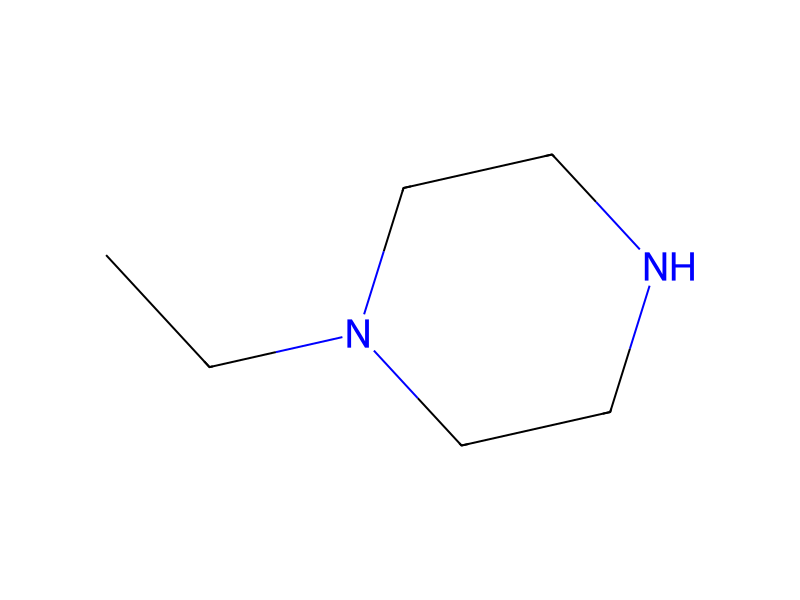
[Cl:1][C:2]1[CH:9]=[C:8](F)[CH:7]=[CH:6][C:3]=1[CH:4]=[O:5].[CH2:11]([N:13]1[CH2:18][CH2:17][NH:16][CH2:15][CH2:14]1)[CH3:12].C(=O)([O-])[O-].[K+].[K+]>CN(C=O)C>[Cl:1][C:2]1[CH:9]=[C:8]([N:16]2[CH2:17][CH2:18][N:13]([CH2:11][CH3:12])[CH2:14][CH2:15]2)[CH:7]=[CH:6][C:3]=1[CH:4]=[O:5]Participants
5
Reactant 3


Product 1

Reagents, catalysts & solvents 1

Conditions
- Temperature
- 100 °C
Procedure
In a 250 mL round bottom flask, 2-chloro-4-fluorobenzaldehyde (3.15 g, 20 mmol), 1-ethylpiperazine (2.8 mL, 22 mmol), and potassium carbonate (2.76 g, 20 mmol) were dissolved in anhydrous DMF (20 mL). The mixture was heated at 100° C. for 4 hours. DMF was evaporated under vacuum. The crude product was partitioned between water (100 mL) and DCM (150 mL). The organic phase was separated, washed with water, dried over Na2SO4, and evaporated to provide nearly pure 2-chloro-4-(4-ethylpiperazin-1-yl)benzaldehyde.
Workup
- customDMF was evaporated under vacuum
- customThe crude product was partitioned between water (100 mL) and DCM (150 mL)
- customThe organic phase was separated
- washwashed with water
- dry with materialdried over Na2SO4
- customevaporated
Sources & evidence
- ORD record
- ord-dbe4e4dc4bec4cee978d8dd60da6191a
- Source dataset
- uspto-grants-2016_04
- Patent number
- US09315521B2
Reaction notes
Loading…