2,2,3,3-Tetrafluoro-1-propanol → 4-(2,2,3,3-Tetrafluoropropoxy)benzaldehyde
Reaction equation

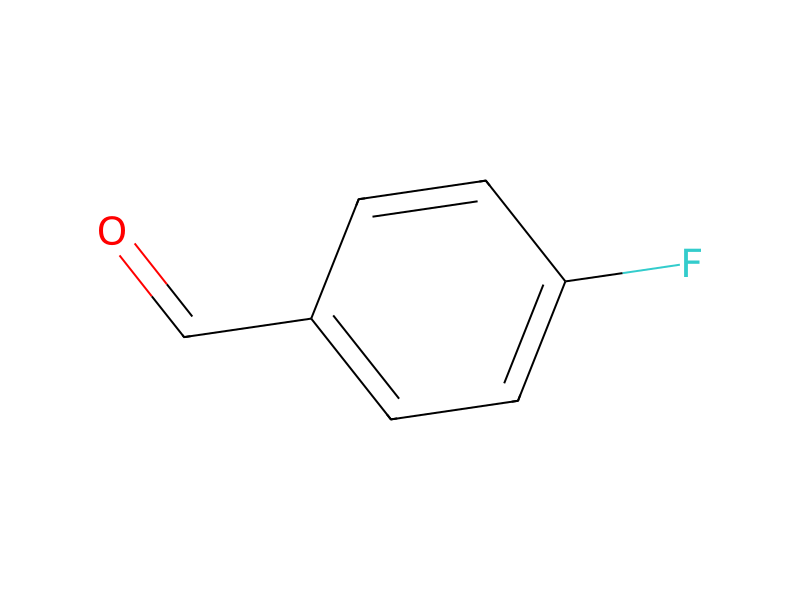
[H-].[Na+].[F:3][C:4]([F:10])([CH:7]([F:9])[F:8])[CH2:5][OH:6].F[C:12]1[CH:19]=[CH:18][C:15]([CH:16]=[O:17])=[CH:14][CH:13]=1.C(=O)(O)[O-].[Na+]>CN(C)C=O>[F:3][C:4]([F:10])([CH:7]([F:9])[F:8])[CH2:5][O:6][C:12]1[CH:19]=[CH:18][C:15]([CH:16]=[O:17])=[CH:14][CH:13]=1Participants





Procedure
To sodium hydride (288 mg as 55-60% mineral oil dispersion, 6 mmol) in N,N-dimethylformamide (2 mL), a solution of 2,2,3,3-tetrafluoro-1-propanol (535 μL, 6 mmol) in N,N-dimethylformamide (8 mL) was added dropwise. The reaction mixture was stirred for thirty minutes at room temperature. Then, 4-fluorobenzaldehyde (429 μL, 4 mmol) was added slowly, and the reaction was heated to 80° C. for three hours. After cooling, saturated sodium bicarbonate solution was added. The mixture was extracted with ethyl acetate. The organic layer was washed with brine, dried over sodium sulfate, and concentrated under reduced pressure. Flash chromatography gave 674 mg of 4-(2,2,3,3-tetrafluoropropoxy)benzaldehyde; 1H NMR (300 MHz, CDCl3) δ 9.93 (s, 1H), 7.88 (d, 2H), 7.06 (d, 2H), 6.06 (tt, 1H), 4.44 (tt, 2H) ppm.
Workup
- temperaturethe reaction was heated to 80° C. for three hours
- temperatureAfter cooling
- extractionThe mixture was extracted with ethyl acetate
- washThe organic layer was washed with brine
- dry with materialdried over sodium sulfate
- concentrationconcentrated under reduced pressure
Sources & evidence
- ORD record
- ord-91567f74d4e54e97b0c267dda61df09a
- Source dataset
- uspto-grants-2016_04
- Patent number
- US09315509B2
Reaction notes
Loading…