Potassium Carbonate → (1-(5-(4-Cyclopropylpyridin-2-yl)pyrimidin-2-yl)-3-(methylthio)-1H-indol-6-yl)(pyrrolidin-1-yl)methanone
Reaction equation

B1(B2OC(C)(C)C(C)(C)O2)OC(C)(C)C(C)(C)O1.C([O-])(=O)C.[K+].Br[C:25]1[CH:26]=[N:27][C:28]([N:31]2[C:39]3[C:34](=[CH:35][CH:36]=[C:37]([C:40]([N:42]4[CH2:46][CH2:45][CH2:44][CH2:43]4)=[O:41])[CH:38]=3)[C:33]([S:47][CH3:48])=[CH:32]2)=[N:29][CH:30]=1.Br[C:50]1[CH:55]=[C:54]([CH:56]2[CH2:58][CH2:57]2)[CH:53]=[CH:52][N:51]=1.C(=O)([O-])[O-].[K+].[K+]>O1CCOCC1.C1C=CC(P(C2C=CC=CC=2)[C-]2C=CC=C2)=CC=1.C1C=CC(P(C2C=CC=CC=2)[C-]2C=CC=C2)=CC=1.Cl[Pd]Cl.[Fe+2].C1C=CC([P]([Pd]([P](C2C=CC=CC=2)(C2C=CC=CC=2)C2C=CC=CC=2)([P](C2C=CC=CC=2)(C2C=CC=CC=2)C2C=CC=CC=2)[P](C2C=CC=CC=2)(C2C=CC=CC=2)C2C=CC=CC=2)(C2C=CC=CC=2)C2C=CC=CC=2)=CC=1>[CH:56]1([C:54]2[CH:53]=[CH:52][N:51]=[C:50]([C:25]3[CH:30]=[N:29][C:28]([N:31]4[C:39]5[C:34](=[CH:35][CH:36]=[C:37]([C:40]([N:42]6[CH2:43][CH2:44][CH2:45][CH2:46]6)=[O:41])[CH:38]=5)[C:33]([S:47][CH3:48])=[CH:32]4)=[N:27][CH:26]=3)[CH:55]=2)[CH2:58][CH2:57]1Participants
Reactant 5




Product 1

Reagents, catalysts & solvents 3



Conditions
- Temperature
- 110 °C
Procedure
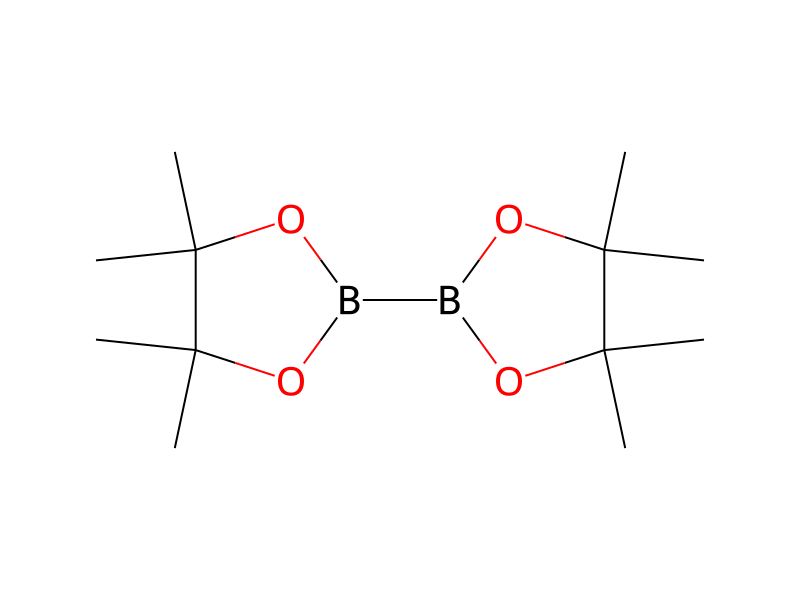
Bis(pinacolato)diboron (0.584 g, 2.3 mmol) and potassium acetate (0.421 g, 4.29 mmol) were added at room temperature to a solution of 341a) (0.6 g, 1.43 mmol) in dry dioxane (35 mL). The reaction apparatus was flushed with argon, PdCl2(dppf) (58 mg, 0.071 mmol) was added and the resulting mixture was stirred for 1 h at 110° C. (complete consumption of starting material). 2-bromo-4-cyclopropyl-pyridine (0.328 g, 2.14 mmol), potassium carbonate (2M, 2.5 mL) and tetrakis(triphenylphosphine)palladium(0) (83 mg, 0.071 mmol) were added successively and the reaction mixture was stirred for 16 h at 100° C. The mixture was then cooled to ambient temperature and filtered through a sintered funnel. The filtrate was concentrated and the remnant was purified by flash column chromatography [silica; dichloromethane with 2% methanol]. White solid. Yield: 0.28 g (43% of theory)
Workup
- additionwas added
- custom(complete consumption of starting material)
- stirringthe reaction mixture was stirred for 16 h at 100° C
- temperatureThe mixture was then cooled to ambient temperature
- filtrationfiltered through a sintered funnel
- concentrationThe filtrate was concentrated
- customthe remnant was purified by flash column chromatography [silica; dichloromethane with 2% methanol]
Sources & evidence
- ORD record
- ord-ae184684a3454d3cb839a24f4e366ad9
- Source dataset
- uspto-grants-2016_04
- Patent number
- US09315490B2
Reaction notes
Loading…