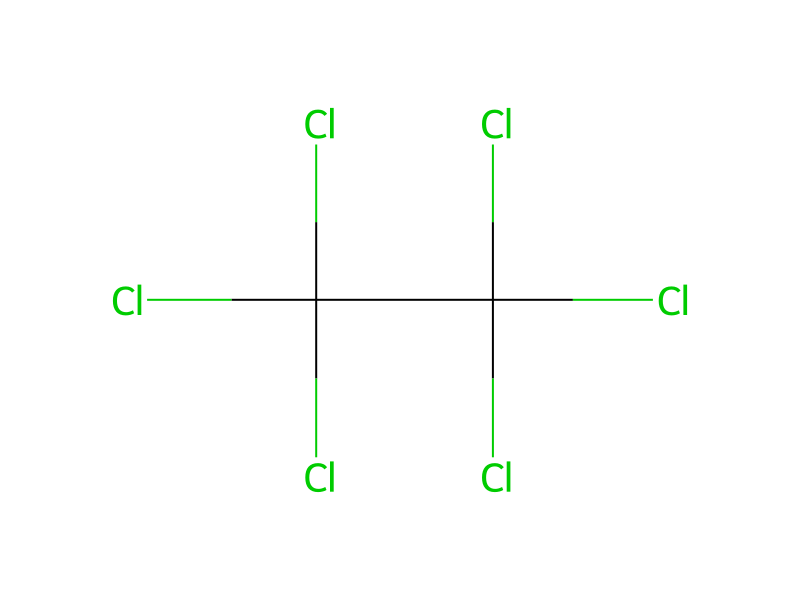
Hexachloroethane → HCID 86686971, compound
Reaction equation

[F:1][C:2]1[CH:3]=[CH:4][C:5]([NH:8][NH:9][C:10](=O)[CH2:11][N:12]2[CH2:17][CH2:16][N:15]([CH3:18])[CH2:14][CH2:13]2)=[N:6][CH:7]=1.C1(P(C2C=CC=CC=2)C2C=CC=CC=2)C=CC=CC=1.C(N(CC)CC)C.ClC(Cl)(Cl)C(Cl)(Cl)Cl>C1COCC1>[F:1][C:2]1[CH:3]=[CH:4][C:5]2[N:6]([C:10]([CH2:11][N:12]3[CH2:17][CH2:16][N:15]([CH3:18])[CH2:14][CH2:13]3)=[N:9][N:8]=2)[CH:7]=1Participants
6
Reactant 4



Product 1

Reagents, catalysts & solvents 1

Procedure
Intermediate 14a (570 mg, 2.13 mmol) was dissolved in THF (20.0 mL) and cooled in an ice/water bath. Triphenylphosphine (1.12 g, 4.27 mmol) was added followed by triethylamine (1.19 mL, 8.54 mmol) and hexachloroethane (1.01 g, 4.27 mmol). The reaction was stirred for 18 h. The mixture was loaded onto an SCX-2 cartridge, washing with MeOH and eluting with 2M NH3 in MeOH. The residue was purified by FCC, using 0-10% [2M NH3 in MeOH] in DCM, to give the title compound (470 mg, 1.89 mmol, 89%). LCMS (Method 1): Rt 0.36 min, m/z 250 [MH+].
Workup
- temperaturecooled in an ice/water bath
- washwashing with MeOH
- washeluting with 2M NH3 in MeOH
- customThe residue was purified by FCC
Sources & evidence
- ORD record
- ord-04c044be339e4775b56d127a23f7ecc4
- Source dataset
- uspto-grants-2016_04
- Patent number
- US09315503B2
Reaction notes
Loading…