Potassium Carbonate → Methyl 4-methoxy-3-(2-methoxyethoxy)benzoate
Reaction equation

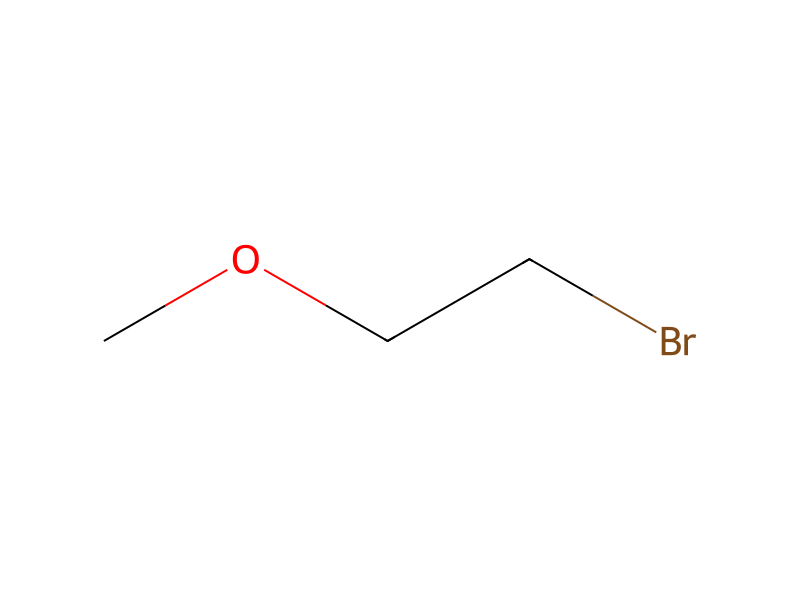
[OH:1][C:2]1[CH:3]=[C:4]([CH:9]=[CH:10][C:11]=1[O:12][CH3:13])[C:5]([O:7][CH3:8])=[O:6].Br[CH2:15][CH2:16][O:17][CH3:18].C([O-])([O-])=O.[K+].[K+]>CN(C=O)C>[CH3:13][O:12][C:11]1[CH:10]=[CH:9][C:4]([C:5]([O:7][CH3:8])=[O:6])=[CH:3][C:2]=1[O:1][CH2:15][CH2:16][O:17][CH3:18]Participants
5




Conditions
- Temperature
- 90 °C
Procedure
According to the procedure described in Example 6A Step 1, a mixture of methyl 3-hydroxy-4-methoxybenzoate (5.00 g, 27.4 mmol), 1-bromo-2-methoxyethane (4.96 g, 35.7 mmol), and K2CO3 (4.6 g, 32.9 mmol) in DMF (20 mL) was heated at 90° C. overnight, to afford methyl 4-methoxy-3-(2-methoxyethoxyl)benzoate as a solid (5.6 g, 85%). 1H NMR (300 MHz, DMSO-d6) δ 7.60 (dd, 1H), 7.46 (d, 1H), 7.09 (d, 1H), 4.12 (m, 2H), 3.84 (s, 3H), 3.81 (s, 3H), 3.67 (m, 2H), 3.33 (s, 3H).
Sources & evidence
- ORD record
- ord-fc8bca8f608847efa2ed6c84615c153d
- Source dataset
- uspto-grants-2016_04
- Patent number
- US09320739B2
Reaction notes
Loading…