Potassium Phosphate, Tribasic → 2-Nitro-6-cyclopropylbenzonitrile
Reaction equation

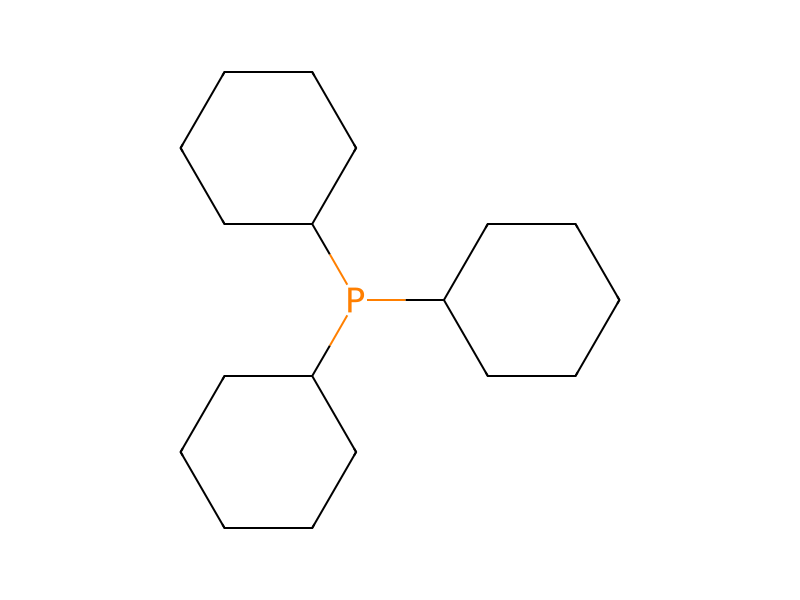
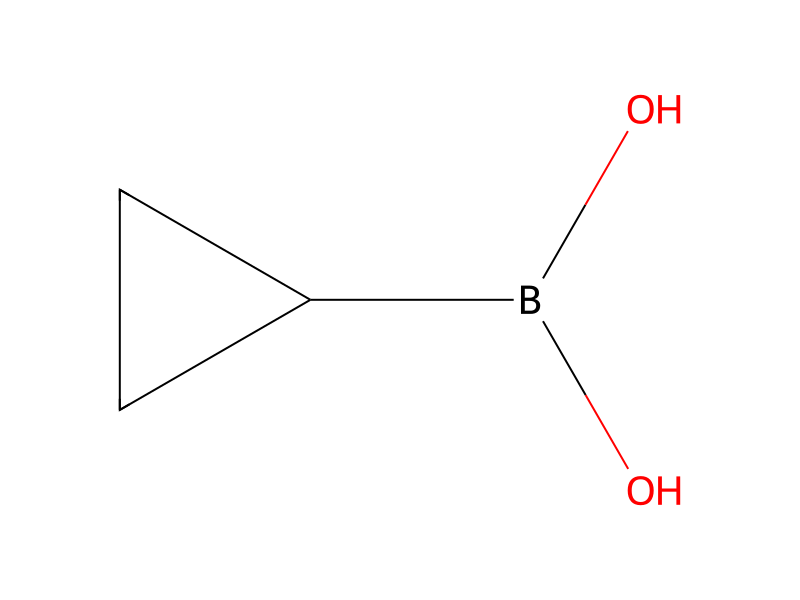
Br[C:2]1[CH:9]=[CH:8][CH:7]=[C:6]([N+:10]([O-:12])=[O:11])[C:3]=1[C:4]#[N:5].[CH:13]1(B(O)O)[CH2:15][CH2:14]1.C1(P(C2CCCCC2)C2CCCCC2)CCCCC1.[O-]P([O-])([O-])=O.[K+].[K+].[K+]>C1(C)C=CC=CC=1.O.C([O-])(=O)C.[Pd+2].C([O-])(=O)C>[N+:10]([C:6]1[CH:7]=[CH:8][CH:9]=[C:2]([CH:13]2[CH2:15][CH2:14]2)[C:3]=1[C:4]#[N:5])([O-:12])=[O:11]Participants
Reactant 4


Product 1

Reagents, catalysts & solvents 3



Conditions
- Temperature
- 100 °C
Procedure
2-Bromo-6-nitrobenzonitrile (0.56 g), cyclopropyl boronic acid (0.63 g), palladium (II) acetate (0.055 g), tricyclohexylphosphine (0.135 g) and potassium phosphate tribasic (2.36 g) were dissolved in a mixture of toluene (15 mL) and water (3 mL). The mixture was heated at 100° C. under nitrogen for 18 hours. The mixture was cooled and then partitioned between water and DCM. The organic solution was separated, dried with magnesium sulfate, filtered and the solvent was removed under vacuum. The residue was purified by flash chromatography on silica, eluting with a mixture of ethyl acetate and cyclohexane. The fractions containing the desired product were combined and evaporated to give the title compound as a light yellow solid (0.51 g).
Workup
- temperatureThe mixture was cooled
- custompartitioned between water and DCM
- customThe organic solution was separated
- dry with materialdried with magnesium sulfate
- filtrationfiltered
- customthe solvent was removed under vacuum
- customThe residue was purified by flash chromatography on silica
- washeluting with a mixture of ethyl acetate and cyclohexane
- additionThe fractions containing the desired product
- customevaporated
Sources & evidence
- ORD record
- ord-1b1d10b94dab494992f606472c1216e2
- Source dataset
- uspto-grants-2016_04
- Patent number
- US09321740B2
Reaction notes
Loading…