Triphenylphosphine → HCID 58592758, compound
Reaction equation

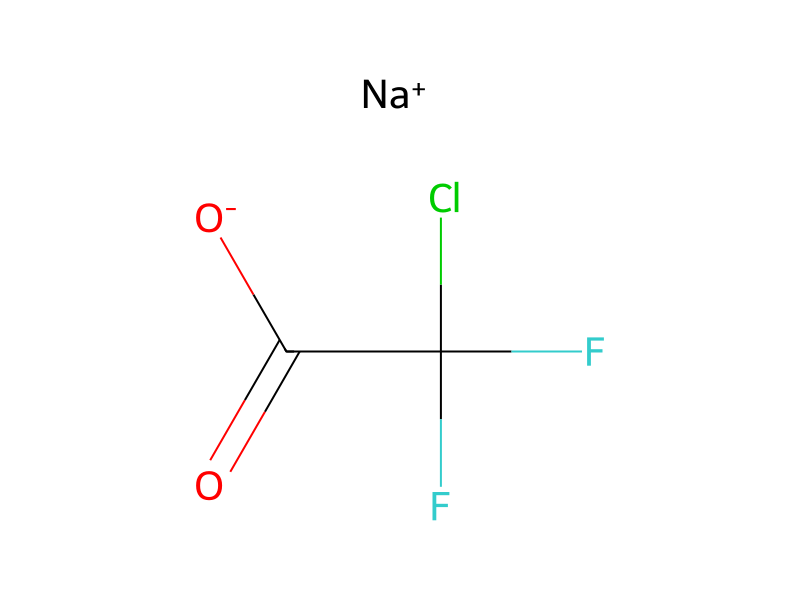
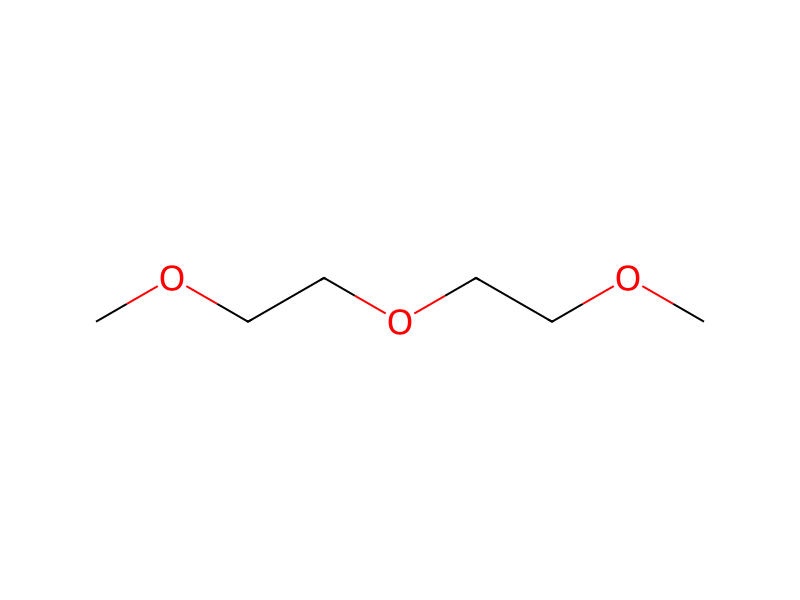
[Br:1][C:2]1[CH:7]=[CH:6][C:5]([C:8](=O)[C:9]([F:12])([F:11])[F:10])=[CH:4][CH:3]=1.C1(P(C2C=CC=CC=2)C2C=CC=CC=2)C=CC=CC=1.Cl[C:34]([F:39])([F:38])C([O-])=O.[Na+].[F-:41].[K+]>COCCOCCOC.O>[Br:1][C:2]1[CH:7]=[CH:6][C:5]([CH:8]([C:34]([F:39])([F:41])[F:38])[C:9]([F:12])([F:11])[F:10])=[CH:4][CH:3]=1Participants





Conditions
- Temperature
- 150 °C
Procedure
1-(4-Bromo-phenyl)-2,2,2-trifluoro-ethanone (500 mg, 2 mmol) and triphenylphosphine (1.05 g, 4 mmol) were dissolved in diglyme (25 ml) and heated to 150° C. in a three-neck flask fitted with both an addition funnel and a reflux condenser under nitrogen. A solution of sodium chlorodifluoroacetate, dissolved in diglyme (13 ml), was slowly added via the addition funnel. The addition took about one hour. After it was complete, the reaction mixture was allowed to stir for an additional hour. It was then cooled to below 100° C., and potassium fluoride (476 mg, 8.2 mmol) and water (0.3 ml) were added. The mixture was allowed to stir for 18 h at 95° C. The reaction mixture was heated to 130° C., water was added and the title product was steam distilled into a collection flask (with a large amount of diglyme, complicating yield calculations). 1H NMR (CDCl3) δ=7.61 (d, J=8.4 Hz, 2H), 7.32 (d, J=8.4 Hz, 2H), 4.06 (septet, JH,F=8.2 Hz, 1H).
Workup
- customfitted with both an addition funnel and a reflux condenser under nitrogen
- additionwas slowly added via the addition funnel
- additionThe addition
- temperatureIt was then cooled to below 100° C.
- stirringto stir for 18 h at 95° C
- temperatureThe reaction mixture was heated to 130° C.
Sources & evidence
- ORD record
- ord-6296cfb5da8e49f3812f18d43b7e5695
- Source dataset
- uspto-grants-2010_04
- Patent number
- US07696210B2
Reaction notes
Loading…